
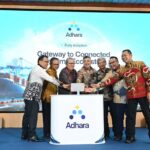
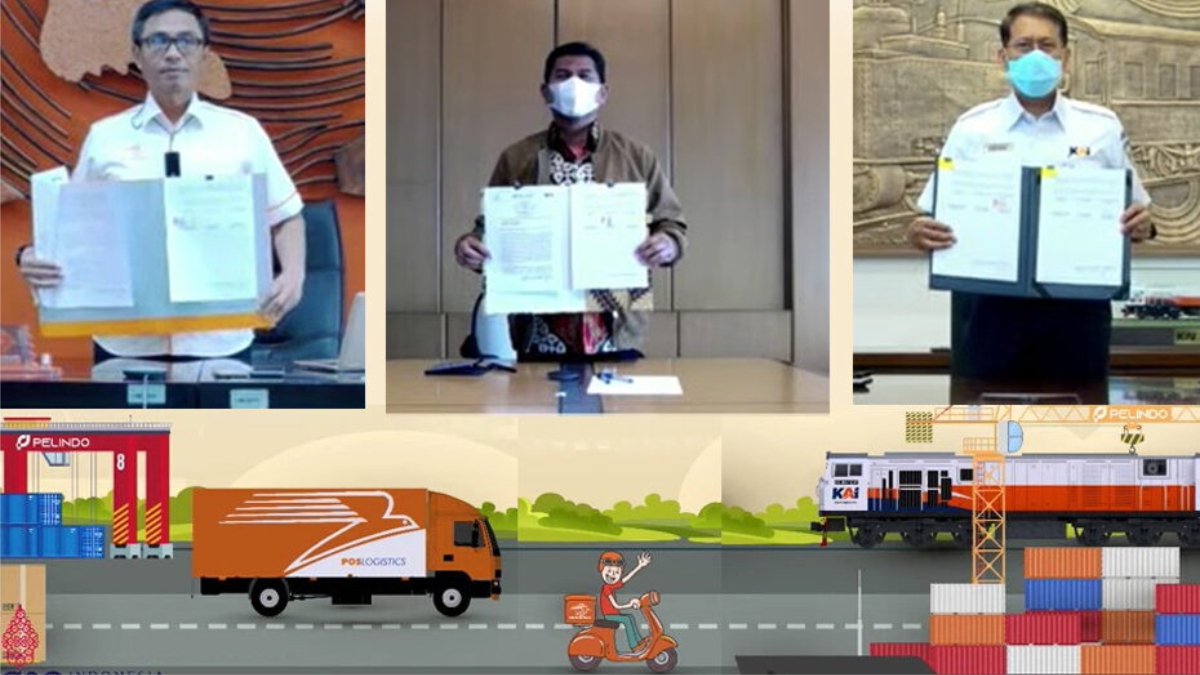
Three state-owned companies – the state port operator PT Pelabuhan Indonesia (Persero)/Pelindo, the state railway company PT Kereta Api Indonesia (Persero)/ KAI, and the state postal company PT Pos Indonesia (Persero)/Pos Indonesia signed up an MoU (Memorandum of Understanding) on their commitment to jointly strengthening the logistics services in the country last month (February).
In view of their core businesses, the synergy among the three is very strategic. Their synergy will unite the three infrastructure providers of transportation: land, sea, and railway.
Therefore, we support the steps of the three that have initiated this. Indeed, if this can be followed with actual actions, it will undoubtedly help keep the logistics efficiency within the country. Moreover, they have at least five factors driving the success of this synergy.
First, the three companies have the capacity, infrastructure, and competitiveness to support the improvement of the logistics. KAI has a rail network, especially in Java and Sumatra, the most efficient mode of transportation on land.
KAI data shows that the company has 27 multi-terminal operators, 12 single operator terminals, and 23 potential terminals. KAI also is very potential in providing courier and multimodal logistics services.
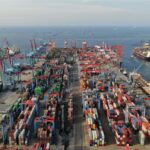
Meanwhile, Pelindo operates as many as 96 ports throughout the country and is supported by four business units (sub-holdings) Pelindo Container Terminal, Multi Terminal, Maritime Services, and Logistics Solutions.
Meanwhile, Pos Indonesia has a network infrastructure with 24,000 service points and reaches all cities/districts and sub-districts.
Pos Indonesia has more than 3,800 online post offices and is equipped with the electronic mobile post in several big cities.
Pos Indonesia has courier and logistics, financial services, and property business segments potentially crucial in this synergy.
Second, the integration of logistics services is very much needed in realizing multimodal transportation services, which are still constrained due to processes that are not yet end-to-end and problems with infrastructure/facilities for intermodal transitions.
The third is the potential captive market for state-owned companies with huge logistics volumes because they cover various sectors, including plantations, forestry, fisheries, oil, mining, construction, cement, steel, pharmaceuticals, and trade.
Fourth, the potential non-captive markets outside of state-owned companies will be obtained when the synergy of the three SOEs results in high efficiency.
Fifth, national logistics connectivity will be assisted by the infrastructure and facilities of the three SOEs and their development plans, including involving state-owned construction companies.
Read ISG Cover Story March 2022: https://theshippinggazette.com/container-carriers-predictably-reach-another-profit-record/