








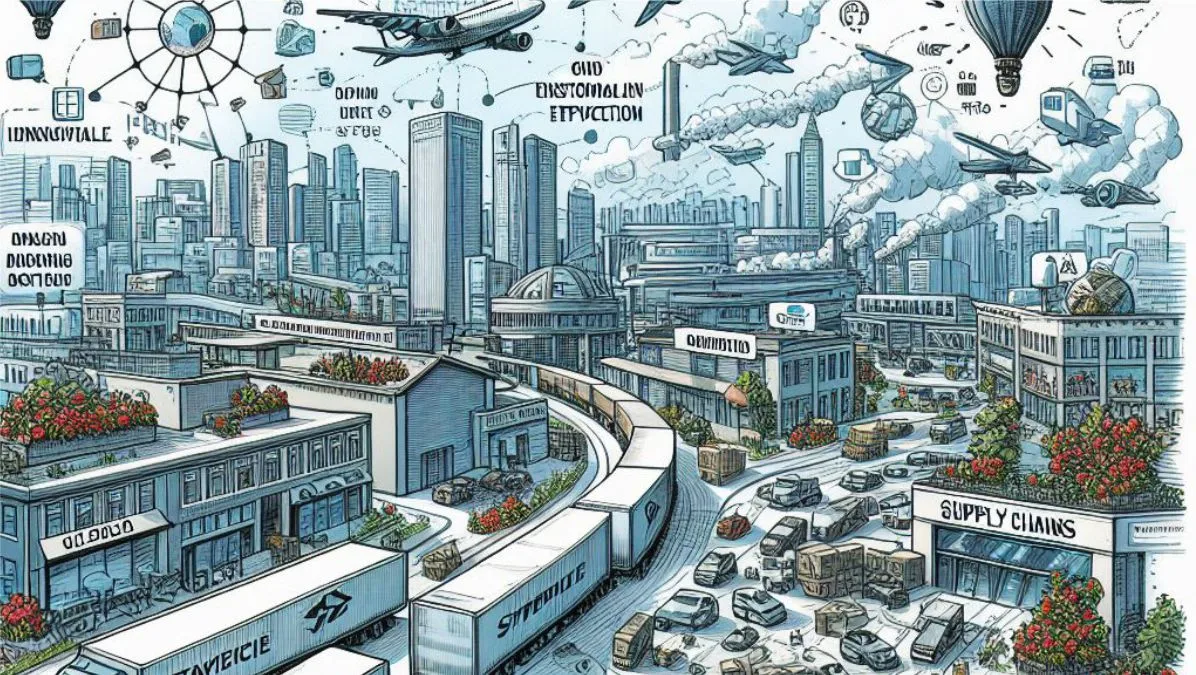
The future of logistics promises a landscape characterized by unprecedented efficiency, sustainability, and innovation. Supply chains will be tightly integrated, data-driven, and optimized for speed and cost-effectiveness. Automation will streamline processes, reducing the need for human intervention in routine tasks. Sustainability will be a non-negotiable aspect of logistics, with a focus on reducing emissions and waste.
As the logistics industry embraces these transformative changes, it will play a crucial role in shaping a more sustainable and interconnected global economy. To succeed in this future, businesses will need to adapt quickly, invest in technology and sustainability, and prioritize collaboration in an ever-evolving and highly competitive landscape. The logistics of 2030 will be a testament to human ingenuity and our commitment to building a more efficient and sustainable world.
The rise of e-commerce and omni-channel retailing is driving innovation in order fulfillment and last-mile delivery. Finally, sustainability and green initiatives are paving the way for a more environmentally friendly logistics sector. To stay ahead in this evolving landscape, businesses must embrace these trends and invest in the necessary technologies and infrastructure. By leveraging digital platforms, harnessing big data, and adopting sustainable practices, logistics companies can enhance efficiency, reduce costs, and meet the ever-changing demands of customers.
Supply chains will become hyper-efficient, driven by advanced data analytics, predictive algorithms, and the Internet of Things (IoT). Companies will have real-time visibility into their entire supply chain, allowing them to optimize routes, reduce transit times, minimize inventory holding costs, and respond rapidly to changing market conditions. This level of precision will improve cost-effectiveness and customer satisfaction.
The logistics landscape will see a significant increase in the use of autonomous vehicles for transportation. Self-driving trucks will revolutionize long-haul freight, reducing labor costs and improving safety. Drones, both ground-based and aerial, will be used for last-mile delivery in urban areas, enhancing speed and efficiency while reducing congestion and emissions.
Sustainability will be at the core of logistics operations. Zero-emission delivery vehicles, powered by electricity or alternative fuels, will become the norm. Companies will adopt circular supply chain practices, emphasizing recycling, reuse, and waste reduction. Sustainable packaging materials will replace single-use plastics, reducing environmental impact.
Buy & Read ISG March 2024: https://sociabuzz.com/isgct/p/isg-march-2024