

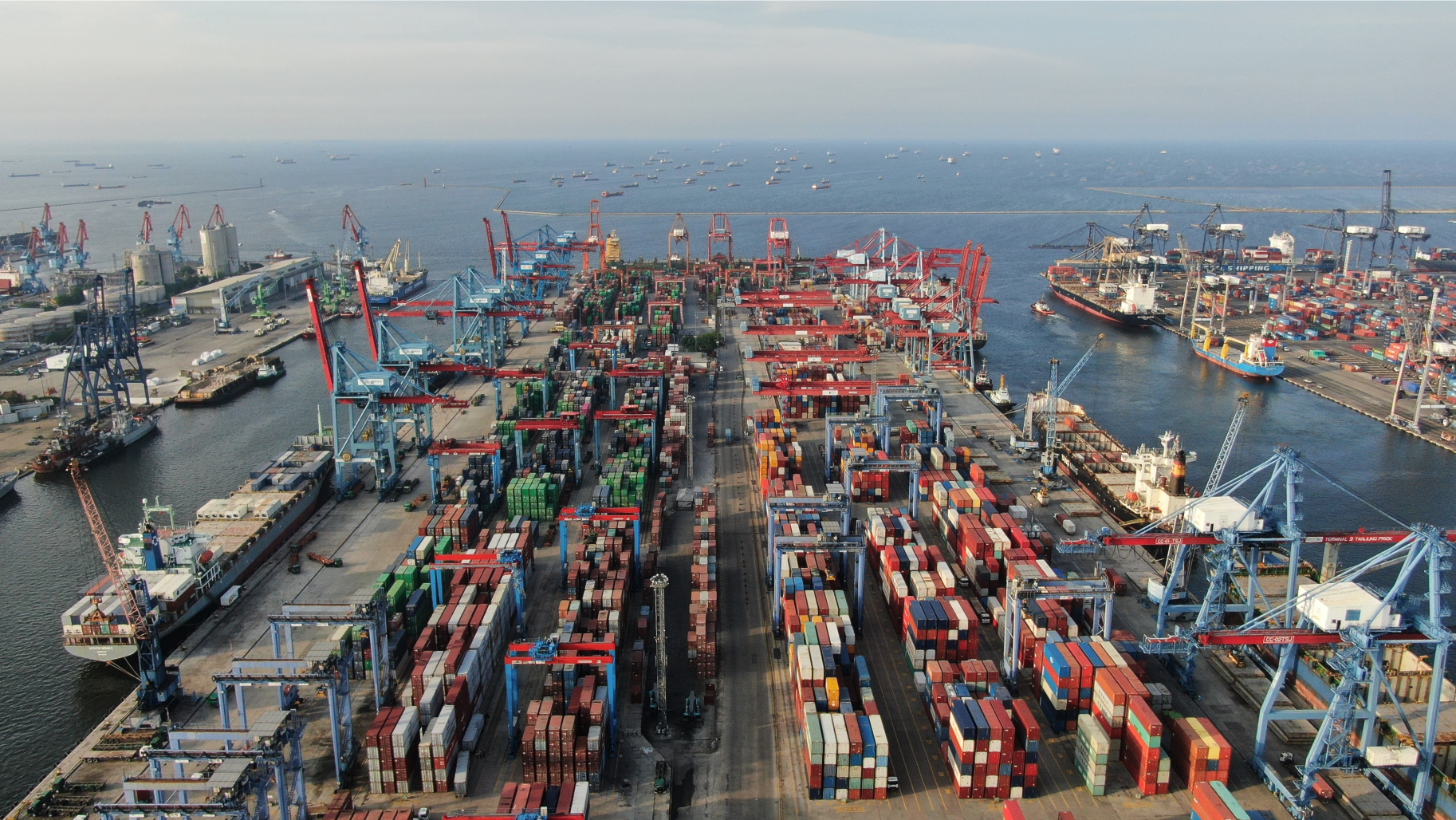
Five years after Pelindo’s merger, standardized systems have lifted terminal productivity, while operators say equipment reliability and consistent service remain central to lower logistics costs nationwide and improve shipping predictability
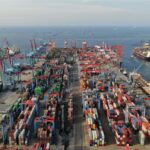
Five years after the merger of Indonesia’s state-owned port operator PT Pelabuhan Indonesia (Pelindo), the transformation of container terminal management is increasingly focused on a practical challenge: turning standardized systems into consistently efficient services across the country’s diverse ports.
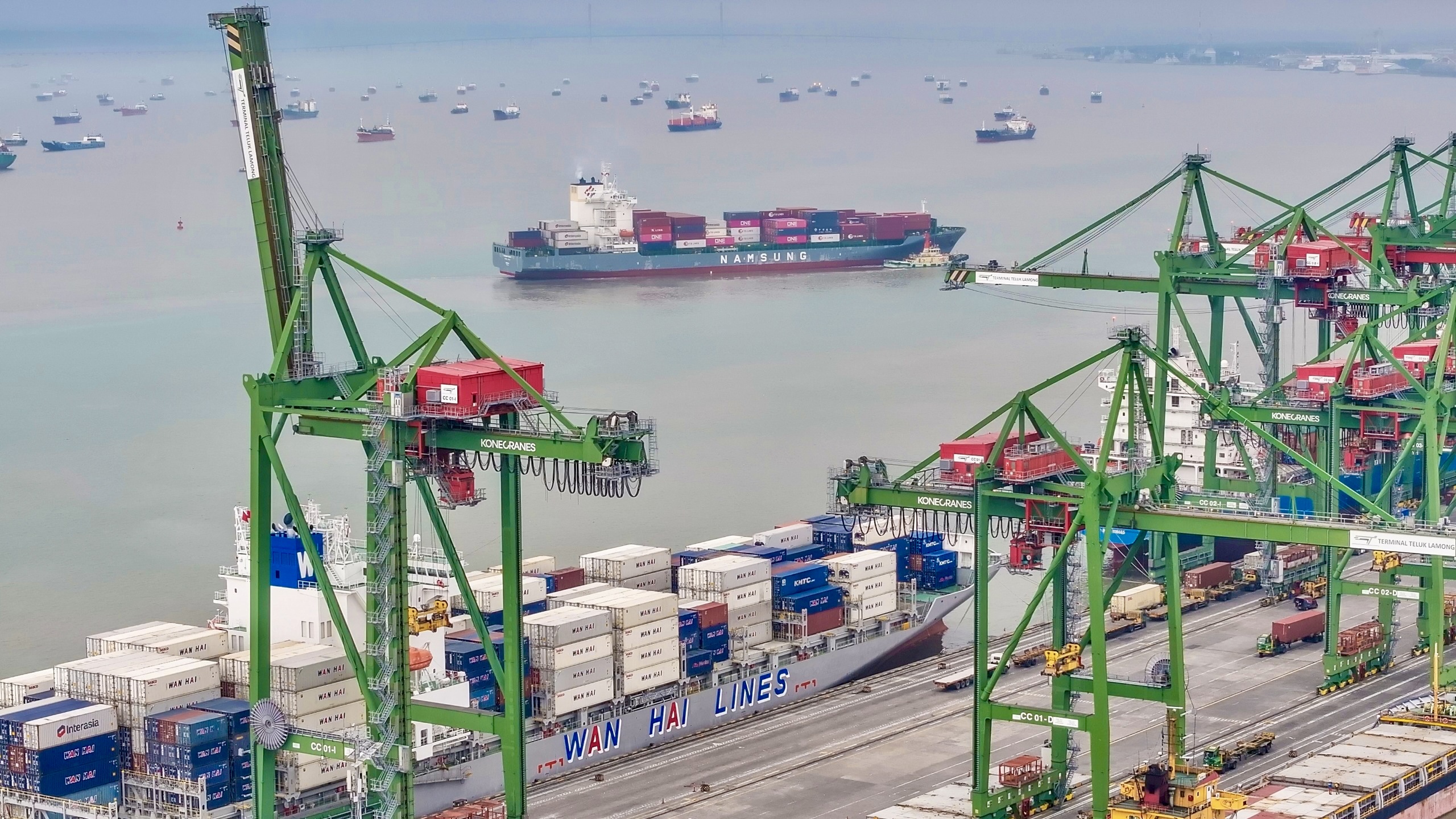
PT Pelindo Terminal Petikemas, Pelindo’s container terminal subsidiary, says the changes have raised productivity while reducing vessels port stay and cargo stay at terminals.
Widyaswendra, corporate secretary of PT Pelindo Terminal Petikemas, said productivity at the container terminals had increased by more than 70% since the 2021 merger.
“We are grateful that productivity has increased by over 70%. This rise in productivity translates into better value for customers. Port stay have also been significantly reduced, leading to greater efficiency for them,” Widyaswendra said in press statement.
He attributed the gains to the standardization of procedures and systems, as well as efforts to improve employee skills. Nearly all of the company’s 32 terminals have begun to show improvements, he said.
“Since the merger took place in 2021, competency and knowledge enhancement have been automatically standardized. Tangible improvements are visible across almost all of the 32 terminals,” he said.
The transformation has also allowed Pelindo to make greater use of equipment across its network. Equipment that is underutilized at one terminal can be moved to another where demand is greater, Widyaswendra said.
“Some terminals previously faced equipment-related issues. Through the merger, we have modernized certain terminals, allowing existing equipment to be reallocated to terminals that require it,” he said.
The changes have helped improve both vessel and cargo turnaround times, he added.
Higher productivity has also created opportunities for new business partnerships and shipping routes, according to Widyaswendra.
“We see numerous opportunities arising from this, ranging from business development through inter-corporate partnerships to the opening of new routes or services. Many new routes have been secured precisely because the productivity levels at the respective terminals are already high,” he said.
For Pelindo, the broader objective is to strengthen the maritime ecosystem while helping reduce logistics costs, he said.
“Ultimately, the anticipated rise in productivity and operational performance is expected to impact vessel operating costs. Our focus is on how the maritime ecosystem can contribute to lowering logistics costs while enhancing connectivity,” Widyaswendra said.
Shipping Industry Seeks More Consistency
Shipping companies say they have felt improvements in Pelindo’s services since the merger, but are also calling for further progress, particularly in equipment readiness and service integration.
Carmelita Hartoto, chairperson of the Indonesian National Shipowners’ Association (INSA), said shipping companies in various regions had benefited from improvements across Pelindo’s network.
“Throughout the five years since the merger, Pelindo has continuously implemented service improvements, and we have felt the benefits across all of Pelindo’s operational areas,” Carmelita said.
She said further work was needed to create more integrated services across Indonesia.
“Pelindo continues to refine and develop its services to ensure greater integration throughout the country,” she said.
For shipping companies, terminal performance directly affects vessel productivity. Loading and unloading operations are only one part of the equation; equipment availability, operational efficiency and the time vessels spend in port can also influence shipping schedules.
“We hope that the repair or replacement of loading and unloading equipment can be carried out promptly to improve port-stay efficiency,” Carmelita said.
Equipment readiness is particularly important for maintaining predictable shipping schedules, she said.
“What we hope for, of course, is service that is increasingly better and more integrated, providing certainty for business players,” Carmelita said.
INSA is also seeking continued standardization across terminals so that shipping companies can plan vessel operations with greater certainty.
“For shipping companies, service certainty is crucial. We need services that support productivity and operational predictability,” she said.
Cost pressures are adding to the need for efficiency. A weaker rupiah has increased the cost of items denominated in U.S. dollars or affected by exchange rates, including some vessel maintenance expenses and imported spare parts, Carmelita said.
“The depreciation of the rupiah impacts various costs that are denominated in dollars or heavily influenced by exchange rates,” she said.
“Consequently, it affects not only day-to-day operating costs but also corporate investment planning,” she added.
Carmelita said efficiency could not depend solely on shipping companies and other businesses, arguing that government policies also had a role in maintaining a competitive cost structure.
“Efficiency measures by business owners alone are insufficient. The government must also assist in keeping the industry’s cost structure competitive,” she said.
Standardization Meets Local Conditions
Five years after the merger, Pelindo has made progress in standardizing container terminal services, but the harmonization of systems and business processes has not necessarily produced identical service performance across its network.
Raja Oloan Saut Gurning, a supply-chain expert at the Sepuluh Nopember Institute of Technology (ITS), said the merger had created a more centralized approach to terminal management. This included aligning business processes, deploying Terminal Operating Systems (TOS) and standardizing performance indicators.
“The standardization of container services in Indonesia has been on the right track over the past five years. Business process architecture, operating systems (TOS), and performance indicators have all been standardized centrally,” Saut said.
He said the changes represented an important part of the reform of terminal management following the integration of Pelindo’s operations.
The remaining challenge, he said, was ensuring that standardized systems produced consistent service quality at individual terminals.
“However, consistent service delivery across terminals has not yet been fully achieved. What currently exists is ‘segmented consistency’—consistency within specific tiers, but a lack of nationwide uniformity,” he said.
Differences between terminals make uniform performance difficult to achieve. Ports operate under different geographical conditions and have varying equipment, vessel characteristics and hinterland connections.
Terminals on tidal rivers, for example, face constraints that do not necessarily apply to deep-sea ports.
“Terminals located on tidal rivers—such as the Musi, Barito, or Kapuas—face tidal window constraints that limit the consistency of vessel arrivals and departures. This differs from deep-sea ports,” Saut said.
Those differences also mean that terminal performance cannot be assessed using a single productivity measure, he said.
Equipment specifications are another factor. Standardizing a TOS does not automatically produce the same level of productivity when terminals operate different types of loading and unloading equipment.
“Running the same TOS at a terminal equipped with high-speed Ship-to-Shore (STS) cranes will yield different output compared to a terminal relying solely on aging Harbor Mobile Cranes (HMC) or ship-based cranes,” he said.
Saut said Pelindo therefore needed to ensure that operational standardization was accompanied by improvements in equipment availability and reliability.
“Levels of equipment readiness—or availability—and the mean time between failures at terminals outside Java remain inconsistent,” he said.
The experience of Pelindo’s first five years as a merged port operator thus points to a distinction between standardization on paper and consistency in practice. Common systems and procedures can provide a foundation for efficiency, but equipment, geography and local operating conditions continue to shape how those standards translate into service performance.