


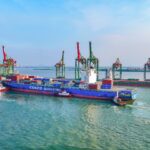
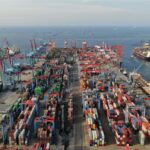
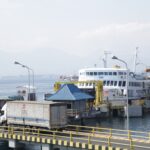

State port operators Pelindo I – IV have been officially merged early this month, on October 1, 2021. This merger is expected to make Pelindo stronger, competitive, and strategic in building maritime connectivity, thus supporting efficient logistics and encouraging economic growth.
Noted that Indonesia’s logistics cost is still very high, reaching 23.5% of GDP. The port operational and connectivity have significantly contributed to this high logistics cost, while this high logistics cost is one of the key bottlenecks in the country’s economic growth.
So, it is so fair if we send appreciation to the Ministry of State-Owned Entreprises (SOEs Ministry) that has taken this step. It might be too early to affirm the merger mission, but if it is for better logistics performance and economic growth, we all must support it.
Some have said that this is overconfidence because of the 23.5% logistics cost to GDP, the port operation contribution is only 1.4%, while the share of others is much higher: inventory (8.9%), land transportation (8.5%), and administration (3.5%). This means that the Pelindo merger will control only a small amount of this total logistics cost.

However, this merger can optimize its benefits in unlocking logistics bottlenecks only if it can create multiplier effects. Will this merger be able to create multiplier effects? Will this merger be able to optimize benefits? Surely, it can. Why?
First, Pelindo will be more strategic in doing investment both in improving port performance or building new ports throughout the nation that potentially trigger industry growth, especially the industry in the eastern part of Indonesia. Noted that one of the main causes of high logistics cost is due to imbalanced industry among the regions in the country. In addition, if the port can trigger industry growth, it will totally help the economic growth.
Second, Pelindo can easily build synergy with other parties. Let us say with other transportation mode operators of airport, railway, or toll road operator to build multimodal connection. Good to know that poor multimodal has a very significant effect on the high logistics cost in the country. Even, poor land road access between port and hinterland has contributed the highest to the total logistics cost within the country.
Third, the merger is expected to act as a role model for other parties in streamlining business administration, processes, and permits, especially the trade-related institutions. This is expected to help simplify the process of business (trade) permits, thus finally cut the administration cost. Noted that administration cost significantly contributes to the logistics cost. Administration cost share to 3.5% of 23% logistics cost to GDP.
Moreover, the merger will make Pelindo more strategic and have more resources in doing development and business expansion. Noted that merger makes Pelindo one of the leading global port operators. In the container sector, for example, the merger will make Pelindo handle 16.7 million TEUs throughput in a year, making it the 8th largest container terminal operator in the world. This merger will also make Pelindo a very big company with total assets reaching more than Rp 111 trillion, according to SOEs Ministry
Read ISG Cover Story October 2021: https://theshippinggazette.com/when-will-freight-rate-rise-end/