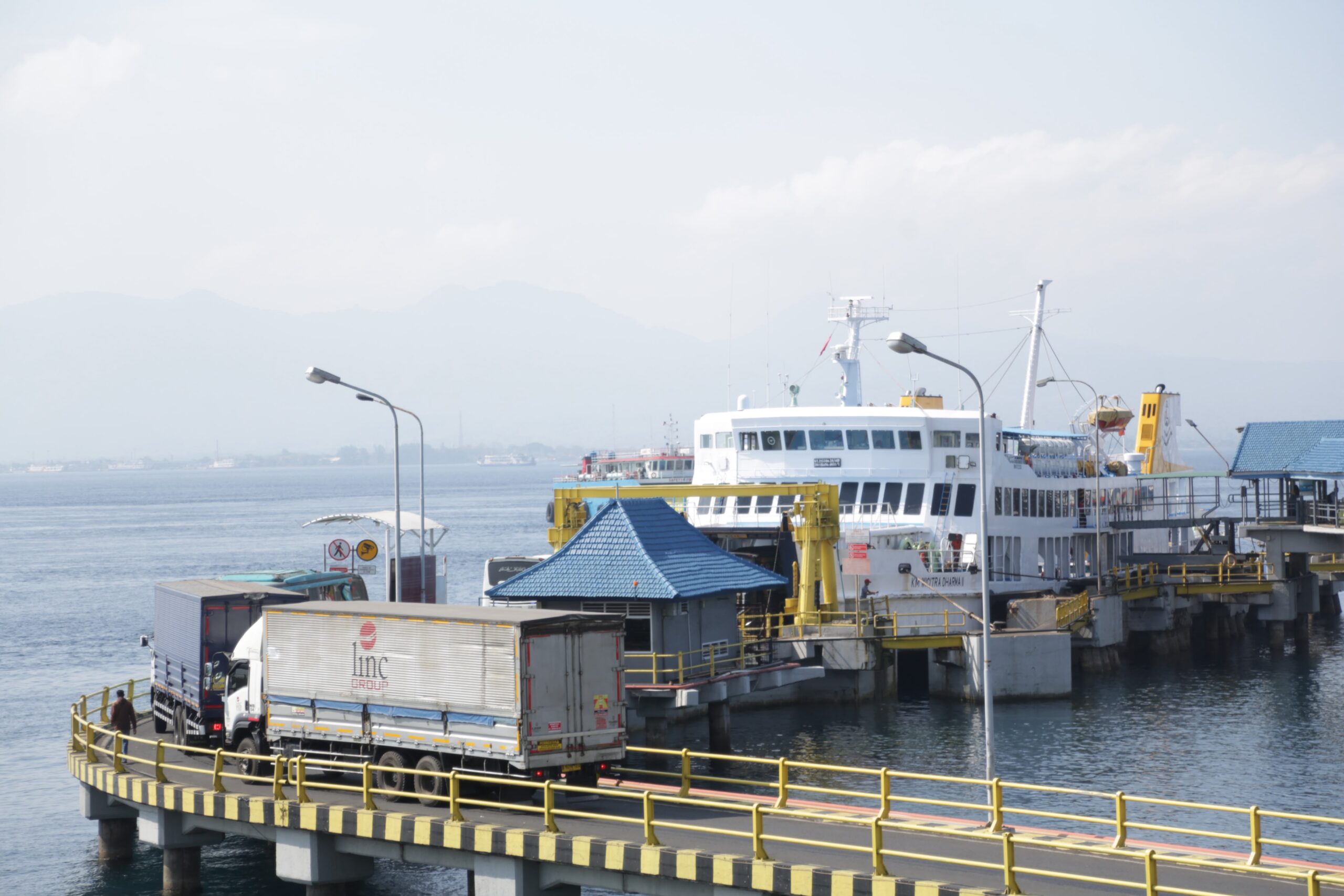









Fears on global economy recession spheres shipping industry players as global shipping lines’ profit seem to fall in the last quarter this year (2022Q4). But Indonesia’s domestic market is expected to keep steady, suggesting the national shipping companies hang on and optimize the domestic market potencies.
Global liner shipping is predicted to post a full-year net profit of $223.4bn in 2022, a 50.6% improvement over the record profits made last year (2021), according to Liner veteran John McCown, who runs Blue Alpha Capital in the US. It was lower than McCown’s $244.9 billion forecast at midyear, as the Q4 profit seems much lower.
The global carriers have exceptionally strong balance sheets heading into 2023, a year where demand is expected to be muted and the supply of new ships gigantic, leading analysts to anticipate significant idling of tonnage over the coming 12 months.
For many years, containerized trade has been the fastest-growing maritime trade segment, but in 2022 is projected to expand at a tepid 1.2 percent, and even this may be optimistic.
The top 10 lines have now collectively pulled in nearly $260bn in operating profit (EBIT) since the pandemic’s start on April 1, 2020, according to Alphaliner, cash that will come in handy going into 2023.
The container shipping industry earned $58.9 billion in profit in the third quarter, breaking a streak of seven straight record quarters for the sector and further confirmation that the industry’s earnings peak is now firmly in the rearview.
While the $58.9 billion profit is 22.4% higher than the $48.1 billion profit from last year’s third quarter, it is 6.6% lower than the $63.7 billion earned in this year’s second quarter, making for a slight sequential earnings downturn that is expected to continue in the months and quarters ahead as overall aggregate pricing in the sector continues to ease, McCown said.
“The Q2/22 actual results can now be recognized as the peak in earnings,” McCown said.
Throughout the pandemic, container shipping has benefitted from significant price increases across most lanes as strong consumer demand and widespread port congestion drove freight rates to record.
“The sharp upturn in the quarterly bottom line performance of the container shipping industry over the last two years is one of the most pronounced performance changes ever by an overall industry,” McCown writes.
“It comes on the heels of results in the more than ten years following the financial crisis and preceding the pandemic that results in a negative overall bottom line. The container shipping industry has gone from being at the bottom related to overall industry performance to being at the top related to overall industry performance.”
Lower Profit in Q4
But, with the container shipping industry widely accepting that the peak of an epic cycle was passed by the middle of this year, attention is turning to how severe the drop in profits could be in the coming quarters. Alphaliner is warning carrier results could fall up to 70% in the fourth quarter.
“Indications for the remaining months of the year show carriers are likely to book steeply lower profits in the final quarter, with some potentially falling by up to 70% versus the previous three-month period,” Alphaliner suggested in its latest weekly report.
Long-term ocean freight rates suffered a steep month-on-month decline in November as subdued spot prices, weak demand, and ongoing economic uncertainty caught up with contracted container agreements.
The latest data from the Xeneta Shipping Index indicates that global rates fell by 5.7%, with all major corridors experiencing negative import and export trends.
“After such a long, strong period of rates growth, it’s clear 2023 will usher in much tougher times for the global carrier community. Time will tell exactly how challenging that proves to be,” commented Patrik Berglund, Xeneta’s CEO.
“Freight rates may return to the pre-pandemic level in 2023 without congestion and weaker economic condition. However, limited active supply growth driven by regulations, which will lead to vessel demolitions and speed reduction, may help the market to recover in 2024 onwards,” said Daejin Lee, a lead shipping analyst at S&P Global Market Intelligence, in a recent report on container shipping prospects.
And maritime trade is expected to be slowed by macroeconomic headwinds, inflationary pressures that constrain consumer spending, and pandemic-induced lockdowns and developments in China’s economy next year (2023).
There could also be some normalizing of demand as consumer spending switches back to services,” a new report from the United Nations warned, forecasting container growth of just 1.9% next year (2023).
Optimism, Hanging on Domestic Market
However, national shipping line actors are optimistic and remain vigilant against the threat of a global recession in 2023. Carmelita Hartoto, Chairwoman of INSA (Indonesia National Shipowner’ Association), admitted that, like many other sectors, the national shipping industry is facing a difficult situation.
She said a recession had overshadowed the economies of several countries. The causes are complex, starting from the Russian-Ukrainian war, which triggered food, energy, and financial crises. In line with this, the tightening of monetary policies in many countries to control the inflation rate has also made the recession more evident.
However, she is optimistic that the national economy will be vital in facing global conditions. This is in line with the projections of many institutions on Indonesia’s resilience in facing the economic situation next year.
Quoting predictions from some credible institutions, Carmelita said the national economy would still grow next year (2023), supporting the national shipping industry to grow up. The International Monetary Fund (IMF) and the World Bank project that the national economy will grow positively by 5 and 5.1 percent in 2023, while Bank Indonesia and the Ministry of Finance project that the national economy will grow between 4.6 and 5.3 percent in 2023.
“Many institutions project that the national economy will still be on a positive growth next year. But we still have to ensure that the purchasing power of the people in the country is well maintained so that the domestic economy remains strong,” he said.
In view of these, the national shipping sector will not be affected much by negative sentiment in 2023 economic conditions. She affirmed that the shipping that serves export import might be hit much following the drop in export-import activities.
“But, until October, our export value was still growing positively,” she said, quoting data from the Central Bureau of Statistics BPS.
According to BPS, Indonesia’s export value from January to October 2022 reached US$244.14 billion, an increase of 30.97% year on year. Meanwhile, non-oil and gas exports reached US$230.62 billion, an increase of 30.61 percent.
According to Carmelita, the domestic container transport sector will still grow positively following national economic growth next year. The dry bulk (coal carrier) sector would also grow positively, in line with the increasing domestic and international coal demand.
The Ministry of Energy and Mineral Resources said that PT Perusahaan Listrik Negara (PLN) ‘s coal needs are around 161.15 million tons in 2023, an increase from 2022, which reached 130 million tons. The coal production in 2023 is targeted to reach 694 million tonnes.
On the other hand, the downstream natural resources (SDA) policy that the government is currently promoting will also impact dry bulk transportation.
Meanwhile, the world oil trade experienced a significant increase due to the economic recovery after Covid-19. Volume is expected to increase by 3 percent in 2022, although it is still slightly smaller than before Covid-19, which reached 5 percent. But the impact of the Russo-Ukrainian war led to requests for longer trade miles by 5%.
In 2023, the volume of oil trade is expected to increase by 2 percent, with a potential increase in ton-miles due to changes in trading patterns and routes of 6%.
From the supply side, the additional tonnage is insignificant, which still reflects low demand sentiment due to Covid-19, as well as changes in technological requirements and the high cost of building new ships. Even though the ship is being held back for scrap due to soaring market freight rates, the addition of tonnage has mostly stayed the same.
“In view of this, I think the tanker market in 2023 will be quite promising,” she said.
Carmelita also sees promises in offshore shipping. “Though it will not be significant, the offshore shipping will be steady,” she said.
In conclusion, Carmelita explained that national shipping lines are more confident in facing the global recession threat. “We have learned many from the Covid-19 storm,” she said.
However, she warns of increased ship maintenance costs due to fluctuations in the rupiah exchange rate, considering that 70 percent of ship components are still imported. “So, the threat of a recession in 2023 will probably have an impact on national shipping, but as long as our domestic consumption remains strong, we expect that the global recession will have minimum impact on our national shipping,” she said.
This article was published in ISG Print Magazine December 2022 Edition.