




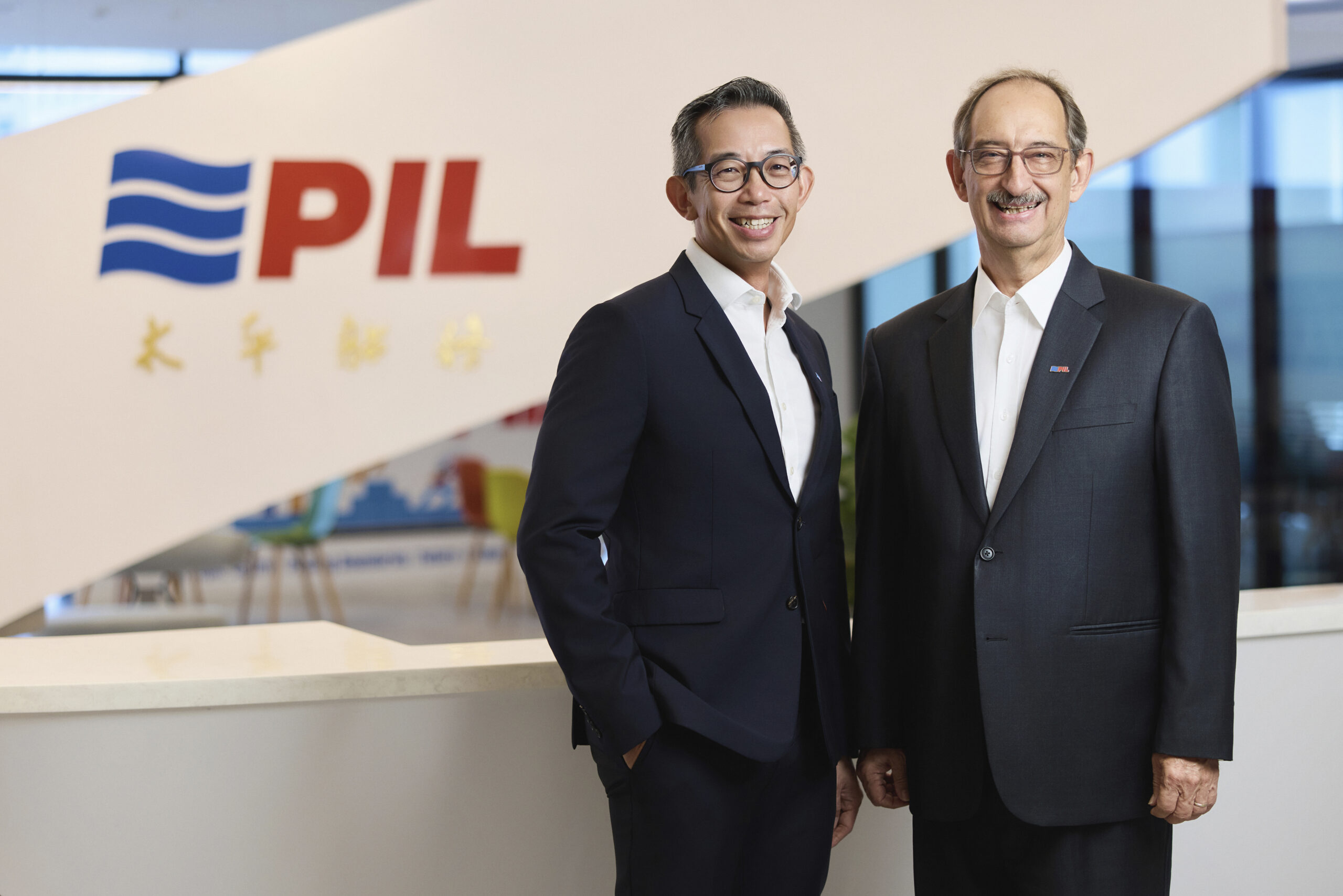
Pacific International Lines (PIL) has appointed Wan Chee Foong as deputy chief executive officer, with the former Temasek executive set to succeed Lars Kastrup as CEO in April 2027, the Singapore-based container shipping company said on Tuesday.
Wan will take up his new role on Oct. 5 and work alongside Kastrup during a six-month transition, progressively assuming responsibility for the group’s commercial, operational and strategic priorities, PIL said.
Kastrup will remain CEO through the handover period and will subsequently become an adviser to the board.
The appointment follows a board-led succession process that considered internal and external candidates, the company said.
Wan has nearly three decades of experience in transportation, ports and logistics, including senior positions at PSA International and nine years at Singapore state investor Temasek.
At PSA International, Wan served as regional CEO for the Middle East and South Asia and as head of group business and commercial development. He was also CEO of PSA BDP, the group’s supply chain solutions business, and served on PSA International’s Senior Management Council from 2014 to 2025.
Wan is currently managing director for corporate strategy at Temasek. He previously worked in Temasek’s transportation and logistics team from 2003 to 2012 and was involved in the establishment of SeaTown Holdings. He began his career at Singapore Airlines.
He is also an independent director of Bahri, Saudi Arabia’s national shipping company, and a board member of Singapore’s National Council of Social Service.
Kastrup joined PIL in July 2020 as a senior adviser and later became co-president and executive director in March 2021. He was appointed CEO in July 2022 after more than four decades in the container shipping industry.
Under Kastrup, PIL’s earnings and fleet have expanded significantly. Group EBITDA rose to $1.50 billion in fiscal 2025 from $558 million in fiscal 2023, while net profit after tax reached $1.04 billion on revenue of $4.27 billion in fiscal 2025, according to the company.
PIL said fiscal 2026 was on track to exceed the previous year’s performance, without providing further details.
The company’s fleet capacity has increased by more than 50% to about 500,000 twenty-foot equivalent units (TEU), with 10 LNG dual-fuel vessels delivered by the first half of 2026.
A further 18 LNG dual-fuel newbuild vessels and 14 long-term charter vessels are due to be delivered through 2029, PIL said. The programme is intended to replace up to half of the company’s fleet over five years.
PIL has also expanded its network of wholly owned and controlled agencies, which the company said now handle about 98% of its cargo volume.
The company, founded by the Teo family in 1967, will mark its 60th anniversary in 2027.
“When I took on this role … my objective was to build the resilience, discipline and capability to perform through industry cycles,” Kastrup said in a statement.
“With that foundation in place, this is the right time to hand over,” he said, adding that Wan had the experience to lead PIL into its next phase.
Andrew M. Lim, chairman of PIL’s nomination and remuneration committee and an independent director, said the succession plan was intended to provide continuity for the company’s employees, customers and partners.
Wan said his immediate priority would be a smooth handover and working with employees, customers and partners to strengthen PIL’s network and customer relationships.