




The rehabilitation programme running in two years has covered 10 hectares in Central Java, with the company reporting a survival rate of more than 75% among seedlings planted in 2025.
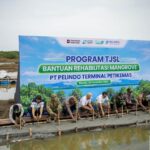
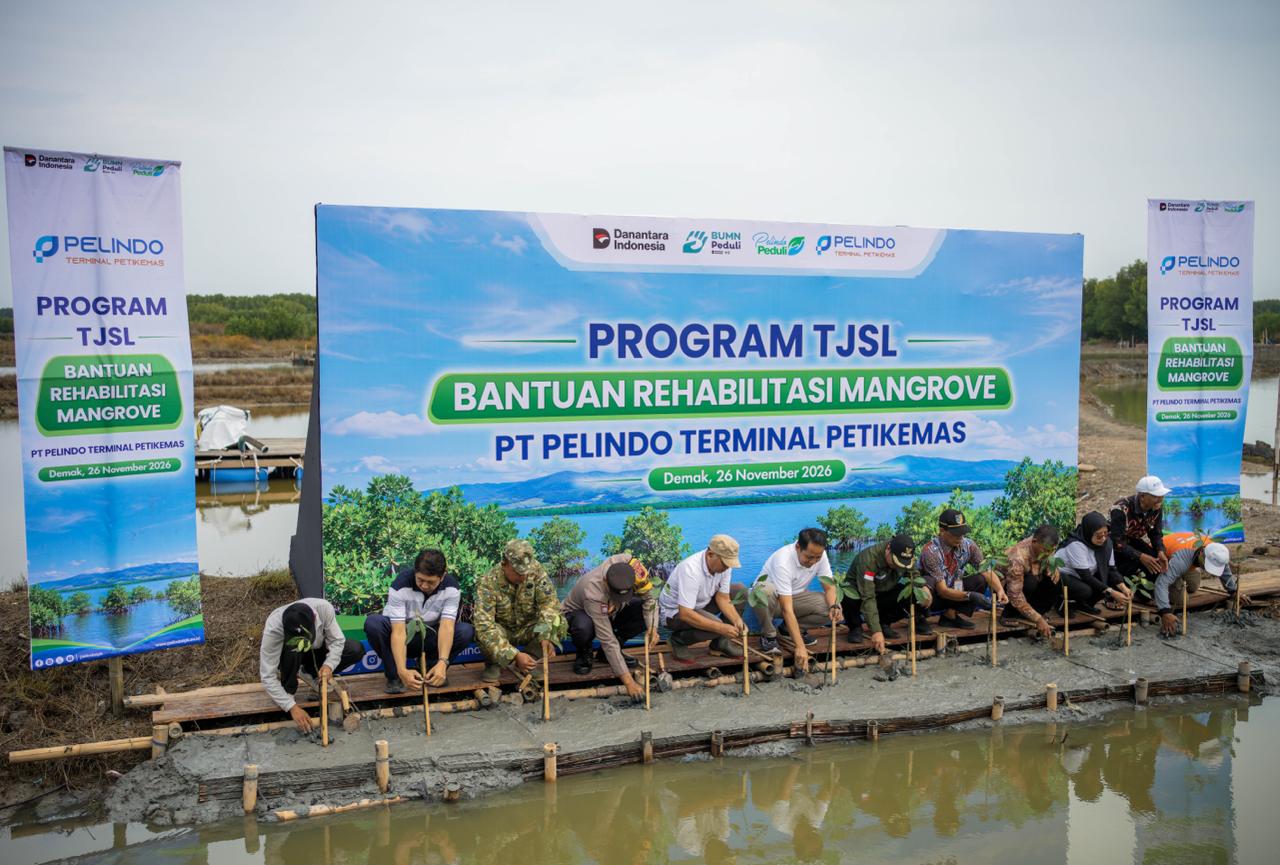
PT Pelindo Terminal Petikemas has planted 50,000 mangrove seedlings across five hectares in Tambakbulusan Village, Demak Regency, Central Java, expanding a coastal rehabilitation programme launched in 2025.
The latest planting brings the company’s total to 100,000 seedlings across 10 hectares over two years, as part of its social and environmental responsibility programme.
Pelindo Terminal Petikemas Corporate Secretary Fajar Setyono said the expansion followed positive results from the first phase, in which more than 75% of the mangroves planted in 2025 had survived.
“Monitoring results show healthy mangrove growth and signs of land formation within the rehabilitated area,” Fajar said.
He said the company would continue maintaining and monitoring the mangroves to support their long-term survival and environmental benefits.
Rehabilitation and Coastal Protection
A field survey conducted on Oct. 28, 2026, found that the first rehabilitation area had recorded a seedling survival rate of more than 75%, alongside signs of land formation.
The findings indicate changes in the physical condition of the coastal area, although further monitoring will be needed to assess the programme’s broader ecological impact.
The second planting phase, located next to the initial rehabilitation site, is expected to facilitate integrated maintenance and monitoring, including assessments of the mangroves’ potential to absorb and store carbon.
The initiative also supports Pelindo Group’s Blue Carbon programme, which focuses on conserving coastal ecosystems.
Fajar said the programme’s success should be measured not only by the number of seedlings planted but also by their survival and contribution to the surrounding ecosystem.
The company is working with government agencies and local communities to support the long-term sustainability of the rehabilitation efforts, he added.
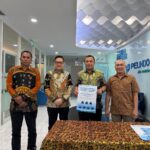
Dwi Cahyo Pramono, head of the Forestry Service branch for the Pati Region, said private-sector involvement was important in addressing environmental challenges along the Demak coast, including rising sea levels and land subsidence.
“This is the second year of the programme, which includes maintaining the plants from the previous year,” Dwi said.
He said several coastal areas in Demak still required rehabilitation and expressed hope that Pelindo would continue its support and extend the programme’s benefits to more communities.
Habibullah, head of Tambakbulusan village, welcomed the continuation of the initiative, saying mangroves played an important role in protecting the local environment and supporting residents’ livelihoods.
He expressed hope that the programme would continue to benefit the village and its surrounding communities.
Pelindo Terminal Petikemas said it would continue monitoring mangrove growth, maintaining the planted areas and assessing their ecological benefits as part of efforts to restore coastal ecosystems and strengthen protection for communities along the Demak coast.