As Indonesia seeks to expand export markets by 2027, the government is streamlining trade licensing and integrating digital systems, while ports and logistics operators prepare for rising cargo volumes
Indonesia is looking to expand its export markets by 2027, placing greater emphasis on logistics efficiency, port infrastructure and streamlined trade procedures as it seeks to strengthen its position in global commerce.
The challenge extends beyond finding new buyers for Indonesian products. Moving goods efficiently across borders, reducing administrative delays and ensuring reliable shipping services will also be crucial to sustaining trade growth.
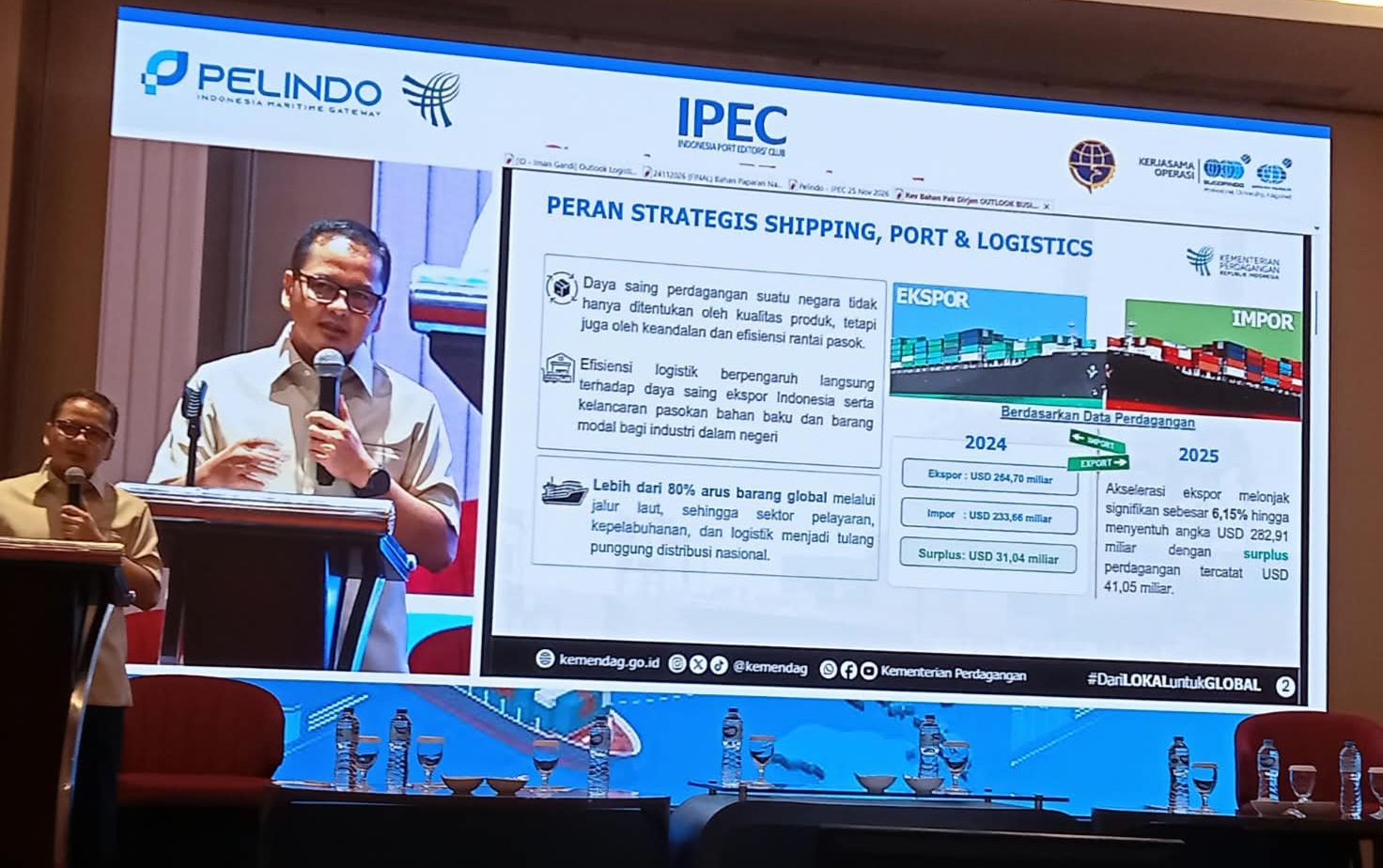
More than 80% of global cargo is transported by sea, making shipping and port services central to international trade, Tommy Andana, director general of foreign trade at the Ministry of Trade, said on Wednesday.
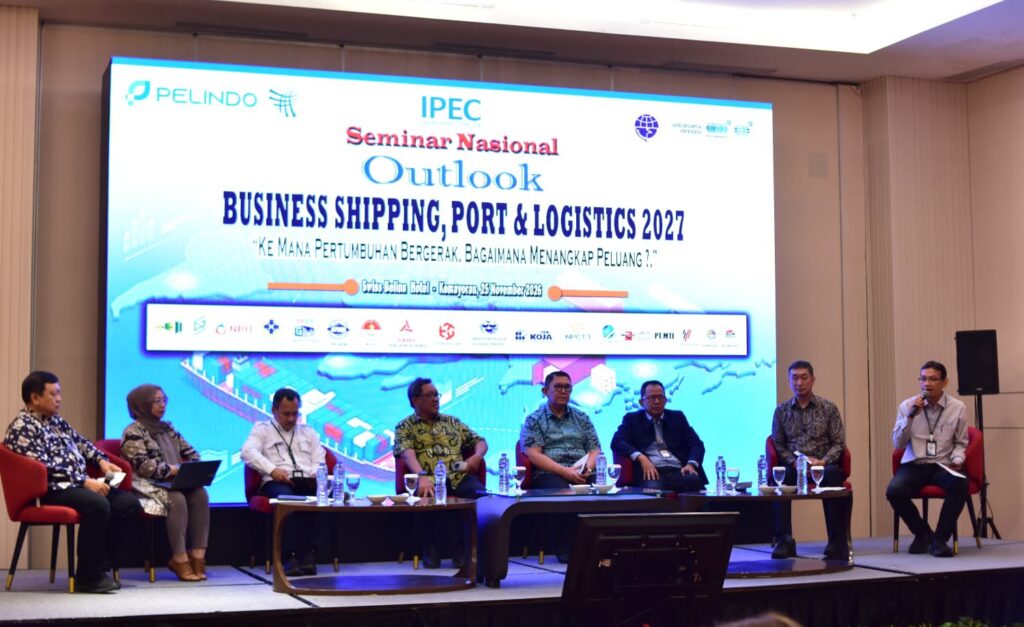
Speaking at the Shipping, Port and Logistics Business Outlook 2027 seminar, organised by the Indonesia Port Editors’ Club (IPEC) in Jakarta, Tommy said the government was prioritising export market expansion and domestic market protection through deregulation, digitalisation and greater integration of trade systems.
Indonesia’s trade figures provide a backdrop to the government’s ambitions. Exports rose 6.15% in 2025 to $282.91 billion, from $264.70 billion in 2024. The trade surplus widened to $41.05 billion from $31.04 billion over the same period.
From January to September 2026, Indonesia recorded a trade surplus of $10.61 billion, including a surplus of $3.36 billion in September alone.
Against this backdrop, the Ministry of Trade is working to simplify business licensing and accelerate the issuance of export and import certificates, seeking to reduce administrative hurdles for companies involved in international trade.
A central part of the initiative is the integration of INATRADE, the ministry’s trade licensing platform, with other government systems, including the Online Single Submission (OSS) system and the Indonesia National Single Window (SINSW).
The integration allows businesses to use their Business Identification Number (NIB) and access licensing services through a more connected digital process.
The government is also encouraging other ministries and agencies to link their licensing systems to the platforms, while introducing electronic signatures, QR codes and online applications for export and import permits.
Another measure is the so-called fictitious positive mechanism, under which a licence is deemed approved if authorities do not respond within five working days after an application has been verified as complete and compliant.
A Single Sign-On system also allows businesses to access multiple electronic government services through one account.
The measures are intended to shorten processing times and improve coordination among government agencies, addressing administrative bottlenecks that can affect the movement of goods through the supply chain.
Ports prepare for rising cargo volumes
Beyond licensing reforms, the capacity and connectivity of Indonesia’s ports will be critical to supporting the country’s trade ambitions.
Prasetyadi, director of operations at state-owned port operator PT Pelabuhan Indonesia (Pelindo), said ports were expected to play a growing role in supporting trade expansion through 2027 and beyond.
“Currently, Pelindo’s role has evolved from a mere port operator into a comprehensive service provider and an integrator of the logistics ecosystem, supporting the national economy,” he said.
Pelindo remains committed to becoming a world-class leader in an integrated port ecosystem, he added.
The company is continuing to develop port infrastructure and improve connections to hinterland areas, including through projects at Kuala Tanjung Port and Industrial Estate, Kijing Terminal in West Kalimantan, Makassar New Port, Belawan New Container Terminal, New Priok Container Terminal and Bali Maritime Tourism Hub.
Container traffic handled by Pelindo has also increased. Throughput reached 18.8 million twenty-foot equivalent units (TEUs) in 2025 and was projected to rise 5% to 19.8 million TEUs in 2026.
The figures underscore the growing demands placed on port infrastructure as trade volumes expand, while also highlighting the importance of connections between ports and inland distribution networks.
Industry sees opportunities, but warns of bottlenecks
Business leaders also expressed optimism about the outlook for Indonesia’s shipping, port and logistics industries in 2027, citing expected trade growth and what they described as a relatively healthy balance between cargo demand and vessel capacity.
But they cautioned that infrastructure constraints and gaps in logistics connectivity could undermine those prospects if they were not addressed.
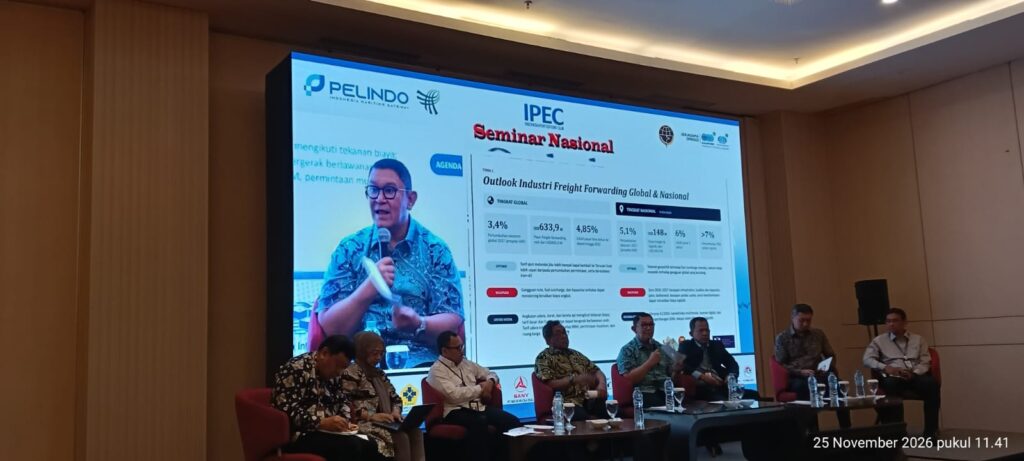
Yukki Nugrahawan Hanafi, vice president of the International Federation of Freight Forwarders Associations (FIATA), said digitalisation would be increasingly important as global supply chains continued to change.
He called for closer cooperation between the government and businesses to build an integrated national logistics network, pointing to road and port infrastructure constraints, imbalances in cargo flows and limited connections between ports and the railway network.
Yukki also backed the government’s plan to implement a Zero Overload and Over-Dimension (ODOL) policy by 2027, while warning that the transition would need to account for its impact on cargo owners and the continuity of trade operations.
“If the ‘Zero ODOL’ policy is implemented by 2027 without the availability of multimodal alternatives, costs will rise, and structural inefficiencies will only deepen,” he said.
His remarks highlighted a broader challenge facing the logistics industry: regulations aimed at improving transport safety and efficiency will also require alternative freight options to prevent additional costs and disruptions.
Meanwhile, Keishin Watanabe, a representative of Japanese shipping line Ocean Network Express (ONE), said the company’s container volumes to and from Indonesia had grown by around 7% in 2026.
He expected the growth to continue in 2027.
Watanabe said the balance between shipping capacity and cargo demand was expected to remain stable next year. Although additional vessels were due to enter the market, projected growth in export and import volumes, including those involving Indonesia, was expected to absorb the additional capacity.
This would allow vessel supply and freight demand to grow at a relatively balanced pace, he said.
For Indonesia, the outlook points to opportunities as international shipping activity expands. But capturing those opportunities will depend not only on demand for Indonesian goods, but also on the efficiency of the infrastructure and systems that move them.
As the country pursues wider export markets by 2027, the ability to connect ports, transport networks, businesses and government services into a more integrated logistics system will be central to turning trade ambitions into sustained growth.