


Analytical Report: Indonesian Container Terminals Exhibit Strategic Resilience Amid Global Maritime Contraction
In a period characterized by pronounced global maritime volatility, Indonesia’s principal container terminals are demonstrating significant operational resilience, achieving substantial throughput gains that defy the broader industry slowdown driven by geopolitical disruption, structural overcapacity, and tariff escalation. This performance signals a strategic divergence within Indonesia’s port sector.
Tanjung Priok (Jakarta): Container Throughput Dynamics
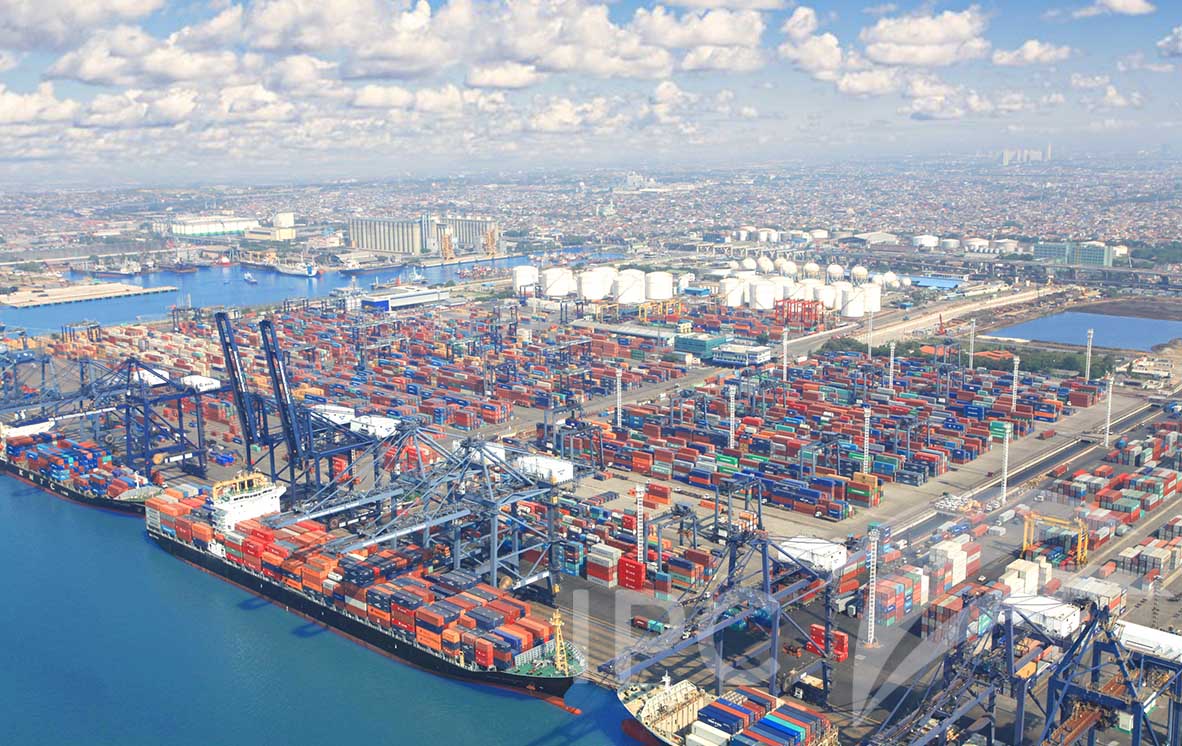
Tanjung Priok Port, serving as Indonesia’s largest seaport, posted a robust 5.7% year-on-year increase in container throughput through the third quarter of 2025. Cumulative figures from January through September 2025 reached a total volume of 4,075,521 TEUs (twenty-foot equivalent units), an increase from the 3,853,951 TEUs handled during the corresponding period in 2024. This cumulative surge sustained momentum despite a weaker segment observed in September 2025.
A detailed breakdown of performance across Priok’s terminal operators reveals shifting competitive dynamics and varied growth profiles:
| Terminal Operator | Throughput (Jan-Sep 2025, TEUs) | Year-on-Year Change (%) | Share of Port Volume (%) | Performance Commentary |
|---|---|---|---|---|
| Jakarta International Container Terminal (JICT) | 1,609,253 TEUs (down from 1,655,091 TEUs in 2024) | -2.8% | 39.5% | Remains the dominant contributor by volume. |
| New Priok Container Terminal One (NPCT1) | 1,155,159 TEUs (up from 965,587 TEUs in 2024) | +19.6% | 28.3% | Notched a strong volume gain. |
| IPC TPK | 305,880 TEUs (up from 252,788 TEUs in 2024) | +21.0% | N/A | Delivered the largest relative percentage jump. |
| TPK Koja | 777,134 TEUs | +1.5% | N/A | Expanded modestly. |
| Mustika Alam Lestari (MAL) | 228,095 TEUs | +5.5% | N/A | Recorded an uptick. |
This data indicates that while JICT maintains the largest market volume, its slight decline allowed more adaptive operators, such as NPCT1 and IPC TPK, to capture market share via significantly faster growth rates of 19.6% and 21.0%, respectively.
Tanjung Perak (Surabaya): Expansion and Efficiency
Indonesia’s second-largest port, Tanjung Perak (Surabaya), also registered expansion. The international container terminal, operated by PT Terminal Petikemas Surabaya (TPS), recorded 1,115,827 TEUs in the first nine months of 2025, marking a 0.66% increase from the 1,108,562 TEUs handled during the same period in 2024.
Specific operational and trade metrics for TPS include:
- September Throughput: The port handled 127,302 TEUs of international container traffic in September 2025, which was a 5.5% increase over the 120,637 TEUs recorded in August 2025.
- Overall Monthly Increase: Including 3,785 TEUs of domestic traffic in September, the port’s total throughput rose 5.3% month-over-month, from 124,487 TEUs to 131,087 TEUs.
- Trade Balance (Jan-Sep): Exports edged up 1.73% to 552,503 TEUs (from 543,121 TEUs), while imports saw a 0.37% dip to 563,324 TEUs. The resulting export–import ratio maintained near parity, with a 49% export and 51% import share.
- Vessel Calls: Vessel calls increased by 3.61%, rising from 913 to 946.
- Operational Productivity: TPS reported an average loading/unloading productivity of 52 boxes per ship per hour, successfully exceeding the Ministry of Transportation’s established benchmark of 48 boxes per ship per hour. TPS commands an 83% market share in international container handling in Surabaya.
Global Macroeconomic Headwinds Context
The positive performance of Indonesian ports contrasts sharply with the complex and challenging global maritime trade environment. Global container shipping has experienced a gradual cooling after a strong start in early 2025, influenced by structural overcapacity, tariff pressures, and geopolitical tensions.
Key global performance indicators underscore this slowdown:
- Half-Year Volume (H1 2025): Global full TEU volumes saw a 4.5% year-on-year increase, totaling 93.5 million TEU. However, momentum moderated, as evidenced by January’s initial spike of 5.8% growth (reaching 15.4 million TEU).
- Container Throughput Index: The RWI global Container Throughput Index reached 138.3 points in May 2025 but stood at 137.5 by July 2025.
- Monthly Contraction: By July 2025, global container port throughput, despite rising 4.1% year-over-year, simultaneously fell 1.1% month-to-month.
- Trade Conflict Impact: New tariff measures, including a 145% duty on many Chinese goods, caused container flows between the U.S. and China to plunge by 30% to 40% in April 2025. This disruption led some analysts to project an overall 1% drop in global container volume for the entirety of 2025.
- Eroding Carrier Margins: Dropping spot rates have severely impacted carrier profitability, with Shanghai-Los Angeles rates falling nearly 58% year-on-year, sinking to levels below the break-even threshold for many operators.
Strategic Implications and Future Outlook
Tanjung Priok’s 5.7% growth amid these global pressures signals a strategic resilience within Indonesia’s trade node. This resilience is partially attributed to the leveraging of terminal competition, expanded capacity, and streamlined operations by port operators.
However, the domestic growth trajectory is not entirely immune to global pressures. Headwinds such as shipping overcapacity, eroding freight rates, and weakening international trade demand are anticipated to squeeze margins and potentially slow flows in Q4 2025 and into 2026.
To sustain this performance, Indonesia must prioritize future-proofing its ports by focusing on:
- Strengthening efficiency.
- Investing in digital logistics infrastructure.
- Expanding hinterland connectivity and inter-terminal coordination.
- Strategically aligning with global shifts in trade routes and vessel deployment.
The next two quarters will be pivotal in determining whether Indonesia’s current growth represents a sustainable step forward or merely a short-term surge against temporary turbulence.
This article is adapted from an original report by Damas Jati, published in the October 2025 edition of the Indonesia Shipping Gazette.