




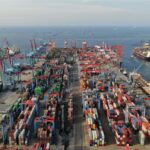
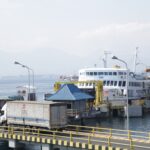

A surge in vessel traffic at Indonesia’s Patimban Port is opening a new growth avenue for public listed company PT Jasa Armada Indonesia Tbk (IPCM), as the West Java gateway moves beyond its role as an automotive export hub and begins attracting regular international container services.
For IPCM, the pilotage and towage provider within the Pelindo Group, the opportunity is already taking shape. The company handled about 30 ship movements a month at Patimban as of June, up from around 20 a year earlier, while revenue from the port’s pilotage and towing activities has grown by about 20% to 30% annually, JAI Area V General Manager Dadan Ramdan told The Shipping Gazette.
The opening of Patimban’s container terminal could accelerate that growth by bringing a new stream of containership calls alongside the port’s established automotive business.
The arrival of Mediterranean Shipping Company (MSC), the world’s largest container shipping line, marks an important step in that transition. MSC launched its first scheduled weekly container service last month (July 9), linking the port with Singapore, Port Klang in Malaysia, Laem Chabang in Thailand and Hong Kong.
The service gives exporters and importers in West Java a direct connection to major regional transshipment hubs and adds another international gateway to Indonesia’s increasingly diversified maritime logistics network.
“We need to emphasize that Tanjung Priok and Patimban are not competitors, but complement each other,” said Pierre Avesque, president director of PT Patimban Global Gateway Terminal (PGT), which operates the container terminal.
The distinction is important for IPCM. As Patimban grows, the company’s opportunity is not simply to capture traffic shifting from Jakarta’s Tanjung Priok port, but to support additional trade generated by West Java’s expanding industrial base.
From Car Hub to Broader Gateway
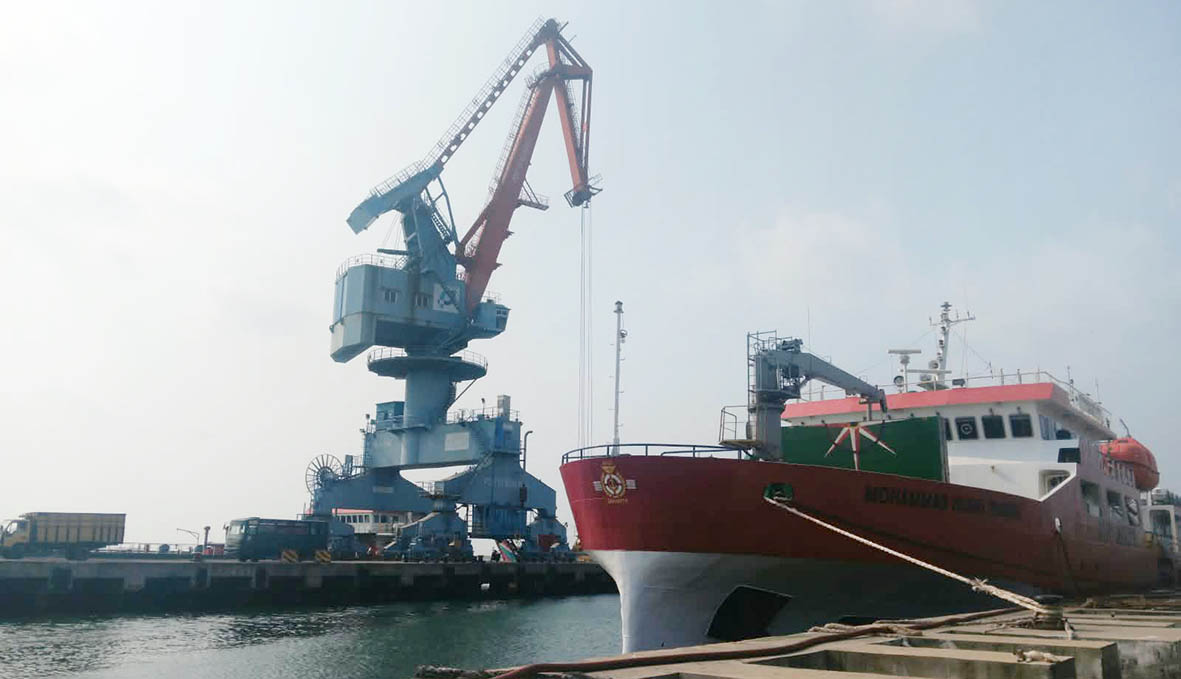
Patimban began commercial operations in 2021 and initially built its reputation around vehicle exports. Its car terminal, operated by PT Patimban International Car Terminal (PICT), began operations in 2022 and has an annual capacity of 218,000 completely built-up (CBU) vehicles.
The terminal handled 204,774 vehicles in 2025, including 125,705 exports, 13,381 imports and 65,688 domestic shipments, bringing utilization close to installed capacity.
Activity remained substantial in the first half of 2026, when the terminal processed 63,086 export vehicles, 7,262 imports and 37,110 domestic shipments, mainly to Belawan and Batam.

Between 21 and 26 vehicle carriers called at Patimban each month during the period, according to port operator data.
The port’s competitive position has also improved as infrastructure has expanded. Since January, larger vehicle carriers have been able to call after the channel and berth depth was increased to 14 metres below low water spring.
Hiroyuki Yazawa, president director of PICT, said the improvement has increased the capacity of vessels able to call at Patimban from about 4,000 vehicles to between 5,000 and 6,000 vehicles per voyage.
“We are promoting Patimban to Japanese manufacturers while also engaging other automakers, including China’s BYD and Vietnam’s VinFast,” Yazawa said.
The vehicle shipping network now connects Patimban with Belawan, Batam, Japan, China, Vietnam, Thailand, Malaysia and Singapore.
But the port is now entering a different phase of development.
The launch of regular container services gives Patimban a second engine of growth and could make vessel traffic less dependent on the automotive cycle.
MSC’s inaugural call carried 1,200 twenty-foot equivalent units (TEUs), comprising 765 containers, including 716 empty containers and 49 export containers. Cargo operations, supported by two mobile harbor cranes, were expected to take about one and a half days.
MSC had previously made a trial call at Patimban in March before deciding to introduce the weekly service.
Port authorities say several other international and domestic shipping lines are discussing services at the port as cargo volumes increase.
For IPCM, each additional vessel represents a potential demand for marine services.
Bigger Ships, Bigger Opportunity
The scale of that opportunity was highlighted on Aug. 3, when IPCM handled the berthing of the 295-metre Panamax-sized container vessel MSC BREMERHAVEN V at Patimban.
The vessel was assisted by four tugboats, KT Jayakarta 2, KT Teluk Jakarta 208, KT BVS 208 and KT Abimanyu V, during the pilotage and towing operation.
“The successful handling of the Panamax vessel MSC BREMERHAVEN V reflects IPCM’s operational readiness to support Patimban Port’s growing role as a national logistics hub,” IPCM President Director Shanti Puruhita said in a statement.
The operation also illustrates the challenge facing IPCM as Patimban scales up: larger ships require greater towing capacity and more operational resources.

JAI currently operates at Patimban with two pilots, one pilot boat and three tugboats with combined power of 6,100 horsepower. That is sufficient for vessels of up to 250 metres, Dadan said, with regulations requiring at least 6,000 horsepower of tug capacity for vessels of that size.
For larger ships, including Panamax vessels, JAI Area V has arranged to have a 4,400-horsepower tug from JAI Area I at Tanjung Priok available on call.
“We are collaborating with JAI Area I Tanjung Priok to have a 4,400 HP tugboat on call,” Dadan said.
The arrangement allows IPCM to increase its capacity without immediately committing to a full-scale expansion of its Patimban fleet.
That flexibility could become increasingly important if more liner services follow MSC into the port.
Patimban is expected to receive regular international container calls involving vessels ranging from Handymax and Supramax ships of roughly 150 to 200 metres to Panamax vessels exceeding 250 metres. The port is projected to handle about three to four Panamax calls a month, according to the company.
Revenue Is Already Responding
The increase in traffic has begun to show up in IPCM’s Patimban revenue.
Pilotage and towage revenue from the area has increased by roughly 20% to 30% annually, Dadan said, broadly tracking the rise in vessel movements.
The business remains a relatively small contributor to IPCM’s consolidated revenue, but its growth rate is significant because it comes from a port whose traffic base is still developing.
“Specifically, for the Patimban area, pilotage and towing revenue is still not a significant contribution to the corporation’s consolidated revenue. However, revenue growth is growing by 20% to 30% annually,” Dadan said.
That creates an asymmetric opportunity for IPCM: Patimban does not yet materially affect the company’s overall earnings, but faster growth at the port could make the business increasingly meaningful over time.
The addition of container traffic could further strengthen that trajectory.
Unlike vehicle carriers, which are closely tied to automotive production and export schedules, container services can bring a broader mix of industrial and consumer cargo. That could give IPCM a more diversified source of vessel movements as Patimban develops.
A Complementary Role
The Indonesian government has positioned Patimban as a complement to Tanjung Priok, rather than a replacement for the country’s largest container gateway.
That strategy is particularly relevant as industrial activity spreads across West Java. Patimban’s location gives manufacturers in the region another route to international markets, potentially reducing pressure on the existing logistics network around Jakarta.
The port’s evolution from an automotive terminal into a multi-purpose gateway therefore matters beyond the number of ships calling at its berths.
For IPCM, it creates the possibility of a broader marine-services market built around automotive carriers, container ships and eventually other commercial vessels.
“We are optimistic that Patimban Port will become an attractive port for national and international logistics,” Dadan said.
The immediate opportunity is clear: more ships mean more pilotage and towage demand. The larger opportunity lies in what happens if Patimban succeeds in attracting sustained container traffic and becomes an established gateway for West Java’s industrial economy.
For IPCM, that would turn Patimban from a relatively small contributor into a potentially important growth market, provided the company can expand its operating capacity fast enough to keep pace with the port while maintaining the safety, reliability and competitive costs that shipping lines require.