





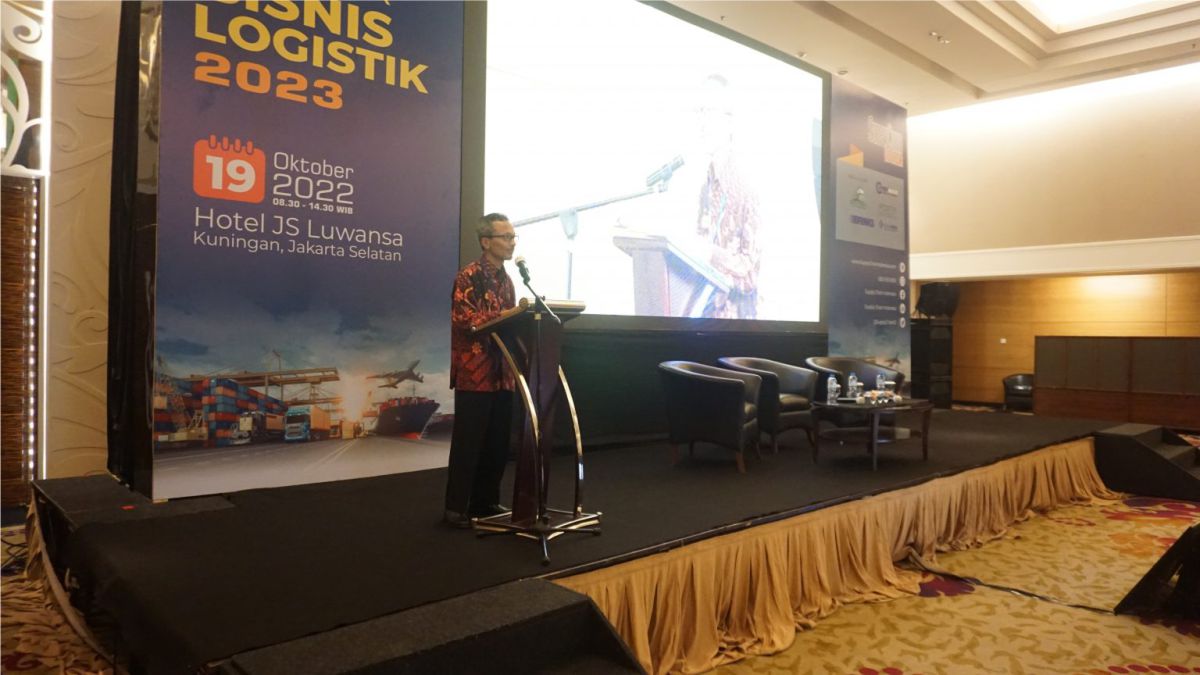
Chairman of Supply Chain Indonesia (SCI) Setijadi said that one of the efforts that needed to be made in dealing with the threat of a recession in 2023 was the orientation and strengthening of domestic logistics based on the potential strength of domestic demand and supply.
Potential demand is reflected in Indonesia’s population of 273.87 million people and an economic growth rate of 3.69 percent in 2021. Meanwhile, the potential for supply is in the form of various commodities in various parts of Indonesia.
This was conveyed by Setijadi at the 2023 Logistics Business Outlook Seminar in Jakarta last week.
The seminar also invited speakers from the Director of Trade, Investment and International Economic Cooperation of the Ministry of National Development Planning/Bappenas P.N. Laksmi Kusumawati, President Director of PT Pelindo (Persero) Arif Suhartono, President Director & CEO of Logistic Group Sarana Citranusa (SCN) Logistic Group Aulia Febrial Fatwa.
Other speakers were the Head of the Consultation Center for Members of the Indonesian Food and Beverage Manufacturers Association (GAPMMI), Tetty H. Sihombing, Group CEO at PowerCommerce.Asia – The Power Group Indonesia Hadi Kuncoro, Practitioner and Consultant of the Pharmaceutical Industry Pre Agusta Siswantoro, CEO of Mostrans Berty Argiyantari, and President Director PT Brinks Solutions Indonesia David Aim.

Setijadi explained that in anticipating the threat of a recession in 2023, it is necessary to significantly strengthen and improve logistics and supply chain efficiency to reduce dependence on global supply chains.
Dependence on exports and imports with a number of countries must be considered in anticipation of the risk of recession in several partner countries, especially China, Indonesia’s largest trading partner.
Based on BPS data, in September 2022, the value of Indonesia’s non-oil and gas exports to China amounted to USD 6.16 billion or 26.23 percent of the total non-oil and gas exports, while imports from China amounted to USD 5.69 billion or 34.74 percent of the total. Indonesia’s non-oil and gas imports.
Export-import dependence must be watched out for due to the recent economic growth in China. In the second quarter of 2022, China’s economy grew 0.4 percent (YoY) or contracted 4.4 percent compared to the previous quarter.
Anticipation must also be done, considering that Indonesia’s largest import is raw/auxiliary materials. Of the import value in September 2022 of USD 19.81 billion, 75.21 percent was in the form of raw/auxiliary materials, 16.76 percent of capital goods, and 8.03 percent of consumer goods.
Setijadi said that in the long term, it is necessary to develop supply chains of several products and commodities from upstream to downstream (end-to-end) to reduce dependence on imports. For the pharmaceutical industry, for example, about 95 percent of raw materials come from imports.
According to him, increasing logistics and supply chain efficiency will impact decreasing product and commodity prices, which is very important in a recession.
“From a global perspective, increasing the competitiveness of products and commodities has the potential to increase export volume,” said Setijadi.