

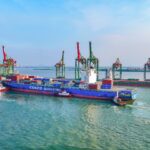

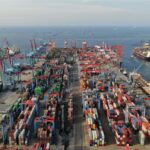
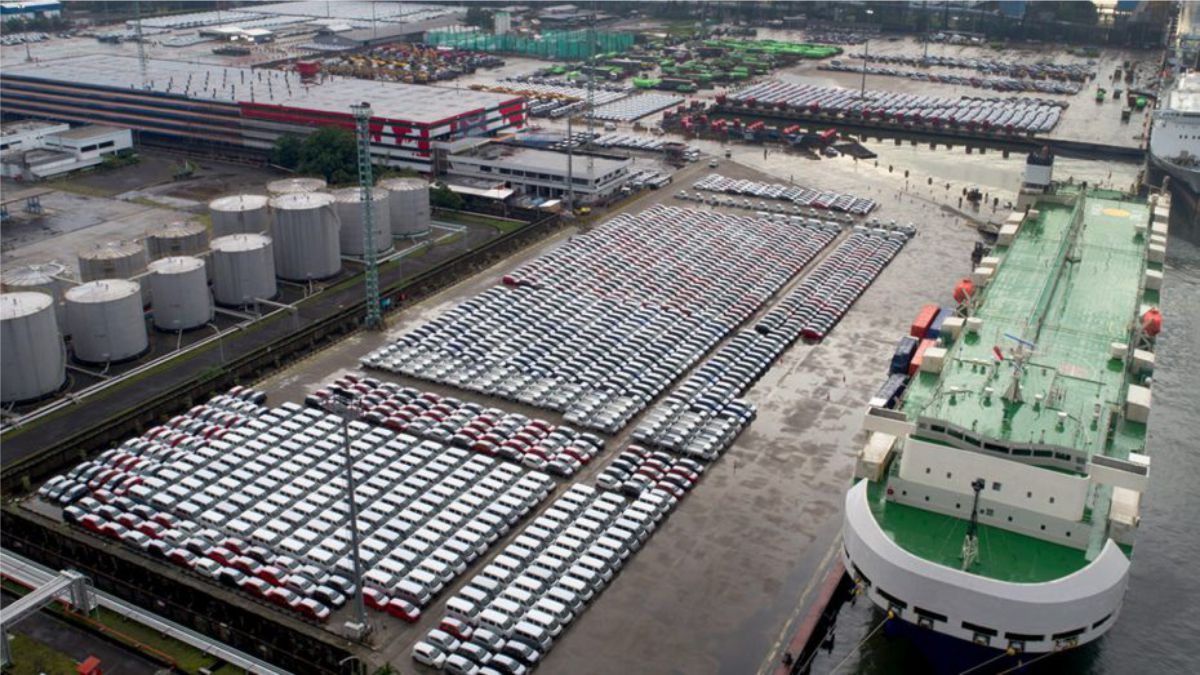
Indonesia’s leading car terminal operator PT Indonesia Kendaraan Terminal IKT (IPCC), comes with a new tagline – ‘beyond the gate – mirroring the corporate mission to support an ‘end to end’ automotive distribution, thus keeping the national automotive industry growth.
After hit by the COVID-19 pandemic, the automotive industry has been recovered. The automotive industry production proved the recovery has occurred since the end of last year (2021). According to the automotive industry association GAIKINDO, the Indonesia CBU (Completely Built-Up) production in 2021 grew 61.36% yearly to 890 thousand.
Such increasing production has positively impacted the IPCC’s productivity and financial performance. In 2021, the CBU handled by IPCC lifted 35.34%, equaling 53.41% of total national production. This increasing production has helped the company’s financial performance to be ‘back in the black’ from the ‘red record’ in 2020.
For information, amid the COVID-19 pandemic outbreak, the automotive industry market dropped significantly in 2020. The national automotive production (CBU) in 2020 dropped 43.97%, to 551,426 units, from 1,045,666 units in 2019, according to GAIKINDO.
This results in a drop in IPCC’s volume during the year. IPCC suffered a 23.17% volume drop, from 450,826 units (2019) to 351,141 units (2020), or more than 63.68% of total national production. The IPCC export also dropped in 2020 by more than 29,78%.
A good recovery trend has continued this year, resulting in increased IPCC production. Indonesia’s CBU exports of various brands and models, for example, rose 35% in the first half of this year (H1 2022) compared to the pandemic period (H1 2020). It also has exceeded the pre-pandemic level of H1 2019.
This has impacted the growth of IPCC production, including export, as the IPCC terminals handled over 50% of the total national CBU export. IPCC data shows that the export volume of CBU in H1 2022 reached 142,155 units, up 35% from H1 2020, which accounted for 105,082 units.
“This certainly builds optimism for us. This is excellent news as a terminal operator for the export-import of cars and other heavy vehicles. This condition also shows that the Indonesian automotive industry is back on the right track,” commends IKT/IPCC President Director Rio Theodore Natalianto Lasse.
Like last year, car maker Toyota still dominates the highest number of car exports from Indonesia in the first half of 2022, followed by Suzuki, Mitsubishi, Hyundai, Isuzu, Honda, Daihatsu, Nissan, Mazda, VW, and Geely.
In H1 2022, Toyota exported 81,706 CBUs via IPCC Tanjung Priok. PT Suzuki Indomobil Motor, which produces Suzuki brand cars in Indonesia, exports about 23,762 cars of various models to various countries. Meanwhile, PT Krama Yudha Tiga Berlian, a Mitsubishi car manufacturer, exported 18,559 CBU cars to multiple countries.
The export surge occurred in Hyundai brand cars from PT Hyundai Motor Indonesia, which rose significantly compared to last year. The famous car brand from South Korea, in the first half of 2021, only exported 214 CBU cars. However, in the first half of 2022, it soared by exporting 11,385 cars to various countries.
“With facilities and services that continue to improve, including network to various IPCC satellite terminals, we hope that the number of exported vehicles will continue to increase until the end of the year,” said Director of Business Development Agus Hendrianto.


Revenue Growth Higher, Cost Management Better
The increasing productivity has helped the corporate financial growth, both in revenue and profit. IPCC revenue in H1 2022 reached Rp302.34 billion, increasing from Rp233.28 in H1 2021. IPCC booked a profit of Rp45.42 billion, growing significantly year on year from Rp14.83 billion in the same period of last year (H1 2021).
Some conditions support IPCC to enjoy this satisfying financial growth. First, the decrease in the pandemic impact encourages the continuity of automotive industry activities. “As the pandemic slows down, the automotive industry is more productive, increasing production volume, thus giving more volumes to the terminal,” he said.
“Since last year until the first half this year, the loading and unloading activities have normally been running following the ease of pandemic condition, thus helping our productivity which is much higher than 2020,” added Director of Operation and Technic, Andi Hamdani.
Second, the improved performance during this period was also caused by the lower cost growth and the significant revenue increase. “The growth of cost (especially cost of revenue) was lower than the growth of revenue, so the IPCC has room for lifting the profit,” said Director of Finance & Human Capital, Sumarno.
Conversely, Sumarno further said that the growth of general & administrative expenses looks not too high. It was shown that the Management could manage the cost very well.
Third, the depreciation cost has increased due to the implementation of PSAK 73 of the leased asset (rental of land, tools, and vehicles), which was amortized by the straight-line method on January 1st, 2020. In addition, IPCC also has recorded the additional assets so that they include in the depreciation calculation
Fourth, there was a provision for impairment as the impact of PSAK 71. This account is related to trade receivables in which the Management believes the allowance for impairment of trade receivables is adequate to cover possible losses from uncollectible accounts.
Fifth, an increase in Financial Expenses due to the interest on the leased asset caused the implementation of PSAK 73, which affected the depreciation and interest of the leased asset.
Sixth, the Management makes improvement efforts in trade receivables collectability by implementing the allowance for impairment of trade receivables where is adequate to cover possible losses from uncollectible accounts.
“The combination of those factors has supported us in this position, in which, in general, we are much better than last year,” said Rio.
Sumarno also explained that until the end of Aug 2022, IPCC had absorbed Rp 24.31 billion capital expenditure (Capex), or more than 98.62% of the total Capex of 2022 contracted to Rp24.65 billion.

Beyond the Gate
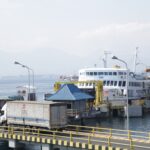
Such increasing performance during the period was also contributed by IPCC penetration to handle satellite terminals. Soon after the Pelindo merger (October 1st, 2021), two terminals, Belawan Terminal & Makasar Terminal, were operated by IPCC, contributing significantly to IPCC’s income sources. The next targets are Tanjung Perak (Surabaya), Balikpapan, and some other ports in Kalimantan and Nusa Tenggara.
In addition, to expand its market coverage through penetration to the new satellite ports, IPCC targets to intensify its services in the automotive industry. IPCC targets to support an ‘end to end’ automotive distribution, thus supporting the national automotive industry growth, the spirit behind its new tagline of ‘beyond the gate’.
With the new logo and tagline “Beyond the Gate”, IPCC keeps looking for every business opportunity that can grab revenue creativity & revenue enhancement, such as Car(go) Distribution Management, CCS, and others.
In realizing the planning, the IPCC will stand on four strategies: first, integration strategy covering the Integrated “Beyond the Gate” end-to-end services, Data integration for continuity of Flow of Goods-Data-Mone, Business Process (order to cash, procure to pay, build to demolish.
Second, expansion strategy. This means that IPCC will expand to other potential cars/RoRo terminals (horizontal), expand to other businesses inside the automotive ecosystem (vertical), and collaborate with other players (global).
Third, the digitalization strategy is done through port operations and Management, automotive distribution management and ecosystem, analytics, big data & business intelligence for future business.
Fourth coordination. The coordination is done by strengthening the coordination within Pelindo Group according to the Post Merger Business Model.
This article was published in ISG Print Magazine October 2022 Edition.