






By Bambang Sabekti
I support the move by Danantara and Pelindo to reduce the number of companies in the Pelindo Group from 41 to 24. Pelindo is Indonesia’s state-owned port operator, while Danantara is the state investment agency that now oversees it. The step is necessary and long overdue.
But reducing the number of companies is not the ultimate goal. The bigger goal is to simplify and integrate the business itself.
Cutting the number of companies should be the starting point for removing layered structures, eliminating overlapping activities, and creating a more integrated business. This is the real test of Pelindo’s transformation, five years after four state-owned port companies were merged into one.
According to the official statement, 17 entities are being restructured through mergers, consolidation, divestment, and liquidation. Eleven have completed their corporate actions, while the remaining six are targeted for completion by December 31, 2026.
Officials have described this as the first stage, with business model reform to follow. That sequence makes sense. But the second stage must not be delayed. Otherwise, Pelindo could simply have a smaller corporate structure operating in much the same way as before.
Success, therefore, should not be measured only by how many companies are closed or merged. There must be clear criteria.
Companies should be merged when they conduct similar businesses, serve the same markets, use similar assets, and maintain duplicated support functions. Conversely, companies may need to remain separate when their markets, strategic partners, business models, or investment requirements are genuinely different, or when regulation or strategic interests require separation.
A separate legal entity should have a clear economic or strategic rationale. History alone is not enough.
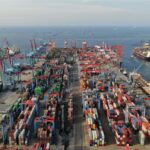
Container terminals provide a good example. Pelindo Terminal Petikemas oversees several entities in the same line of business, including IPC Terminal Petikemas, Terminal Petikemas Surabaya, and Terminal Teluk Lamong. IPC Terminal Petikemas itself operates terminals in Tanjung Priok, Palembang, Panjang, Jambi, and other locations.
All of these terminals are needed because Indonesia requires a port network across its regions. What needs to change is the corporate structure behind them.
These activities should be managed as one integrated business, rather than through multiple layers of separate companies. Terminals can continue to operate according to their local characteristics, but the number of legal entities does not need to match the number of terminals.
The same principle applies to corporate functions. Procurement, information technology, human resources, finance, commercial activities, and asset management do not need to be duplicated across multiple companies.
Integrating these functions can reduce costs, accelerate decision-making, and strengthen accountability. The objective is straightforward: fewer layers, faster decisions, lower costs, and clearer accountability. If a merger does not produce these outcomes, the structure should be reconsidered.
Of course, not every terminal company can be treated in the same way. JICT and NPCT1, for example, have partnerships with foreign strategic partners. Their restructuring requires a different approach from companies fully controlled by Pelindo.
Existing agreements, partner rights, and investment commitments must be respected. Restructuring in such cases needs to be more carefully designed than a merger of wholly controlled internal entities.
Pelindo is also changing its management model from “strategic holding” to “active management.” In the past, the parent company primarily set direction and supervised its subsidiaries. Under the new model, it will manage and integrate business activities more directly.
This is an important shift. But it will work only if the roles of the holding company, regional units, business lines, and operating companies are clearly defined. Everyone must know who manages, who decides, and who is accountable for results.
Otherwise, active management could simply add another layer on top of the old structure.
The number 24 is not sacred. It should be the outcome of an efficient business design, not a target that must be defended at all costs.
If further review shows that some entities can still be merged, the number should be allowed to fall. If certain entities must remain separate because of regulation or strategic partnerships, they should remain separate.
What matters is that the structure follows clear business criteria, not a predetermined number.
For port users, however, the number of Pelindo companies is not the issue. They want competitive costs, fast service, and certainty.
That is where the real test of transformation lies: Are ship and container waiting times getting shorter? Are logistics costs becoming more competitive? Is service becoming more reliable?
If the answers are yes, the restructuring is delivering its purpose.
That is why Danantara’s move should be seen as an opportunity to take Pelindo into its next stage of transformation.
The first five years were about unifying the companies. The next five years must be about unifying the business and its ecosystem.
If that happens, Pelindo will not merely be leaner. It will be stronger, more integrated, and more competitive.
*******
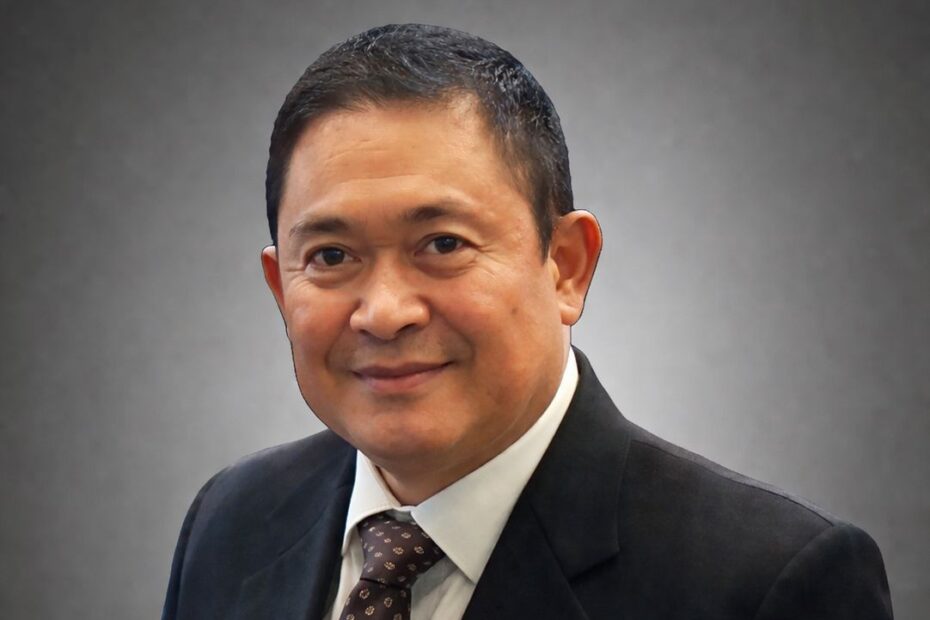
About the Author: Bambang Sabekti is a graduate of Business Administration at the University of Indonesia and holds a Master of Management from Airlangga University. He has more than three decades of experience in ports, shipping, and logistics.He previously served as Country Director Indonesia at American President Lines (APL) and APL Logistics, and as Senior Advisor to the Board of Directors of New Priok Container Terminal One (NPCT1). In 2017, he was a candidate for Director General of Sea Transportation in the Ministry of Transportation’s open selection process.He has served as a judge for journalism awards for Pelindo’s anniversary in 2023 and for PT Jasa Armada Indonesia Tbk’s anniversary in 2026.His articles and opinion pieces have been published in Kompas.com, Katadata, RMOL, Inilah.com, Politik Indonesia, Pikiran Rakyat, Pontianak Post, Radar Banyuwangi, The Shipping Gazette, Logistiknews, Hotfokus.com, and SitusEnergi.com.