

Efforts to realize the initiation of TTBS (Terminal and Truck Booking System) adoption for Tanjung Priok have been continued. How important is this system to unlock traffic bottlenecks at Indonesia’s leading port?
After successfully adopting and running some IT systems toward port digitalization, Indonesia’s leading port Tanjung Priok commit to adopting more and more digitalization systems in a bid to unlock the acute bottlenecks of traffic jams and congestion at the port on one hand while on the other hand, this is to realize its vision to be a digital port and smart port and to support the national strategic program of National Logistics Ecosystem (NLE).
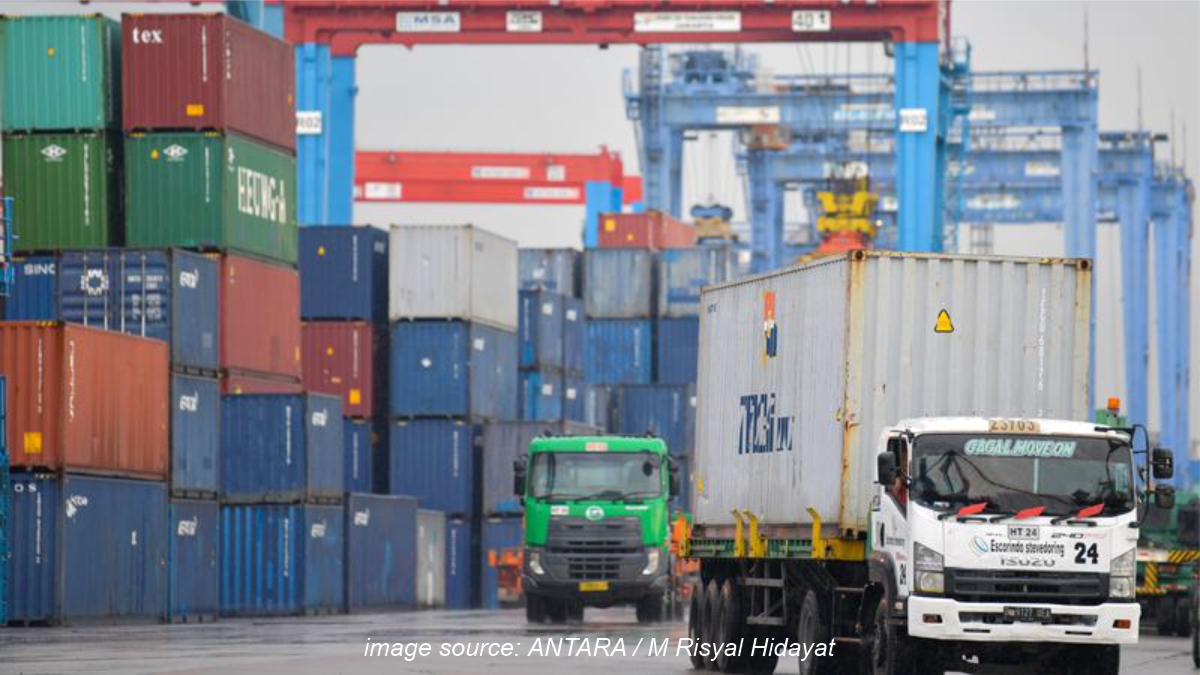
As the reports have said, traffic jams both inside the port and along the port’s access have always stayed at the top of bottlenecks for the fluent flow of goods at this leading port.
In general, congestion of container trucks at the terminal is an unforeseen phenomenon worldwide. There are so many causes, including the abundant of trucks operating in the terminal at that time, unanticipated Turn Round Time (TRT) of the truck by terminal operators, low utilization of assets vehicles where there are empty slots contained in the container truck chassis, and the underutilized truck journey.
Congestion impacts inefficiency in the operation process, and the delay in the truck terminal will result in an additional cost to the goods to the customer.
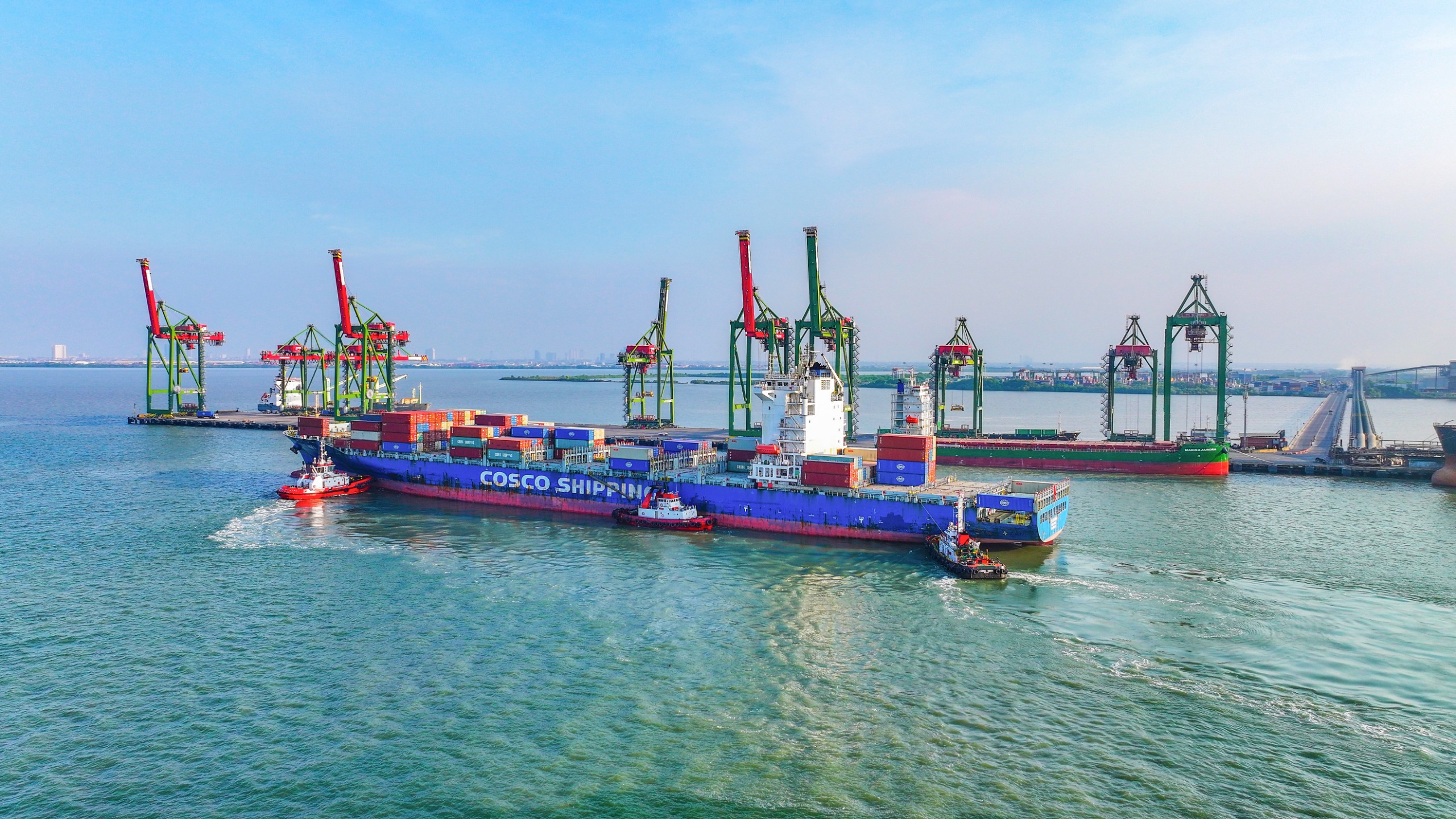
Tanjung Priok, Indonesia’s busiest port, also faces those issues. According to data, over 21,000 trucks serve the port, with more than 17,000 trucks moving to/from the port during peak days.
Such high numbers during peak days are because there are high numbers of container receiving and delivery on certain days, usually from Wednesday to Friday, while there are lower numbers on other days. Another problem is that most trucks run only one-way work, meaning they only serve container receiving or delivery (single trip). Data says the number of container trucks carrying one container in a single trip is more than 80%.
According to ILCS, the average peak time of the Tanjung Priok reaches more than 17,047 per day or more than 696 trucks per hour. This creates serious congestion and traffic jam at the gates and access roads during peak times.
Such condition impacts the congestion at the gate and access road and the production of terminal yards and berths. This impacts the slower process of stevedoring and loading/unloading at the yards and berths during peak times. The truck around time (TRT) is longer. Data says TRT at Priok terminals reached 60 minutes on average.
Lack of parking loops (buffer zone) and poor attitudes of truck drivers are other problems that make the condition more and more serious. Priok has its buffer zone at the west part, but the fact proves that most containers to/from Priok come from and destine to the east part, reaching more than 60%. Meanwhile, truck drivers always park their trucks along the inner roads.
TTBS a Solution
The port stakeholders, including the port regulator and operators, have taken key steps to unlock those bottlenecks – regulation enforcement, infrastructure improvement, and adoption (implementation) of new systems.

Improvement of inner roads, development of toll access directly connecting the terminals with hinterlands, and integration of gates in/out between some terminals are some examples of infrastructure improvement efforts that the port has taken.
The port has also adopted some systems to overcome the issue. The newest is the implementation of STID (single Truck Identification Data). The port also commits to adopting other systems, especially the TTBS (Truck and Terminal Booking System).
“We all know that Tanjung Priok Port has previously implemented STID (Single Truck Identification Data). STID is a basis for adopting further systems, including the TTBS we have initiated for the next efforts. The TTBS is a follow-up of this STID. TTBS is not only an effort to unlock the problem of congestion and traffic jam at the port but further to support port digitalization, NLE, thus finally toward a smart port,” said Wisnu Handoko, Head of Tanjung Priok Port Authority (OP).
Wisnu admitted that there had been some systems that Tanjung Priok has adopted. “Digital port operating systems are known today, such as INAPORTNET, CEISA, TOS, VMS, Auto Gate System, and the newest STID are continuously being developed.”
“After STID, the next step is TBS (Terminal Booking System) which aims to regulate the arrival of trucks that will carry receiving and delivery cargo to be more organized and not centralized in the one-time slot,” Wisnu said.
“Many countries have implemented the TBBS concept. Tanjung Priok port will implement it soon. Of course, it still needs to carry out the stages in the form of a pilot project starting from planning, drafting regulations, developing digital systems, testing, socializing, and implementation. Referring to the implementation of the STID registration, it took almost a year for the system to run normally,” said Wisnu.
Expected Benefits
Terminal/Truck Booking System, sometimes called truck appointment system – a piece of software that allows terminal operators to schedule the arrival and movement of vehicles in the terminal has been running well in some terminals/ports worldwide.
Some countries have adopted a similar system with different names, including:
- Vehicle Booking System (VBS) Long Beach Port, California, USA;
- Truck Appointment System (TAS) Sidney Port, Australia;
- Terminal Appointment System (TAS) Haropa Port, France;
- Tractor Appointment System (TAS) Hongkong Port, Hongkong;
- Terminal Appointment & Booking System (TABS) Manila Port, Philippines;
- Truck Appointment Management System (TAMS) PSA Antwerp Port, Belgium.
According to some sources, the adoption of this system at some global ports worldwide has significantly increased terminal productivity and truck utilization. It optimally arranges shipping container loading and dropping, improving internal asset utilization, avoiding congestion, increasing throughput capacity, decreasing emissions, and enhancing security.
Chris Harnet, one of the speakers at the recently TTBS FGD (forum group discussion) conducted by OP Priok, explained that adopting the Truck Appointment System (TAS) at Sidney Port benefits truck utilization and terminal productivity. The truck utilization, he said, was up to a 5x increase and TTT down from 91 to 15 minutes. He said the terminal productivity increased by up to 50% dwell time reduction and up to 47% increase in yard utilization.
Due to the VBS implementation in all four major ports around Australia, these major efficiency improvements were realized – dwell time decreased from 5 to 2.8 days. Also, terminal capacity increased from 800,000 TEU to 1.1 million TEU, truck turn time decreased from 81 to 25 minutes, and unproductive yard shifts decreased by 4000 per month.
The Belgian Antwerp Gateway Terminal adopted a VBS to address truck congestion. They also created “virtual buffer” queues and used a call-up principle. So, drivers wait for their turn remotely, monitor the queue on the visual board, and get notifications when they can enter the facility. As a result, truck lines were eliminated, and CO2 emissions were reduced by 730,000 kg within the first year.
Los Angeles and Long Beach, housing some of the busiest U.S. port terminals, stepped towards automation and started demanding haulers to make appointments in 2019. In December 2019, the turn times of automated terminals got to the lowest point since 2014 (30 and 35 minutes in different facilities), while the turn times for the manual terminals ranged from 52 to 92 minutes.

Implementing the truck appointments systems in two international terminals in Manila, Philippines, helped increase container throughput by 55 percent and allowed haulers to run twice as many trucks as before.
Learning from the successful adoption of the system at some ports and terminals worldwide and the benefits it brings, many of Indonesia’s port stakeholders appreciate and support the adoption of this TTBS but call for well preparation and collaboration among all stakeholders.
Adil Karim, Chairman of Indonesia Logistics and Forwarders’ Association Chapter DKI, affirmed that conceptually adopting TTBS will overcome the old acute problems of Priok congestion and traffic jam. He said this system would minimize the traffic jam to/from the problem, reduce emission (pollution), better manage trucks coming to the terminal, and create logistics efficiency.
Key Steps
Though supporting the adoption of this system because of its benefits, the port stakeholders call for comprehensive preparatory steps, including its legal (regulatory) basis, infrastructure improvement, IT (software) preparation, and education to improve attitude (truck drivers’ attitude).
Adil urges the port regulator (OP) and port operator (Pelindo) to finalize the direct access from the west buffer to the terminal, build another buffer in the east part, and build an up-to-date IT system.
In addition, Adil also calls for the involvement of cargo owners and consignees in the TBS preparation.
“Build those infrastructure is necessary, and we hope to involve any port stakeholders to realize this initiation (TBS),” he said.
The container terminal operators meanwhile call for preparing more qualified truck drivers (competencies) to make this TTBS program successful.
“Before heading to TBS, we need the identity of a competent driver to enter the terminal. Why can the TBS succeed in other countries? It is because they have prepared qualified drivers,” said TPK IPC Commercial and Business Development Director David P Sirait.
This article was published in ISG Print Magazine July 2022 Edition.