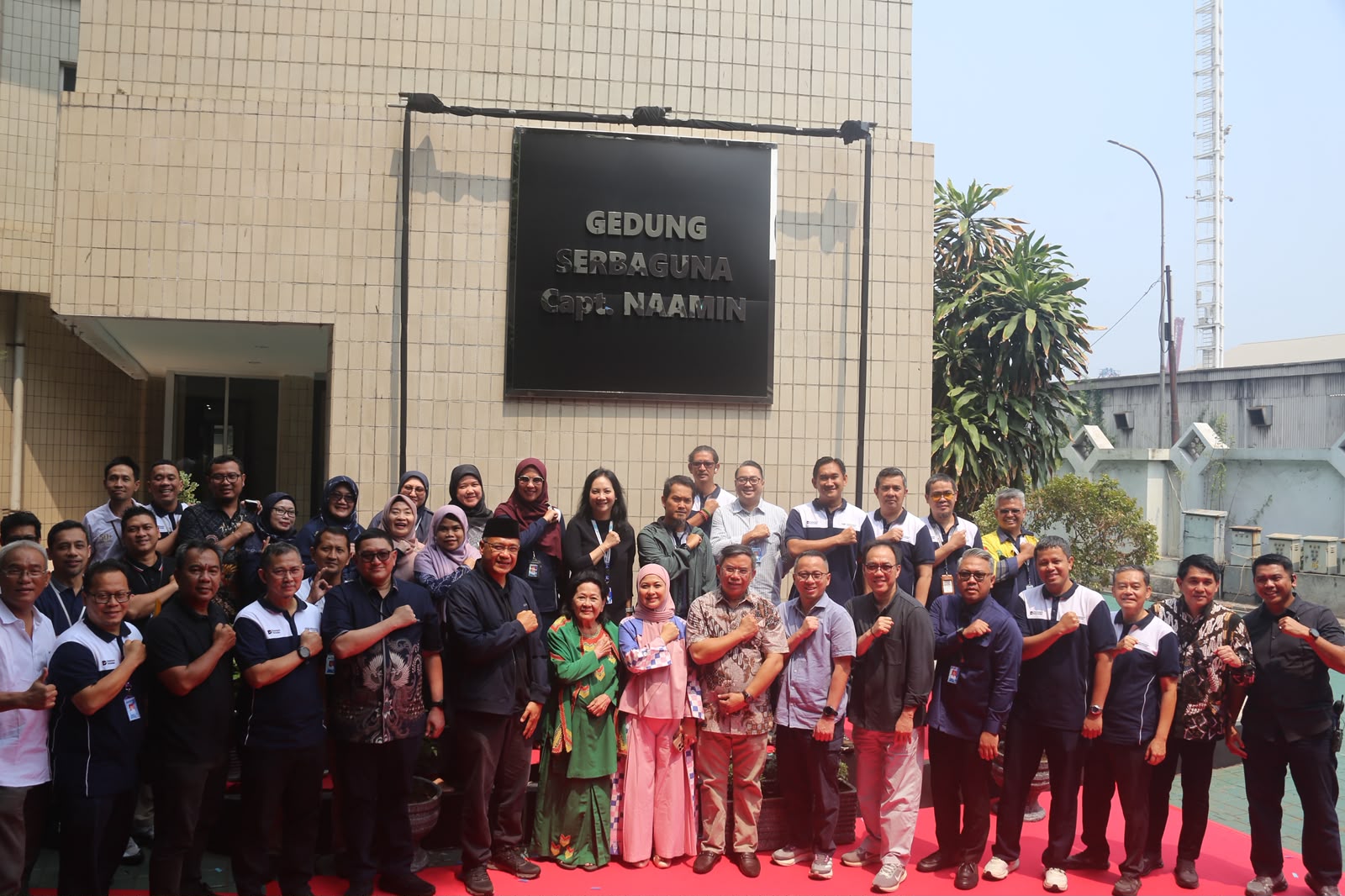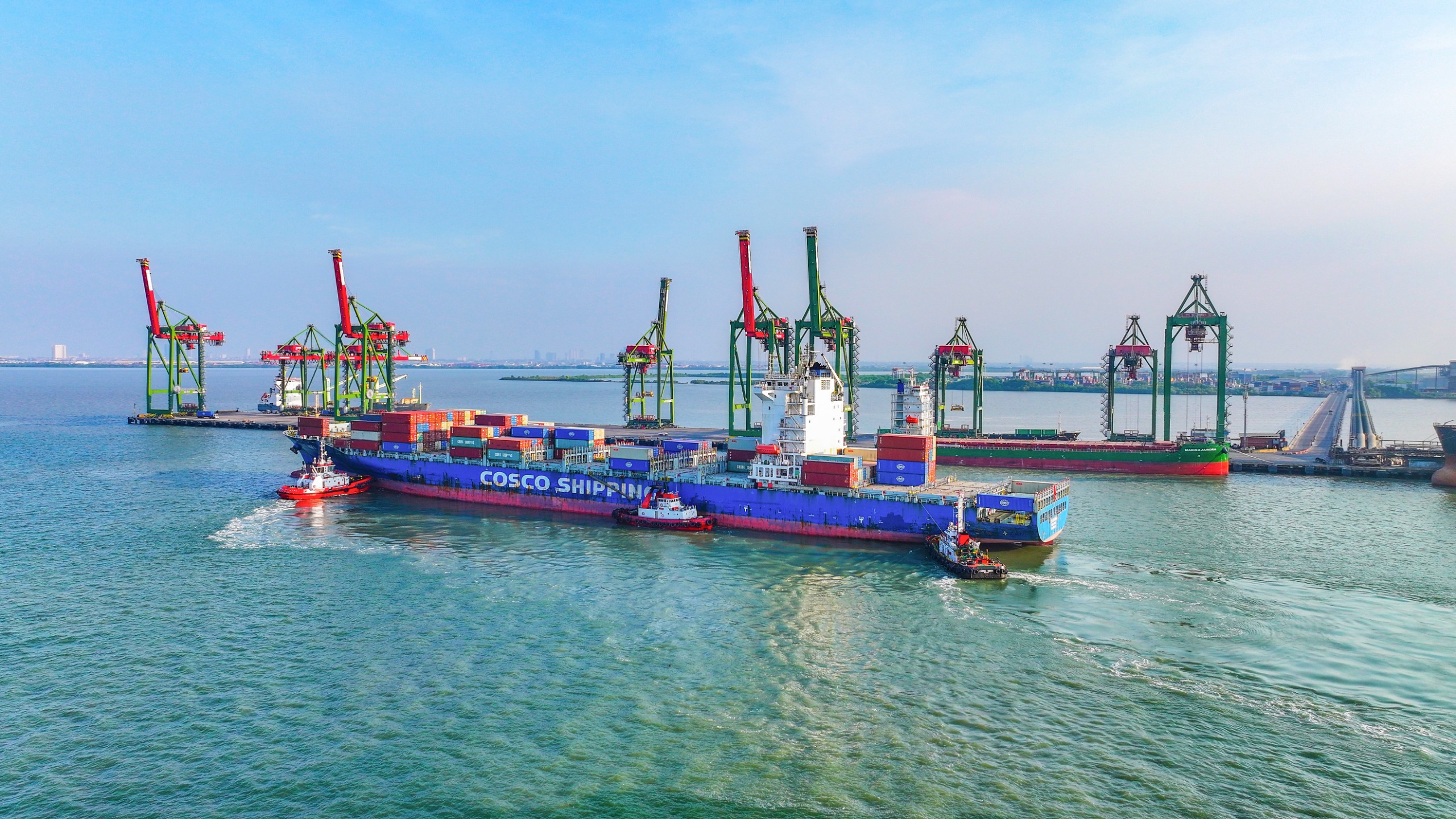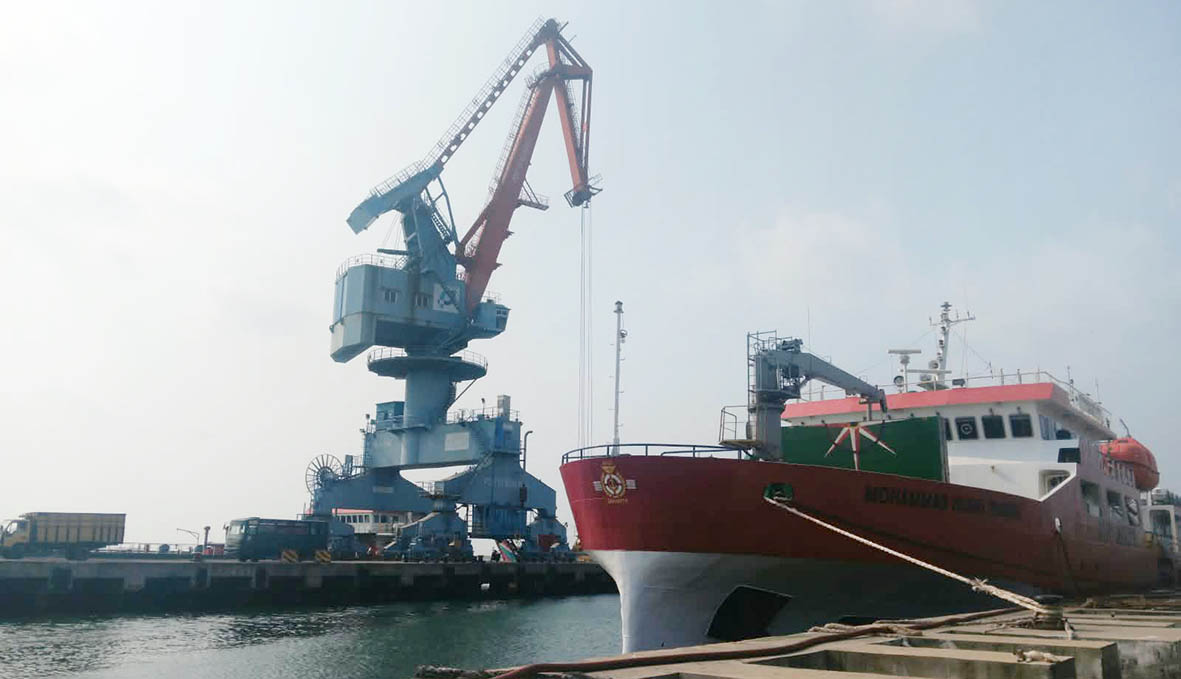



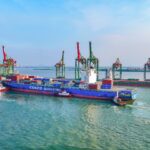


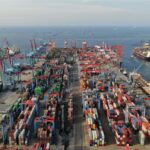

Port of Tanjung Priok has proven its vital role as a gateway to Indonesia’s international trade. But, traffic jam inside is concluded as an acute problem. Why and what are solutions to unlock it? Tanjung Priok General Manager Guna Mulyana and related key stakeholders talked during a recent dialogue on solving the problem of land transportation inside the port.
The problem of traffic jams and congestion at Tanjung Priok is always a corridor talk among stakeholders. It can be understood since heavy traffic always occurs approaching the weekend and nearly the closing time. Beginning Wednesday to Friday, many container trucks and trailers are parking along the roads inside the port, especially in front of Terminal III, waiting for entrance. It sometimes makes a total jam.
Many FGDs (forum group discussions) have been conducted to find the solution. In contrast, the port operator PT Pelindo II/IPC has often presented its programs for the answer, but no significant results have been found yet. Up to now, the heavy traffic and traffic jams still took place approaching the weekend, the time when the ship calls reach their peak time.
This situation justifies that port performance plays a vital role in the country’s poor logistics performance. As information, many studies, including the ones conducted by the World Bank, have said it. The poor port performance is always blamed as one of the causes why Indonesia’s logistics cost is still very high, which is, according to the Indonesia Logistics and Forwarders Association (ALFI/ILFA), reaching 23.6% of the GDP, 40% of the retail price.

Compared to neighboring countries, including the ones in ASEAN countries, Indonesia’s logistics cost to GDP is the highest, higher than Vietnam (15%), Thailand (13,2%), Malaysia (13%), and Singapore (8,1%). Globally, though the World Bank released an increase in Logistics Performance Index (LPI) from 63rd (2017) to 46th (2018), in ASEAN scope, it was down to fifth, from fourth, after those countries mentioned above.
Among the causes of this poor logistics performance, ports’ performance is always mentioned as one of the leading causes. Some World Bank studies have named ports as a bottleneck in the Indonesian logistics chain, hampered chiefly by inadequate infrastructure and poor connectivity both among the ports and between ports and their hinterlands. However, both burdensome regulations (in trade processing and investments) and low labor productivity play a role.
The quality of port infrastructure across the entire country is a weak factor in the overall country’s competitiveness. Detailed work on 18 ports throughout Indonesia by the World Bank confirmed numerous infrastructure gaps. A key reason behind under-investment in the country’s port infrastructure is the lack of clarity on the respective roles of the port landlord and the port operator.
Cumbersome regulatory requirements and inefficient procedures make trade processing a weak link in the logistics chain. Indonesia ranks 105 out of 189 national economies in the “Trading across borders” indicators, which are assessed within the World Bank’s “Doing Business” project, a successful global effort to benchmark countries against each other’s performance vis-à-vis ease-of-business.
Problems from Upstream to Downstream
Tanjung Priok Harbour Master Wisnu Handoko affirmed the problem (traffic jam), saying the traffic jam takes place both inside the port and at the access to the port. He also said that there is a correlation between high ship calls at the seaside and the traffic jam at the landside. This correlation means that traffic jams always arise when ship calls are increasing.

Meanwhile, the General Manager of Tanjung Priok Port Guna Mulyana named at least four factors potentially creating a traffic jam at the port. First, Tanjung Priok is Indonesia’s biggest port and the gateway of Indonesia’s international trade. Guna said that more than 50% of Indonesia’s trade volume, both oceangoing and inter-island are via this port.
Second, Tanjung Priok is fed by busiest hinterlands of West Java and Jakarta agglomeration city of Jabotabek (Jakarta, Bogor, Tangerang, Depok, Bekasi, and Tangerang). These hinterlands contribute a high volume of cargoes from industrial production.
Third, the increase of ship calls and loaded/unloaded cargoes at the port contribute to the traffic jam at the port. And fourth is the habit of delivering cargo (containers) from the hinterland to the port when approaching the closing time. This habit results in a cumbersome road burden during the days of closing time.
Amelia, Chairwoman of Indonesia Exporters/Importers’ Association (IEA), affirmed this fourth factor, saying the process in the industry has forced exporters to send cargoes to the port approaching the closing time.
Chairman of Trucking Companies’ Association (Aptrindo DKI Jakarta) Sudirman explained that the road congestion is also contributed by the significant increase in the number of trucks on the one hand. In contrast, the road width was static or had no expansion for the last year’s teens. “Twenty years ago, there were only 8,000 trucks doing business at this port (Tanjung Priok). Now, it has been reaching 20 thousand units,” he said.
Earlier, Aptrindo Headquarter (DPP) Chairman Gemilang Tarigan underlined that around 60% of the trucks have been over 20 years old, making them less productive.
Ogi Haris from Stevedoring Companies Association (APBMI Jakarta) adds some potential causes contributing to land road congestion. He named free time containers and a lack of storage yard that could create land congestion.
Comprehensive Solution, From Industry to the Port
Because of those multifaceted causes of this issue, all stakeholders are calling for a comprehensive solution. Amelia, IEA Chairwoman, calls for a complete solution at the downstream (Port) and starting from the upstream (Industry). “We need a solution from the industry process. The industry stakeholders including industry and trade regulators (Ministries of Industry and Trade and the Customs Authority) should reform processes at the industry and trade permits.”
“What I mean is how we can provide industry products to be ready not approaching the closing time at the Port. This is not easy since our Industry depends on the readiness to import raw materials. This is a very complicated issue, of course. So, it needs a comprehensive solution at any aspects, from upstream to downstream, from the Industry up to the Port,” she said.
Relating the downstream aspects, Wisnu Handoko recommends some steps to overcome the problem of traffic jams at Tanjung Priok. First, digitalize the truck. Second, optimize the existing buffer area and provide additional buffer area, if probable. Third, manage the trucking system (movement) both within the Port and from/to the Port from/to stuffing depo, and fourth, synchronize the transportation with National Logistic Ecosystem.
Adil Karim, Chairman of Indonesia Logistics and Forwarders’ Association Chapter Jakarta (ALFI/ILFA DKI), asks for some resolution to this issue. First, evaluate the closing time system and practice and terminal booking & tracking truck system. The closing time should be referred to recommendations from related stakeholders, including cargo owners, shippers, consignees (forwarders), truckers, shipping lines, and so on.
“We hope for the closing time policy and the terminal booking & tracking truck system to be carried out through a comprehensive study involving all stakeholders,” he said.
Second, provide an additional buffer area at the eastern part of Tanjung Priok Port. “Apart from the existing west side, another buffer area is also needed on the east side of Tanjung Priok Port. This is because around 70% of export-import originated from Bekasi to Cikampek and so on.”
The existing buffer area, which is located in the west part of Tanjung Priok, according to Adil, has not been optimal yet due to its unconsidered location. “Therefore, if the buffer area is only on the west side of the port, goods from the east to the buffer area in the west will still trigger congestion in the Tanjung Priok Port area,” Adil said.
Third, build a direct access road to the existing buffer area from the Port. According to Adil, since there is no direct access, trucking prefers to park inside the Port while waiting for loading or unloading. “This is potentially creating congestion at the port,” he said.
Fourth, soon adopt the Single Truck Identity Document (Single-TID) that has been prepared by the Port Authority and Port Operator IPC Tanjung Priok. “This is to fasten the process of the truck entrance at the gate-in,” said Adil. Aptrindo asks for government intervention in providing incentives for truck fleet rejuvenation.
Aptrindo has proposed to the government to make it easier for trucking companies to import new trucks to rejuvenate their fleets. “Provision of tax stimuli and import duty is expected,” said Tarigan.
IPC Priok Breakthrough Steps
Tanjung Priok Port Operator IPC Priok has made some breakthroughs and will continue some strategic programs to overcome this issue. Guna Mulyana and Acting Head of Tanjung Priok Port Authority Inayatur Robbany name some key steps, including providing a buffer zone, traffic management system to the buffer zone, auto-gate pass, Single-TID, and access road to the industrial centers.
Guna explained that in the last four years, Tanjung Priok has been adopting auto-gate passes at the entrances of the port, including at Gates 1, 8, and 9.
IPC Priok has also provided the buffer zone in Ex-Inggom (yard). Though it has not been optimum yet due to its location and unavailable direct access, this buffer has been in operation.
“This buffer has been ready. We will continue to support its optimum operation by building a transportation management system and direct access to the buffer zone to the port.”
“We are ready to finance the construction of direct access to this buffer, but some aspects are out of our control,” Guna explained, expecting other parties’ support to realize the program.
Guna, amended by Inayatur Robbany, also explained that the Single-TID would be adopted soon this month (April). “This Single TID will be able to identify any trucks loading and unloading cargoes both at the terminal and non-terminals,” he said.
IPC Tanjung Priok also planned to deploy a terminal booking system (TBS) in 2021-2022. This TBS will integrate truck data with terminals, thus minimizing truck extended stay at the entrances.
Guna also explained that the IPC also develops the CilincingCibitung (JTCC) Toll Road, strategic access connecting the Port of Tanjung Priok with the main hinterlands of this port. “This JTCC Toll will become a new distribution path to the industrial centers. Hopefully, this will operate soon, thus positively contributing to the congestion problem both at the port and at its accesses,” Guna said.
This article was published in ISG Print Magazine April 2021 Edition.