



As artificial intelligence and digital navigation reshape shipping, Pelindo Jasa Maritim says pilot expertise and safety must remain central to maritime transformation and sustainability worldwide.
As digital systems, artificial intelligence and remote operations reshape the maritime industry, ship pilots are facing a new challenge: adapting to technology without losing the human expertise at the heart of safe navigation.
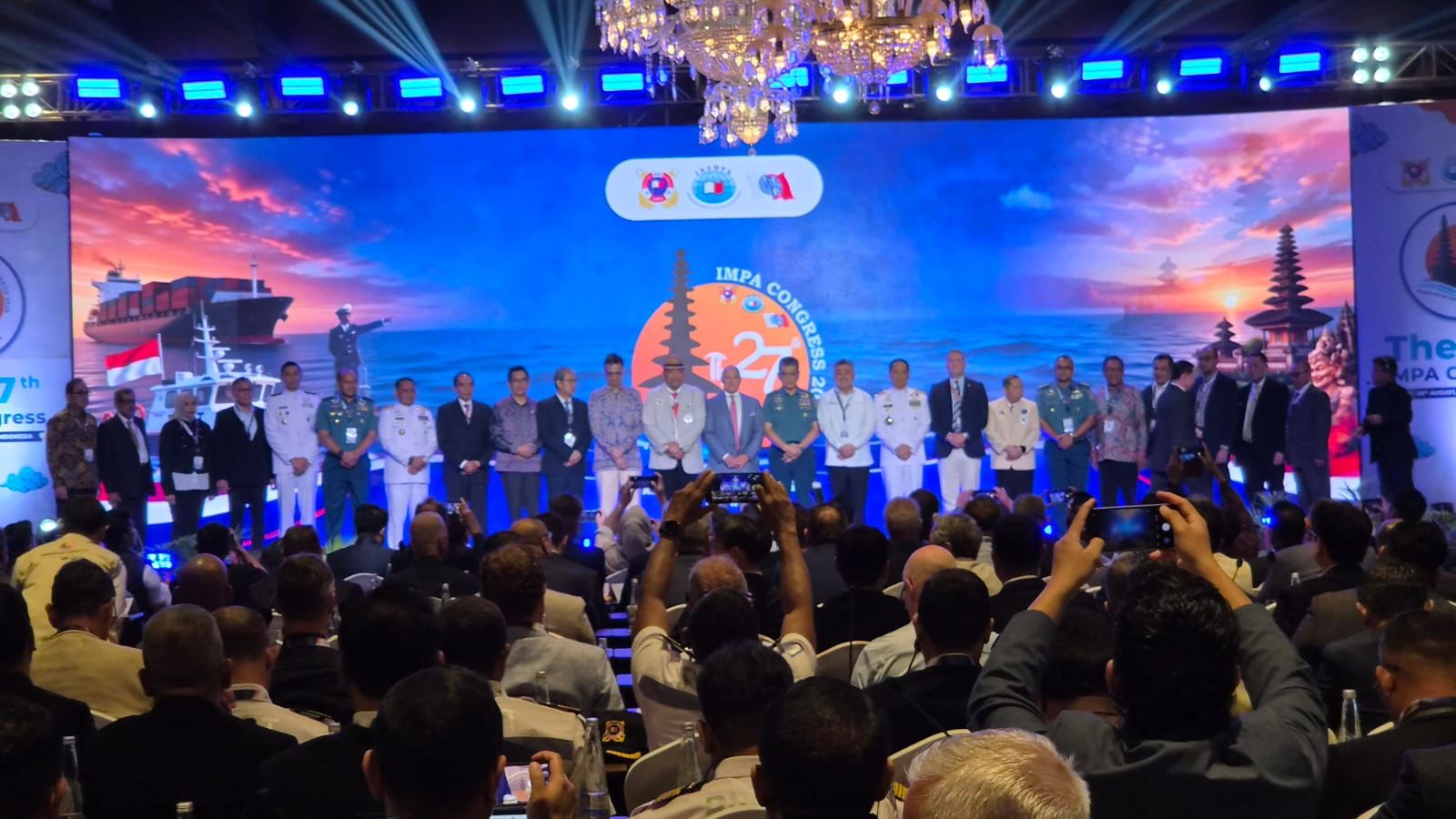
That tension was a central theme at the 27th International Maritime Pilots’ Association (IMPA) Congress, held Aug. 24-28 at The Apurva Kempinski Bali in Nusa Dua, where pilots and maritime professionals from around the world discussed safety, technology, regulation, environmental issues and professional development.
The congress, held under the theme “Navigating Maritime Safety Towards Global Sustainability,” brought renewed attention to how technology can support pilots while preserving their role in managing the risks of navigating complex and often unpredictable waters.
PT Pelindo Jasa Maritim (PJM), a maritime services subsidiary of Indonesia’s state-owned port operator PT Pelabuhan Indonesia (Persero), sent 10 pilots to the congress as part of efforts to strengthen professional capabilities and expose its personnel to international developments in pilotage.
Pelindo President Director Achmad Muchtasyar, Director of Institutional Relations Hendri Ginting, Director of Operations Prasetyadi, Executive Director of Regional 3 Wahyu Widodo and PJM President Director Arief Hermawan also attended the event.
Arief said technological progress should be accompanied by stronger pilot competence and continued attention to safety.
“Pilots remain a crucial part of ensuring vessel navigation safety. Technological advancements are not intended to eliminate the role of the pilot, but rather to serve as instruments for strengthening competence, improving information quality, and supporting pilots in making more accurate decisions,” he said.
Technology was a major focus of this year’s congress, including discussions on remote pilotage, the use of artificial intelligence in maritime operations and safety-critical pilotage activities, and the development of human resources within the profession.
The discussions reflect a broader shift toward what Pelindo describes as “smart pilotage,” in which real-time maritime data and digital tools are increasingly integrated into navigation and operational decision-making.
These technologies include automatic identification systems, vessel traffic services, e-navigation, artificial intelligence-enabled decision support, predictive analytics and digital operational monitoring. Used effectively, they can help make pilotage services safer, faster, more predictable and more sustainable.
But the increasing sophistication of those systems also raises the demands placed on pilots.
Traditional capabilities such as ship handling, navigation, local knowledge and risk assessment must increasingly be combined with digital-navigation skills, data interpretation and the ability to use technology in operational decision-making.
“Technology and human competence must evolve in tandem. The more advanced the systems employed, the higher the level of competence required of a pilot,” Arief said.
“Therefore, training, simulations, certification, knowledge exchange, and exposure to international forums are vital for us,” he added.
One area attracting growing attention is e-pilotage, which uses digital technology to support the pilotage process.
Arief said the adoption of such systems should not follow a one-size-fits-all approach. The characteristics of individual waterways and the risks associated with specific operational areas must determine how and where technology is deployed.
“In high-risk areas or channels, safety remains the primary consideration. Technology must be implemented judiciously, aligned with the specific characteristics of the waters and the results of risk assessments,” he said.
“Under certain conditions, the physical presence of a pilot on board remains essential to ensure navigational safety,” he added.
For PJM, the debate over technology is therefore less about replacing pilots than redefining how their expertise can work alongside increasingly sophisticated systems.
The IMPA Congress also provided an opportunity for PJM’s pilots to exchange operational experience with counterparts from other countries, build professional networks and gain insight into emerging practices in the industry.
“We want the knowledge and experience gained from international forums like IMPA to be brought back to the workplace and add value to our services,” Arief said.
“The ultimate goal remains the same: ensuring that every pilotage service is carried out with a focus on safety, reliability, and professionalism,” he added.
PJM said its participation in the congress reflects its broader effort to strengthen pilot competence, adopt technology in a measured manner and raise safety and service standards as Indonesia’s maritime sector becomes increasingly digital.
The challenge for the industry, as the technology evolves, will be to ensure that smarter systems enhance rather than weaken the judgment, experience and local knowledge that remain essential to safe passage.