
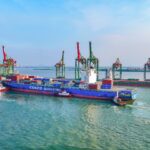



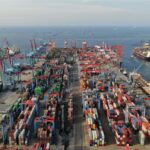
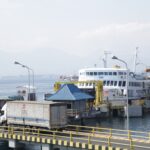

As ships navigate some of the world’s busiest and most challenging waterways, the people guiding them through narrow channels, crowded ports and difficult conditions are facing a rapidly changing maritime landscape.
More than 500 maritime professionals from around the world gathered in Bali this week to discuss how marine pilots can keep pace with those changes, from advances in navigation technology to artificial intelligence and the growing demands of environmental sustainability.
Coordinating Minister for Infrastructure and Regional Development Agus Harimurti Yudhoyono (AHY) opened the 27th International Maritime Pilots’ Association (IMPA) Congress virtually on Monday, Aug. 24, apologizing for being unable to attend the event in person.
The five-day congress, hosted by the Indonesian Maritime Pilots’ Association (INAMPA) at The Apurva Kempinski Hotel in Nusa Dua from Aug. 23 to 28, carries the theme “Navigating Maritime Safety Towards Global Sustainability.”
AHY said the theme reflects the increasingly complex challenges facing the global shipping industry as technological change accelerates and the demand for safer and more sustainable maritime transport grows.
“I hope this congress generates innovative ideas to support shipping connectivity and improve safety,” AHY said.
Guiding ships, connecting an archipelago
For Indonesia, where thousands of islands depend on maritime transport, the work of marine pilots extends beyond guiding individual vessels safely into and out of ports.
Pilotage is closely tied to the country’s ability to maintain connectivity between regions, making the competence and professionalism of pilots an important part of Indonesia’s broader maritime infrastructure.
AHY said strengthening the capacity and role of marine pilots would be essential as the shipping industry evolves.

He also expressed hope that the congress would go beyond the exchange of experiences and produce practical ideas that could strengthen Indonesia’s maritime transport system.
The gathering brings together 214 international delegates from 38 countries, with overseas participation totaling about 333 people. Indonesian participants include marine pilots, government officials, state-owned maritime enterprises, port operators, educational institutions and maritime associations.
Indonesia was chosen to host the congress after the IMPA Executive Committee endorsed its candidacy, followed by unanimous approval from delegates at the 26th IMPA Congress in Rotterdam, Netherlands.
For INAMPA President Pasoroan Herman Harianja, bringing the event to Bali represents both recognition of Indonesia’s growing role in the maritime sector and an opportunity to demonstrate its contribution to the global development of marine pilotage.
The opening ceremony brought together leaders from across Indonesia’s maritime industry, including Liana Trisnawati, chairperson of the Indonesian Port Business Entities Association (ABUPI); Aries Hartoyo, chairman of the Indonesia Ship Agency Association; and Capt. Korompis, secretary general of the Indonesian Stevedoring Companies Association (APBMI).
Technology brings new demands
The role of the marine pilot is changing as technology transforms the way ships and ports operate.
IMPA President Simon Pelletier said pilots remain critical to maritime safety and the quality of public services, particularly when passenger and cargo vessels encounter complex navigational conditions.
But he said pilots must also prepare for new operational realities.
The emergence of e-pilotage, changing conditions at sea and increasing competition in the maritime business are creating new demands on the profession. Maintaining and improving pilot competence, therefore, has become an urgent priority.
The congress is designed to give pilots from different countries a chance to compare those experiences and share practices that could improve pilotage services.
About 25 international speakers are scheduled to address subjects ranging from maritime safety and navigation systems to shipping, port development, human resources, artificial intelligence and maritime business.

Representing Indonesia, Prasetyadi, Director of Operations at PT Pelabuhan Indonesia (Pelindo), is scheduled to speak about the country’s port development.
Alongside the conference, a maritime exhibition brings together domestic and international companies and organizations displaying technologies and products related to vessel pilotage and tugboat services.
Safety meets sustainability
The discussions in Bali also reflect a broader question facing the maritime industry: how to make shipping safer while reducing its impact on the marine environment.
Marine pilots have responsibilities that extend beyond the safe movement of vessels. Their work is also connected to maritime security, environmental protection and the long-term sustainability of maritime transport.
That means pilots must continually update their skills as technology, regulations, market conditions and operational practices change. Technical expertise is increasingly accompanied by the need for communication and other professional skills.
For Indonesia, the congress offers a chance to bring those challenges into an international discussion while highlighting the country’s own maritime ambitions.
From preparation to a global gathering
The journey to Bali began well before delegates arrived.
Preparations for the congress started in early 2025, when Indonesian marine pilots formed a committee to coordinate the event with government agencies, maritime organizations and other stakeholders.
Capt. Agoes Soeryanto, secretary of the congress committee and its public relations officer, said extensive coordination had been needed to prepare for an event of this scale.
He said the congress is expected to help participants strengthen their professional capacity, expand networks and develop new opportunities for cooperation across the maritime sector.
The program also gives delegates a glimpse of Bali beyond the conference rooms. Participants and accompanying guests are taking part in a cultural day featuring several tourist destinations on the island, followed by a gala dinner.
But the main focus remains the future of a profession that operates largely out of public view, yet plays a critical role each time a large vessel enters or leaves a port.
For Indonesia, hosting the 27th IMPA Congress is therefore more than an international gathering. It is an opportunity to connect its marine pilots with their counterparts around the world, exchange knowledge and showcase the country’s evolving ports and maritime industry.
As shipping becomes more technologically advanced and sustainability becomes a greater priority, the message from Bali is clear: the people guiding ships through increasingly complex waters will have to evolve with them.