


The adoption and implementation of the National Logistic Ecosystem (NLE) are believed to improve supply chain management, thus finally creating efficiency in logistics costs and making a faster production cycle.
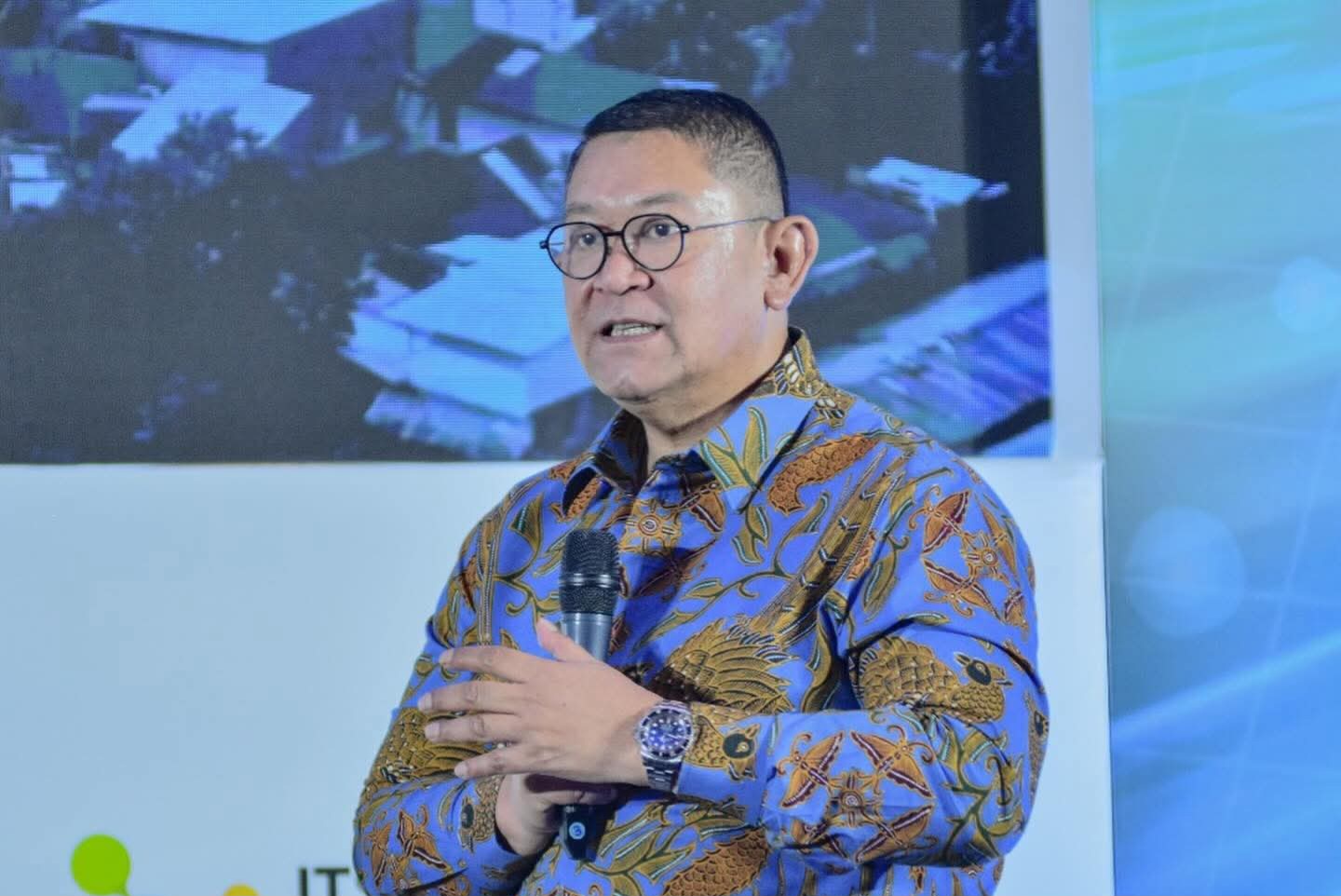
Because of these, national logistics business players are completely and in principle supporting the NLE, according to Indonesia Logistics and Forwarders Association (ALFI) Chairman Yukki Nugrahawan Hanafi.
According to Yukki, NLE is a logistic ecosystem that can streamline the flow of goods and flow of documents from the loading at the port/airport of arrival until the warehouse. The NLE is also a digital collaboration, enabling a logistic business entity to be connected with government and other logistics players’ platforms. In addition, the NLE will help to optimize the Indonesia national single window (INSW) existence.
“We expect the NLE can be adopted by all seaports and airports,” Yukki said but called for its implementation supervision the NLE can run as expected.
According to ALFI, the NLE should also be run at the airports, logistic players, and exporters-importers, and other stakeholders as well. “The NLE should play its big platform in all processes of the supply chain,” Yukki said in a press statement this morning (Saturday, August 28, 2021).
He noted that ALFI with other related stakeholders is ready to provide a constructive recommendation, especially on the NLE application timetable.
“Supply chain is a network between producer and supplier to produce and distribute a product to end-user. This network covers several activities and involves some business players, business entities, and information and other resources as well.”
According to Yukki, under better supply chain management, a company can minimize costs and make its business competitive.
“Hence, we encourage to create a better supply chain management. We believe it can be realized through NLE implementation. So, that is why we call the NLE is not only adopted by the seaports but also airports that handle export-import,” Yukki noted.
To make the NLE run optimal, according to Yukki, it needs integrated infrastructures through collaboration and synergy among key parties like local and provincial governments, Ministry of Public Works, Ministry of Transportation, State-Owned Enterprises (SOEs), and private companies.

In addition, some cargoes/commodities-related institutions like the Ministry of Energy and Mineral Resources (ESDM), Ministry of Trade, Ministry of Industry, and Ministry of Fishery Product, should also be involved in the collaboration.
“Collaboration among all parties is a key to make the NLE run as expected,” said Yukki.
Yukki is so optimistic that this NLE can help to realize the government target in logistics cost to 17% of GDP (gross domestic product) before 2024 if this NLE can run as expected.
Moreover, logistics performance is also a key factor in the economic performance of a country. Further, logistics digitalization is a must in this digital era, in the era of industry 4.0.
“In the industry of 4.0, logistics is not only about moving cargoes, but it is more about moving data from one business entity to other business entities,” he said.
Connectivity
Yukki, who is also Chairman ASEAN Freight Forwarders Association (AFFA), underlined that currently, the data exchange is much faster than goods/cargo movement, the connectivity among the logistics community is a must.
Moreover, seamless logistics is one of the five pillars in the ASEAN Connectivity 2025. “Hence, it needs an interaction among any platforms in trade and logistics activities to become a strong ecosystem to support the economic growth in ASEAN,” he said.
As reported, the government targets to apply the NLE over ten ports nationwide, in addition to Batam.
And to implement the President Instruction No 5/2020 on the National Logistics Ecosystem, the Coordinating Minister of Maritime and Investment Luhut Binsar Pandjaitan has conducted coordinating meetings with some related ministries and institutions.
Luhut has urged many parties to build synergy and collaboration for this NLE implementation. “After Batam, we target 10 ports to soon adopt this NLE. I ask related parties to set up its timetable and list its bottlenecks to find a solution,” he said.