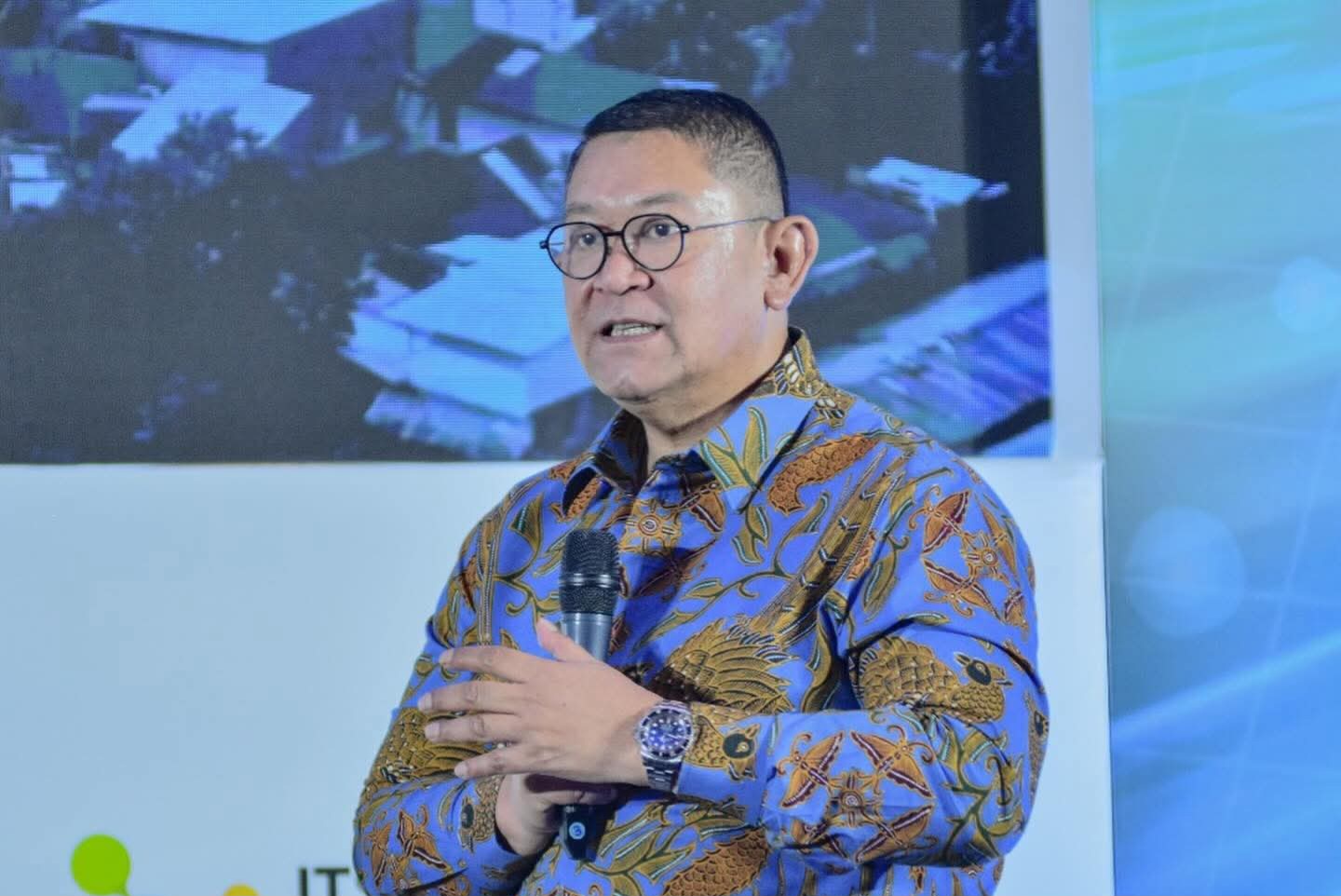








Forwarders’ fear and worries have spiralled as some global shipping companies have massively done manoeuvres to transform themselves into total logistics providers. In response to this, Yukki Nugrahawan Hanafi, Chairman of Indonesia Logistics and Forwarders Association (ALFI/ILFA), said this is not a new issue as the shipping lines did this several times years ago through the acquisition of some logistics companies.
“It is true, this issue is now being massively taken as a corridor talk in line with the massive adoption of digitalization in any aspect of economic activities, including in shipping lines. We realize worries and fears have sphered our logistics and forwarding community. But, surely, this is not a new issue,” said Yukki.
“Even at FIATA (The International Federation of Freight Forwarder Association), we have high concern on this issue. This issue has been on top discussion since two years ago,” Yukki, who is also FIATA Regional Asia Pacific Chairperson, said Yukki affirmed that the issue of shipping lines penetration to the logistic market is now being amplified, but the fact is that the shipping lines have been there since years ago through their logistics wings (sister companies).
“However, they only joint in the export-import services, which accounts for more than 60% of Indonesia’s logistics market. It is not easy for them to take the domestic market due to some regulations,” he noted.
Business expansion to other sectors, says transporters to logistics or vice versa, is not a new practice. “We all know that some global logistics & forwarders have done it since years ago. For example, DHL, a forwarder, has also become a transporter. It has operated some freighters. I am saying that for the time being, this is a business as usual,” Yukki noted.
He reminds us that ALFI had warned members and colleagues (logistics & forwarders) several years ago. In 2016 ALFI forum had presented the trend. “In 2016, we saw how some travel agents lost their jobs as many travellers shifted to online booking platforms (Traveloka and tiket.com).
So, what should be done to face the issue? Yukki encourages logistics & forwarders to improve their bargaining position through some steps. Thus they are competitive in this tight market.
Key Steps to Better Bargaining Position
Yukki shares some key steps the forwarders should take to make the business survive and even more competitive. First, build collaboration. This collaboration can be done among the national logistics & forwarders or with the global forwarders/logistic companies. Collaboration among the local logistics & forwarders can support them as a total logistics provider. Collaboration can also be done with foreign logistics companies. “Remember, they need local partners for their domestic distribution,” Yukki said.
Echoing this view, Adil Karim, Chairman of ALFI Chapter DKI Jakarta, underlined that collaboration would support a logistic & forwarder to transform into a logistics service provider (LSP). This will encourage logistics & forwarders to have a better bargaining position.
“Now, most of us (logistics & forwarders) are agents or sub-contract. The collaboration will make a forwarder be a logistic service provider, giving a better bargaining position and a wider opportunity in this business,” Adil said.
Second, do the transformation to digitalization. The sudden growth of the e-commerce market has added pressure on the already strained supply chain. Consequently, industry players have been forced to look at reconfiguring their supply chains and accelerating their digital transformation.
“Many companies have already begun to adopt technologies which enable the fulfilment of orders within a shorter time, and at lower costs, to meet the rising customer demand. Forwarders have to go with this trend. Otherwise, they will be left behind,” said Adil.
Yukki added that logistics technology had been touted to be the next emerging sector in Indonesia’s quest to develop its digital economy. Moreover, the Ministry of Industry has continually called for the digital transformation of the supply chain and logistic sectors as part of its ‘Making Indonesia 4.0’ roadmap.
Third, expand the business to be a transporter as some logistics & forwarders have done in air freight. Adil suggests some logistics & forwarders develop to NVOCC (Non-Vessel-Operating Common Carrier). Being an NVOCC, a forwarder can perform all services of an ocean carrier except without operating the vessels. “This will improve the bargaining position,” Adil said.
Hesty Rosmawati, Director of Gateway Container Line, amends these steps and even suggests a ‘counter attack’ strategy, meaning that logistics & forwarders should expand to shipping business entities. “You act as a forwarder. We will act as a shipping line,” Hesty said but reminded that this requires high capital to procure vessels.
Hesty noted that Gateway and the Group LPI have predicted this situation years ago and have planned a strategy to penetrate the shipping business.
But, indeed, the point is that logistics & forwarders must do the business expansion, including penetration to the shipping business entity as what the shipping has done to the forwarding business entity.
ALFI to Tighten Control to Prevent Monopoly
ALFI also promises to tighten monitoring and control over the manoeuvres of shipping lines in Indonesia to prevent any probable monopoly practice. In addition, ALFI will also do fair trade and business campaigns through some international networks and affiliates.
“It is legal if a shipping company sets up another sister company for forwarding business, or it can do it by acquiring a certain forwarder. But, what is not true is that if they do business monopoly,” Yukki noted.
“ALFI will intensively monitor and control to prevent any probable monopoly practices. If any, we will sue it to KPPU (Business Competition Supervisory Commission),” said Yukki.
In addition, Yukki also underlined that as a member of FIATA, ALFI would continue to do international lobby and campaign to create fair trade and business. “As I said, FIATA has put this on top concern since two years ago.”
“And, we will continue to campaign this,” he said.
This article was published in ISG Print Magazine February 2022 Edition.