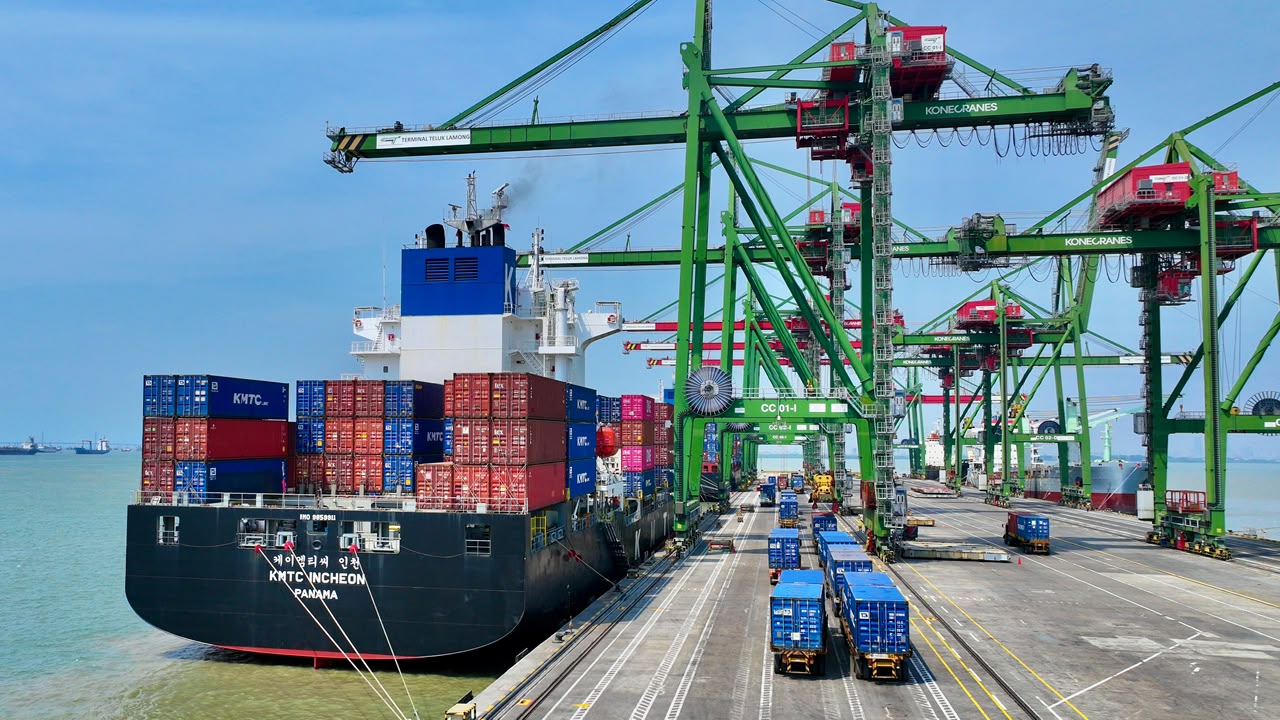
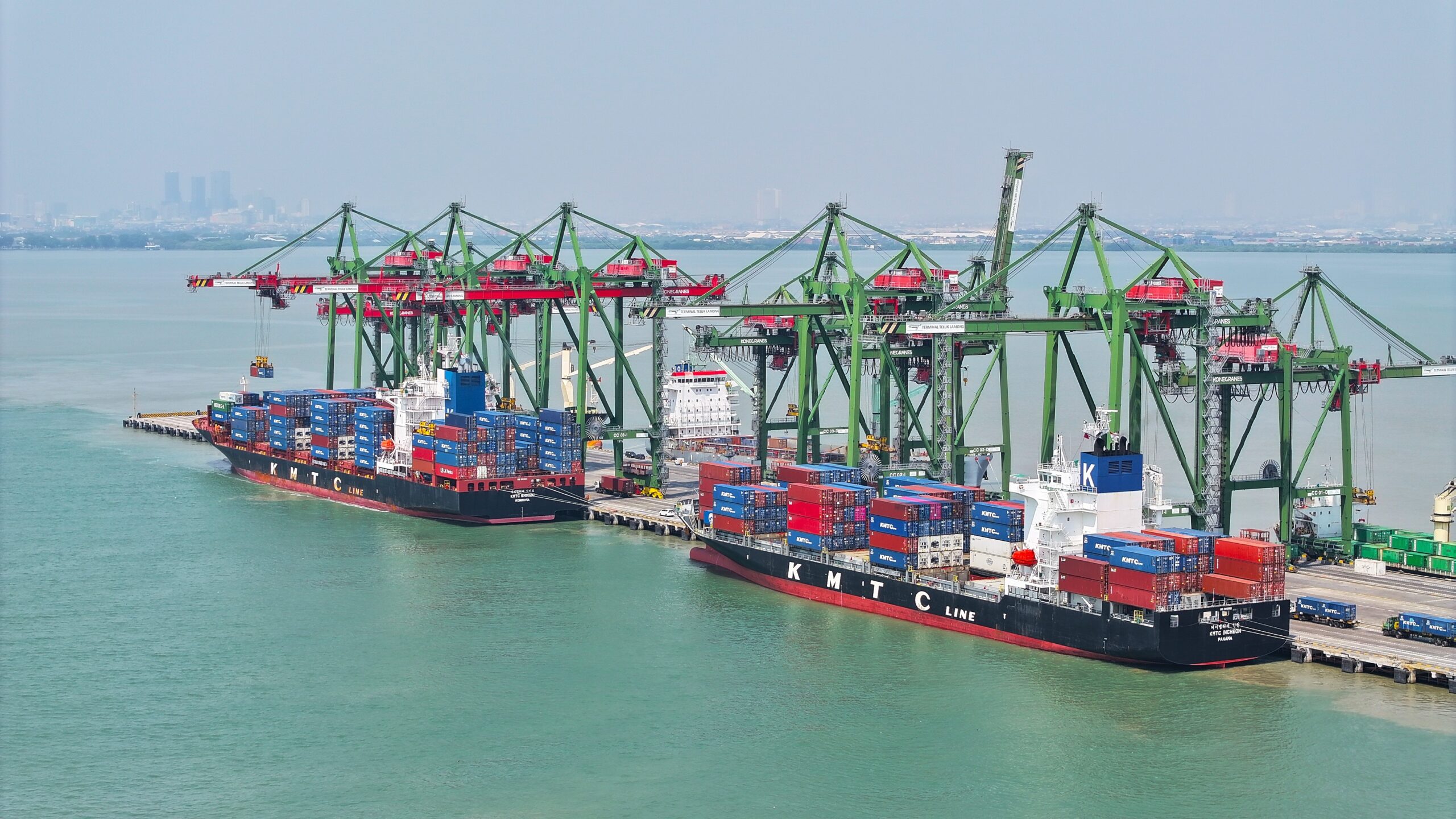
Kijing Terminal has been in operation, starting with handling non-containerized cargoes. The terminal operator PT Pelindo targets the Terminal to start handling containers in 2024. To realize the target and meet the Terminal’s mission, massive efforts are needed to attract international ship calls, especially the liner calls, some sources have said.
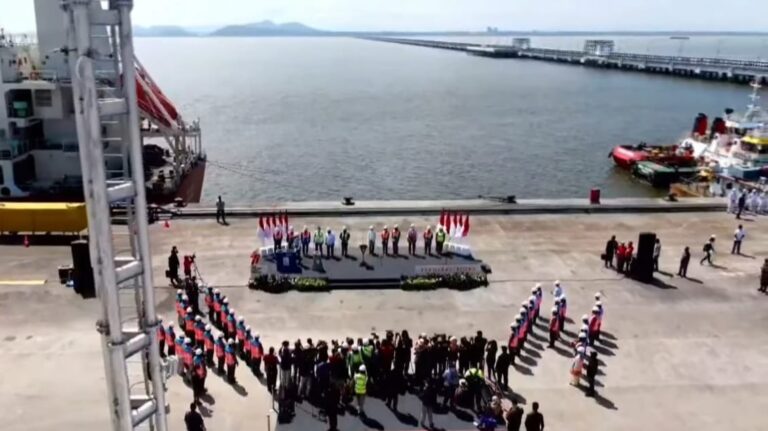
Since its official inauguration last month (August 9, 2022), the Terminal has continued to handle ship calls for non-containerized cargoes. “Following the inauguration last month, this Terminal will gradually handle cargoes, starting from non-containerized ones. We target this Terminal will start to handle containers in 2024,” General Manager of Pelindo Regional 2 Pontianak Udin Mahmudin said recently (Thursday, September 1, 2022), several hours before he was tasked to be President Director of EPI, a Pelindo subsidiary in power (electricity) supply.
“It needs massive efforts to attract international shipping lines (liners) to open direct calls to this terminal,” he said further, explaining that this Terminal is designed to be an international port and a hub for Kalimantan.

Earlier, in his remark statement for the inauguration, Pelindo President Director Arif Suhartono explained that Kijing Terminal is later targeted to replace Dwikora Port. “In the future, this Terminal will gradually replace the role of the existing port in Pontianak. The Pontianak port will later be maximized to serve other activities such as passenger ships or Ro-Ro ships and other services to support inter-island passenger activities using sea transportation,” said Arif.
The completion of Kijing Terminal is a solution to overcome the problems of Dwikora Port: overcapacity and channel access. With the existing throughput, the port almost reaches its maximum capacity. Its throughput of 257 thousand TEUs last year (2021) reached 86% of its capacity. Land for expansion is also no longer available. In addition, the sedimentation rate upstream of the Kapuas River and the channel’s narrowing impact the high cost of dredging operations. In the last five years, the channel width has narrowed from 60 to 40 meters.
Pelindo expects to handle 259 thousand TEUs this year (2022), around 80% of the total market of the province, which reaches more than 320 thousand per annum. And there is evidence that the throughput is increasing, as indicated by the volume in the first half (H1 2022). In H1, according to data from IPC TPK Pontianak, the throughput grew 10% year on year, from 118,284 TEUs in H1 2021 to 130,042 in H1 2022.

The throughput of Dwikora Port (Terminal) has reached 86% of the total capacity
The domestic volume growth significantly contributed to such performance. The domestic volume reached 118,935 TEUs, increasing 14% from 106,482 TEUs in H1 2021.
The international throughput, meanwhile, was slightly down, by 6%, from 11,802 in H1 2021 to 11,107 TEUs. But, coming in the second half, the international throughput trend increased. In July alone, the global throughput grew 9% YoY (compared to July 2021). The international throughput from January-July reached 12,744, and the domestic volume of 139,223 TEUs, creating a total of 151,967 TEUs or an increase of 16% compared to the same period last year.
Such achievement indicates that the regional economy of West Kalimantan has recovered, according to Udin. Meanwhile, though the number was still low, there is an increasing trend of oceangoing shipment.
“Some shipping lines have opened direct services to Singapore. However, the number was small as they deployed tug boats carrying as many as 300 TEUs per trip. We hope Terminal Kijing will help to increase direct shipment from Kalimantan after starting services for the container in 2024,” he said.
“As one of a hub port (terminal), Kijing is expected to be the main gateway of export-import to and from Kalimantan,” said Udin.
In addition to running hub service and overcoming the problem of overcapacity at the existing Terminal (Dwikora Port), Udin underlined that Kijing would also help to realize the government vision of national connectivity and to cut industry disparity between Java and outside Java.
Another advantage is that this port will help to build the competitiveness of some commodities from West Kalimantan since this Terminal can handle direct export. Some leading commodities potential for direct export from this Terminal include CPO (crude palm oil), timber, rubber, and bauxite. West Kalimantan is one of the leading producers of bauxite in the world.
Efforts Needed to Attract International Calls
In view of the potential commodities and technical considerations, the Terminal will start with handling non-containerized cargoes, while the container will follow soon in 2024. Following its official operation since August by handling non-containerized cargoes, the Terminal is expected to strengthen the competitiveness of superior products like crude palm oil, alumina, and bauxite.
According to data, CPO production in 2021 reached 5 million tons and is estimated at 7 million tons in 2030. West Kalimantan also has the largest bauxite reserves in Indonesia, namely 840 million tons or 67 percent of the total bauxite reserves in Indonesia. In addition, the potential for developing an industrial area that is integrated with Kijing Terminal is still wide open.
Kijing Terminal is also projected to be the largest international port in Kalimantan, not only for break bulk but also for containers. “This terminal will become one of the hub ports in Indonesia,” Arif said.
But, some contacted sources from shipping lines and cargo owners have voiced to improve some issues to attract international shipping calls, both container and non-container shipping lines. They noted that the accesses connecting Kijing Terminal with some West Kalimantan industrial centres should be accelerated to get improvement.
“Now, it takes more than two and half hours to trip by private cars from Pontianak to Kijing. Trucks must be much longer. So, this calls for an incremental improvement to attract investors, especially shipping lines, to do business within this Terminal. This problem must be completed in the next two years until the Terminal handles containers in 2024,” a contacted source has said.
Echoed the view, another source said Pelindo has to introduce and promote this Terminal to the global market massively. “This Terminal is built not just to handle the existing market, but to create a new market. And since this is declared as an international port, more oceangoing cargoes are expected. Therefore, massive efforts are needed to attract more and more international ship calls,” he said.