




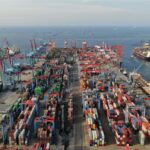


The shipping industry enjoyed the high-profit last year (2021), thanks to the high revenue from the fantastic freight increase and better strategy in controlling cost. This year (2022), shipping is predicted to continue enjoying this promising market. Still, President Director of Samudera Indonesia Bani Maulana Mulia reminds the shipping players to make investments prudently, thus making the industry keep a good margin in the future.

Talking to Indonesia Shipping Gazette recently, Bani affirmed that the shipping industry is one of the sectors that still enjoyed positive growth amid the pandemic of the Covid-19 outbreak. He even declared that last year (2021) was the best in the history of this industry, including for Samudera.
“So fantastic. In view of revenue and net profit, 2021 is the highest in the history of Samudera Indonesia,” Bani said but refused to mention the numbers. “We will release it soon after being audited, but surely, 2021 is so amazing.”
Bani gave a clue, saying Samudera’s single month revenue in 2021 was equivalent to one year in previous years.
He affirmed the container shipping contributed the highest to this industry but noted that other sub-sectors also grew up positive in parallel with a better price of their commodities. Cruise shipping is an exception, said Bani. But, others of dry bulk and liquid bulk also enjoyed a positive income, thanks to the better price of commodities of coal and oil.
“After a drop in the previous year of 2020, the oil price had been rebound in 2021. Coal price has also been increasing, giving good business to coal carrier, I guess,” said Bani.
“But, the pandemic has hit the cruise shipping very much,” he said further.
Strong demand in the shipping and logistics market predictably will continue this year, giving another momentum for shipping to harvest high revenue and profit.
“The market will continue to stay strong this year, though it may be hard to be at the same level as last year. But the shipping industry will still be promising,” Bani said.
Prudently Make Investment
Like last year, the industry will also face similar opportunities and challenges this year. “Opportunities will come from high commodities demand, especially from US and Europe markets. This will be good opportunities for shipping, especially for the container players,” Bani said.
Other shipping sub-sectors of bulk carriers, both dry and liquid bulk, are predicted to enjoy a good market, thanks to the good price of commodities of oil, crude palm oil (CPO), and coal at the global market.
But, Bani also noted similar challenges this industry faced last year. Last year, this industry was disrupted by some imbalanced supply and demand problems that resulted in container and vessel space shortages. In addition, the pandemic covid-19 protocols and policies triggered port congestion, resulting in a longer waiting time and higher operating costs for shipping lines.
Though not so agreeing with the term of container shortage, Bani affirmed the issue has been a corridor talk among players and has significantly influenced the logistics activities.
“To be honest, I don’t so agree with the term of container shortage. The containers are actually there. They are available, depending on price deal,” he said.
What is clear, according to Bani, is that the imbalance between supply and demand will continue this year as demand for commodities, including from the US market, will still be high. On the other hand, the supply will grow moderately.
Bani also reminded that the shipping lines will still face higher expenses for operating, bunker, and charter rate problems. “Last year, all these costs increased significantly. Let say the charter cost increased by more than 400% last year,” he said.
“For shipping lines, these factors have been considered in setting up the freight rate,” he said.
“The main driver of the elevated rates is the high demand,” Bani said, but affirming that the increasing expenses of shipping companies due to the increased operating cost, bunker cost, and higher charter are other factors for shipping lines in setting up freight rate.
In view of the challenges, Bani suggests shipping lines set up appropriate strategies in operation and prudently invest as no one knows what will happen in the future. What is clear is that investment needs high cash at this time.
“Now, we should be more prudent in investing. Since the price for new vessels is now costly, it is not the right time to order new vessels,” Bani said, suggesting shipping lines to focus on optimizing existing fleets.