



CILT says integrating blue economy principles into logistics, ports and maritime development could improve Indonesia’s competitiveness, supply chain resilience and sustainable economic growth
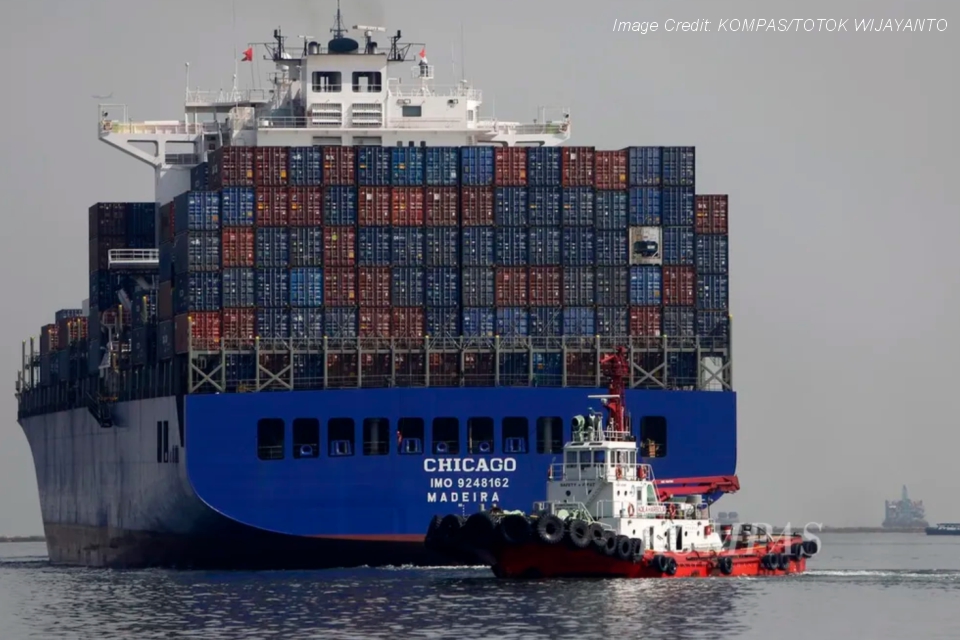
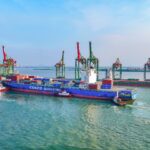
The Chartered Institute of Logistics and Transport (CILT) said Indonesia should adopt the blue economy as a long-term national development strategy to strengthen logistics competitiveness, improve supply chain efficiency and reinforce its position as a leading maritime nation in the Indo-Pacific.
Yukki Nugrahawan Hanafi, a member of CILT’s Advisory Board and Senior Vice President at the International Federation of Freight Forwarders Associations (FIATA), said the blue economy could support stronger and more sustainable economic growth by leveraging Indonesia’s maritime advantages.
“As an archipelagic nation with more than 17,000 islands and the world’s second-longest coastline, Indonesia has strategic geographical advantages for building a competitive logistics and trade ecosystem,” Yukki said. “This potential should be optimized through development that balances economic growth with environmental sustainability.”
He said the blue economy should be viewed as a comprehensive strategy to transform Indonesia’s logistics and maritime sectors rather than solely as an environmental initiative.
“The blue economy is not only about protecting marine ecosystems, but also about creating a more efficient, resilient and sustainable logistics and supply chain system,” Yukki said. “Integrating port development, connectivity, digitalization and coastal area management will provide Indonesia with a stronger foundation to enhance national competitiveness.”
The Organisation for Economic Co-operation and Development (OECD) estimates that ocean-based industries contribute about $1.5 trillion annually to the global economy, with further growth expected from maritime transport, logistics, energy and marine services. The World Bank has also identified blue economy principles as an important tool for strengthening economic resilience while preserving marine resources.
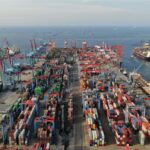
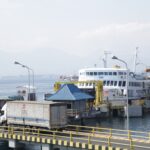
Indonesia’s transportation and supply chain sectors continue to play a strategic role in supporting economic growth. Investment in port infrastructure, inter-island connectivity, logistics digitalization and maritime industrial zones is expected to strengthen supply chain integration and improve the country’s competitiveness in global markets.
Yukki said global supply chains are increasingly being reshaped by disruptions, including geopolitical tensions, climate change and shifting sustainability requirements. As a result, investors are placing greater emphasis on efficient logistics, low-emission infrastructure, regulatory certainty and strong governance when selecting investment destinations.
“Global companies are paying closer attention to sustainability in every investment decision,” Yukki said. “Modern infrastructure, efficient logistics systems, regulatory certainty and commitments to reducing emissions have become critical factors in building resilient global supply chains. Indonesia has a significant opportunity to use its maritime strengths to attract more investment.”
He said wider implementation of the blue economy could create new opportunities in maritime technology, environmentally friendly shipping, green ports, marine renewable energy and coastal community development. It could also improve logistics efficiency through greater intermodal integration, digital technologies and more effective domestic distribution networks, helping address historically high logistics costs across the archipelago.
Yukki said future maritime development should balance economic growth with environmental protection and social welfare.
“Indonesia has the necessary foundations to become a global maritime power. Stronger collaboration among the government, businesses, industry associations, academia and local communities is needed to build a sustainable logistics and maritime ecosystem. The blue economy should become the foundation for long-term, high-quality economic growth that benefits future generations,” he explained.