





High freight rate amid the business chaos of pandemic has disturbed the logistics business cash flow. Hence, strong capital (injection) is needed to secure cash flow, thus making the business running as expected, according to Link Pacific Logistics (PT Link Pasipik Indonusa), one of Indonesia’s leading forwarders
Players in shipping and logistics industries, including shipping lines, forwarders, ports operators and shippers were all taken by surprise since early year of 2021. The increase in demand was stronger than expected. Demand for container shipping has grown during the pandemic, bouncing back quickly from an initial slowdown.
However, problems occurred in line with the demand increase, lack of supply. It is true, the imbalanced demand and supply was not only caused by the increasing demand only, but many causes. The underlying causes are complex, including changing trade patterns and imbalances, capacity management by carriers at the beginning of the crisis and ongoing COVID-19-related delays in transport connection points, such as ports.
These problems have taken place anywhere in the global trade, including in Indonesia (Jakarta). Indonesia is getting extra impact due to containerized trade model.
Even, the problem of container shortage in Jakarta actually only refers to the size of 40/40HC / D45, but there is surplus of D20 and Reefer Container. This situation has been taking place for a very long time. It is true, demand is currently strengthening, making complaints on lack of empty container become a hot and national issue.
Strong imports, which bring raw materials and auxiliary materials for manufacturing purposes, make MLO prioritize loading full (laden) containers rather than loading empty containers (repo in) to Jakarta so that there is a “time gap” between the availability of empty containers with the need for empty containers for export, especially for D40/40HC due to delays in MLO providing empty containers of D40 / HC.
In additions, shippers in Indonesia must compete with shippers in Thailand, Malaysia, China, Vietnam to get ship space to America or Europe as transhipment takes place in Singapore or Malaysia.
This situation has totally disrupted Indonesia’s export/import activities and triggered the freight rate sky rocketing.
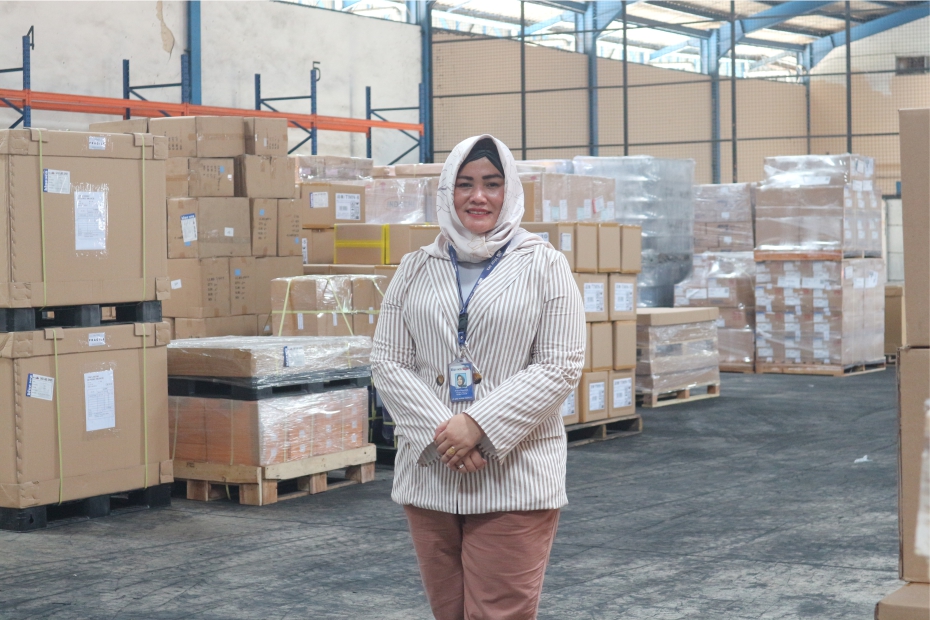
In a discussion with Indonesia Shipping Gazette, General Manager of Link Pacific Logistics Yulia Ningrum amended those situations, saying the situation has disturbed the supply chain, export import activities from/to the country, the logistics and forwarding activities, thus finally triggering high freight rate.
Just like other global trade routes, the freight rate from/to Indonesia rises at any international routes, ranging from 50-300%, according to Yulia.
Though some reports have indicated that beginning August this year, the freight rate have been stable, after 22 consecutive weeks of increases, but the disruption will predictably continue until next year, even longer.
According to Drewry report, in the last week of September, the freight rate seemed to stop rise, a possible early indication that ocean freight spot prices may finally have peaked.
Rates on Shanghai to Rotterdam, Rotterdam to Shanghai, Shanghai to Los Angeles and Rotterdam to New York remained stable at the previous week’s level, said Drewry.
Freight rates on Shanghai to Genoa gained 1% or $144 to reach $13,646 per 40ft box. However, spot rates from New York to Rotterdam dropped 8% or $91 to $1,107 per feu. Similarly, rates on Los Angeles to Shanghai and Shanghai to New York fell 3% and 2% to reach $1,404 and $15,849 per 40ft box respectively.
Imbalanced Supply and Demand
One of the key factors in this supply chain disruption is the imbalanced supply and demand. The demand for container shipping has grown higher than supply during the pandemic.
“It is true. There is an increasing volume on one hand while on the other hand, it is so hard to book container and space from shipping lines. The situation has been taking place since early this year,” said Yulia.
LPI, she said, enjoyed a volume growth until August. Until August, Link Pacific Logistics’s volume increased 13% year-on-year and exceeded the target (forecast).
This took place over all LPI service of export LCL (less than container load/consol), import LCL, export FCL (full container load), and import FCL. Until August, Link Pacific Logistics’s export LCL reached 106% of the target, import LCL (102.81%), export FCL (147%), and import FCL reached 178.73% of the target.
But, Yulia also affirmed these difficulties in container and slot booking from shipping lines during the period.
Evidences have said, container shortage and unavailable slot/space significantly halted Indonesia’s export import activities and industry productivity as well. Many export commodities were blocked at some factories, forcing them (factories) to stop production.
Yulia affirmed that the logistics and transportation business have been hit by some serious problems of container shortage and unavailable slot/space as most of the containerships were full booked. “So many shipments were rejected by the shipping lines. This totally disturbs forwarding business, and customers (cargo owners), of course,” Yulia said.

Efforts to Secure Delivery
Swelling freight rates and container shortage have become a global challenge disrupting supply chains across industries. Over the last six to eight months, shipping freight rates across transportation channels have gone through the roof.
These have made Indonesia’s industry suffer the same as other countries in the world, especially ASEAN countries, which are experiencing container shortage and the increase in freight rate which has reached 300 percent on average. The increase in transportation costs is very hard for Micro-SME exporters as it is not balanced with the selling price.
This shortage of containers certainly burdens exporters who use 40-feet containers. On the other hand, imports use 20-feet containers, causing an imbalance in their utilization.
“Many of our customers are so worried with this situation (container shortage and high freight rate). The situation makes them feel unsecure as there were some cancellations from shipping lines. Sometimes the cancellation took place after they sent delivery information to buyer,” Yulia said.
Since the process is fully under the control of shipping lines, Julia affirmed nothing more the forwarders and logistics companies can’t do except giving some notes. “Usually we will give notes of ‘subject to Space + DO + container availability’,” said Yulia.
Customers also complain that the sky rocketing freight rate will make their products less competitive in the global market.
Some are forcedly to stop their export as the high freight rate makes their products lost competitiveness. “We have a customer of garment commodity from India that stop shipment due to high freight rate,” Yulia said.
In addition, Yulia explains some steps the forwarding companies (Link Pacific Logistics) offered to customers to secure their business during this hard condition. Some steps taken including asking customers to submit volume forecast, pre-booking to shipping two weeks before, making personal approach to shipping lines, update freight rate from shipping lines in weekly base, and build cooperation with many shipping lines (more than 10 shipping lines) for comparative rate.
And to make customers loyal, Link Pacific Logistics has taken some steps: building personal approach with customer (follow up by phone, social media, entertain); proactively making information update (every two weeks), do schedule update, and proactively inform customers on relating information of space and container availability.
Strong Capital to Secure Business
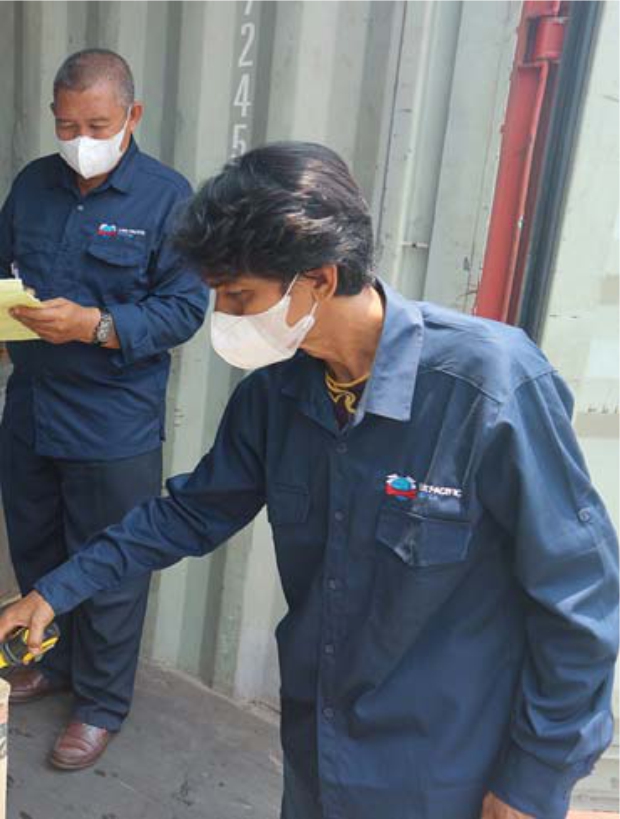
Yulia affirmed that in addition to imbalance supply and demand, in which demand grew higher than supply, the sky rocketing tariff is also caused by the shipping line action of ‘profit taking’ from this condition.
Apart from the aforementioned points, there are a few lesser-known contributors to the high freight rates. Communication issues stemming from last-minute diversions or cancellations in the current scenario are one of the reasons for booming freight prices.
Also, the transportation sector, like other industries, tends to have ripple effects when corporations take major actions. So, when the market leaders (the largest carriers) decide to increase their costs to recuperate losses, the overall market rates are inflated too.
“It seems that this is also due to shipping lines’ profit taking action,” Yulia said.
The freight rate, that has been increasing significantly by around 50-300%, according to Yulia, has totally disturbed the cash flow of forwarding and logistics companies. At this time, logistics should have extra cash for payment to shipping lines before getting credit payment from customers.
“It depends on business model and credit term. Importers usually pay in cash. But, direct customers of fabric usually with credit term of one month,” Yulia said.
But in anticipating this condition, Link Pacific Logistics has changed the credit term, to one-two weeks. “We have explained the situation to our customers and they understand with it,” she said, adding the Link Pacific Logistics would provide no credit (term of payment) to logistics companies, except cash payment. Recently, Link Pacific Logistics also handles cargoes of other forwarders.
Though some have said that the freight rate has been on plateau, but it will not soon come to normal until supply and demand coming to normal. When is it? Hard to predict. It is as difficult as predicting the end of the Covid-19 pandemic.
This is still happening because the pandemic is still not over. In fact, following the growth in the flow of goods, MLO or international shipping operators have begun to purchase orders for new ships and new containers. However, procurement cannot be instant. Shipyards in China (currently the cheapest), are also busy receiving orders. Likewise with the manufacture of containers.
Within the situation, what the forwarders and logistics company can do? “Secure and maintain cash flow,” commends Yulia. She said, logistics companies now need high capital for their business.
According to Yulia, there are some ways the logistics company can do at this time to secure business cash flow, first, capital injection, second, retained earnings, and third change credit term (term of payment). “We change model of credit term (term of payment), from one month to cash or one-two weeks only,” she said.
Yulia expects this chaos of container shortage will and soon and the freight rate will come to normal. She expects shipping lines to build relationship with forwarders as partners so there will be a win-win solution in facing any problems.
She also expects the government to make policies that support the country’s export growth and proactively bridging the exporters, forwarders, and shipping lines.
About Link Pacific Logistics
PT Link Pasipik Indonusa under the trademark Link Pacific Logistics is a potent, dynamic and growing International Freight Forwarder Company, specialized in export and import (both sea and air) direct consolidation services to/from Asia, SOC Service, Project and Domestic Service.
Established in 2006, currently Link Pacific Logistics is supported by branch offices in five cities in Indonesia and a branch office in Malaysia under the name LINK PACIFIC INDONUSA SDN BHD MALAYSIA. By having a global network system, Blue Sea has an efficient and professional team to give the best service as the commitment beside competitive ocean freight.
Link Pacific Logistics offers customized service at affordable cost. Our service offering is tailored to clients needs and spans the range of small parcel to complex industrial project cargo and everything in between. Our management team commits to provide a high level of integrity and professional management practices in our business cooperation.
This article was published in ISG Print Magazine October 2021 Edition.