




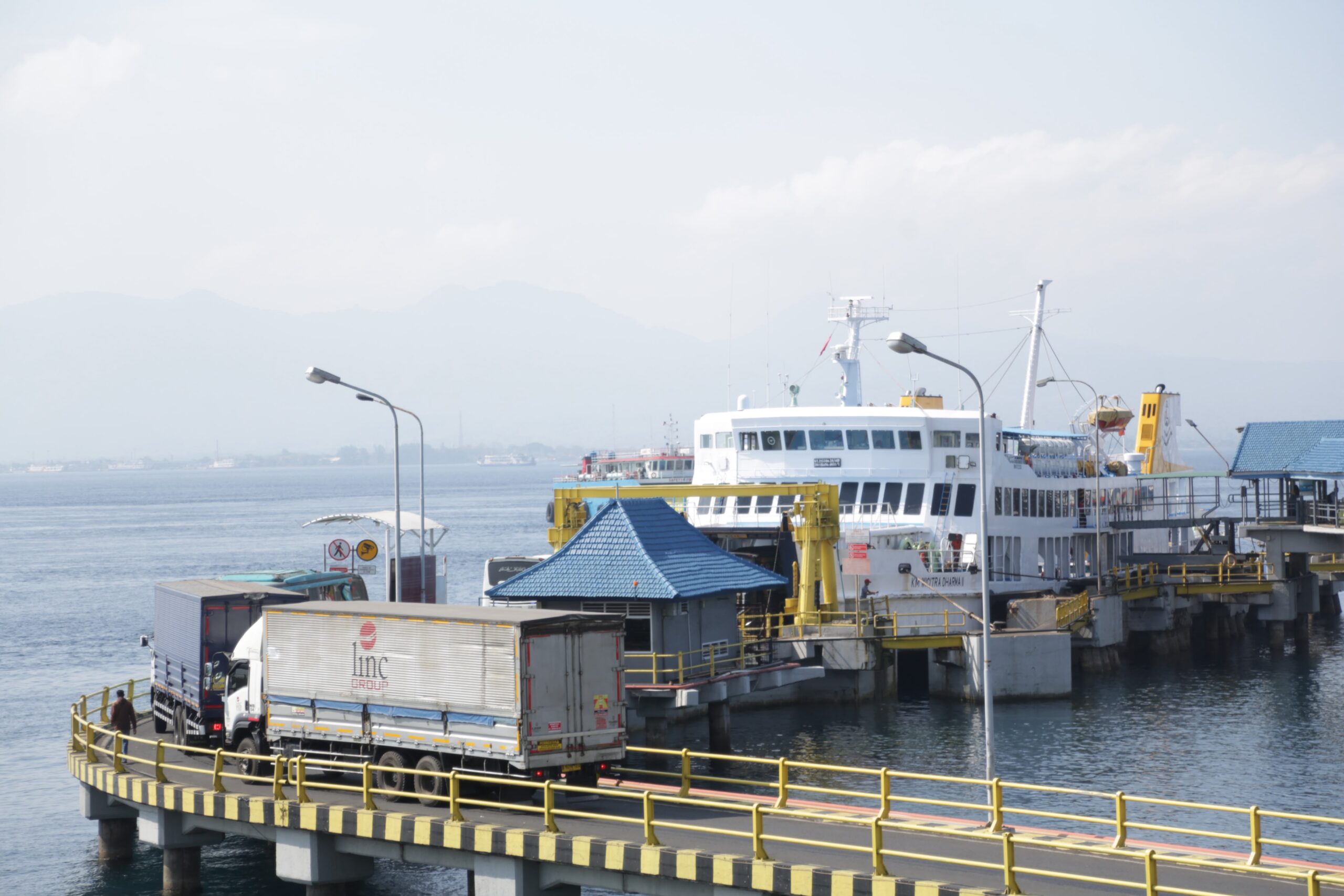
Ferry traffic at Ketapang Port eased Friday as state-owned ferry operator ASDP Indonesia Ferry adjusted vessel deployments and port operations to keep vehicles moving on the busy Java-Bali crossing.
A vehicle queue of about 0.5 kilometers was recorded at around 2 p.m. local time, while traffic at Gilimanuk Port on Bali remained smooth, according to ASDP.
The improvement comes as passenger and vehicle volumes remain substantial, underscoring the importance of managing vessel capacity and berth utilization on one of Indonesia’s key transport links.
“We are continuously monitoring the flow of vehicles and passengers while adjusting vessel operations to match actual conditions in the field,” ASDP President Director Heru Widodo said. “The fact that the queue is becoming more manageable is part of the service recovery process we are actively driving.”
Ketapang handled 19,101 passengers and 5,881 vehicles on Sept. 30, with vehicle movements increasing 4.57% from the previous day. On Oct. 1, passenger traffic rose to 19,942, while vehicle movements totaled 5,745.
ASDP is currently operating 27 vessels across four operating areas at Ketapang: five at MB 1, five at MB 3, 12 at the LCM berth and five at MB 4.
The company is adjusting vessel assignments based on fleet readiness and operating conditions. KMP Portlink VII has also been deployed at MB 4, giving the operator additional flexibility to respond to changes in traffic.
The measures reflect a broader challenge for ferry operators: managing congestion isn’t simply a matter of adding vessels. The effectiveness of the operation also depends on how vehicles are distributed, how quickly berths can be used and how closely port operators coordinate with other agencies.
“We understand that smooth ferry crossings are essential for both the public and logistics distribution,” said Media Syahrianto, general manager of ASDP’s Ketapang branch. “Therefore, we respond to developments on the ground with dynamic operational adjustments.”
ASDP is monitoring vehicle queues at both ports as well as vessel movements and will continue to revise operations based on traffic volumes, berth availability, fleet readiness and maritime-safety requirements.
“Our priority is to ensure that services remain safe, orderly, and responsive to changing conditions on the ground,” Media said. “We will continue to optimize all available resources to ensure the best possible connectivity between Java and Bali.”
The Ketapang-Gilimanuk route is a critical link for passenger travel and the movement of goods between Java and Bali. ASDP said its latest measures are intended to keep the route operating smoothly while reducing passenger waiting times and supporting logistics flows.