

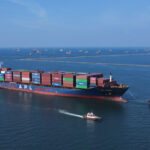
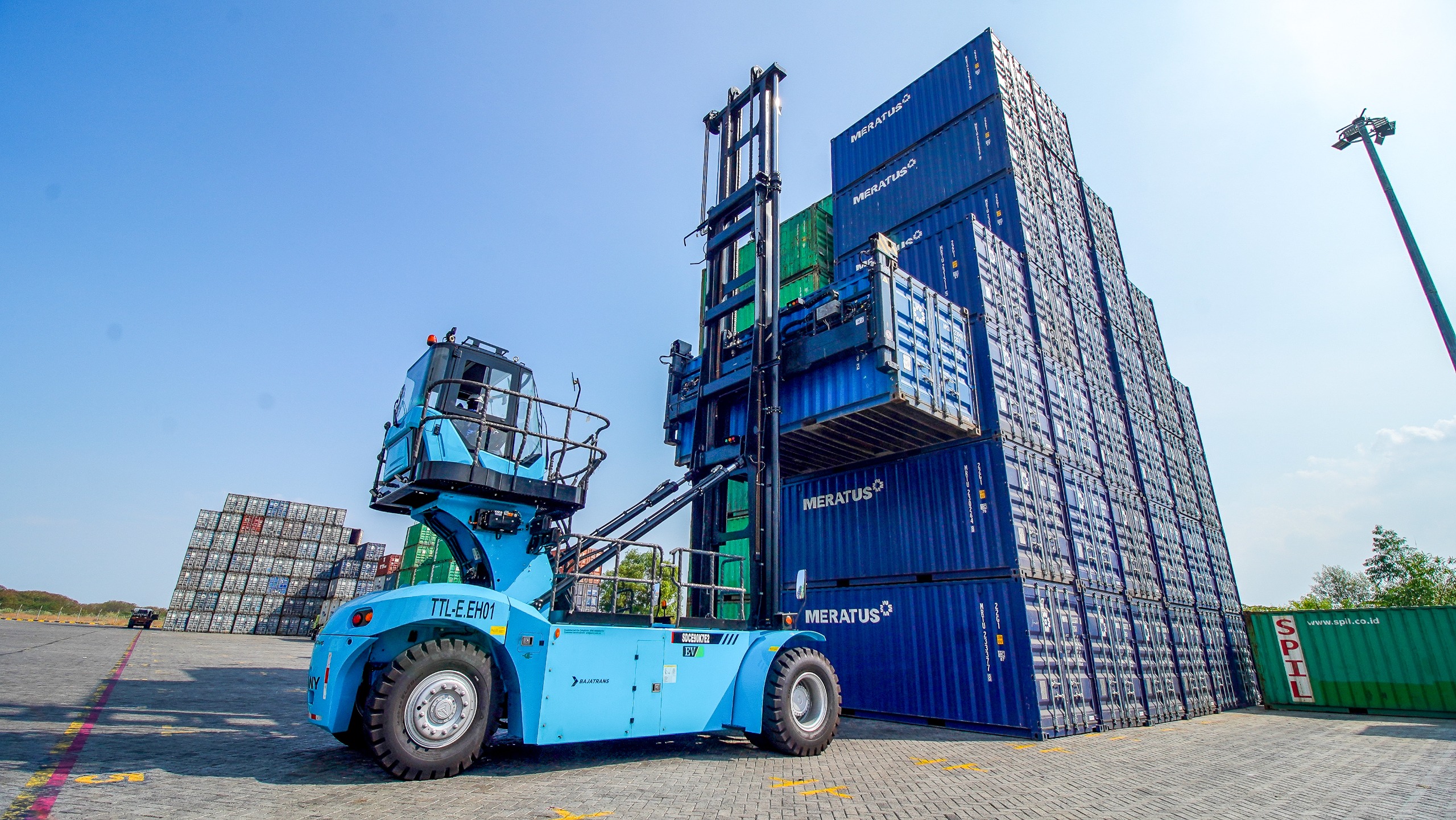
The new electric container handler began operating at Teluk Lamong terminal on October 28, as the company seeks greater efficiency and lower emissions
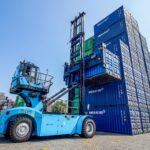
PT Terminal Teluk Lamong (TTL) has introduced an electric-powered empty container handler at its Teluk Lamong Container Terminal, marking another step in the company’s efforts to improve operational efficiency and reduce emissions.
The Electric Empty Container Handler (Electric EH) began operations on October 28, 2026, supporting the terminal’s handling of empty containers as part of TTL’s Green and Smart Port initiative.
The equipment has a lifting capacity of up to nine tonnes and can stack containers up to seven tiers high. It is powered by a 350-kilowatt-hour battery and a 135-kilowatt electric motor, allowing it to operate for up to 12 hours on a single charge, according to the company’s specifications.
With the addition of the new unit, the terminal now operates four empty container handlers.
The deployment comes amid rising demand for empty container handling services. Between January and September 2026, the terminal handled 34,967 twenty-foot equivalent units (TEUs) of empty containers, up 83.82% from 19,023 TEUs in the same period last year.
The new equipment is expected to strengthen the terminal’s handling capacity and support growing demand from domestic and international shipping activities.
“We continue to promote the use of technology that enhances operational efficiency while supporting environmental sustainability,” said Syaiful Anam, corporate secretary of PT Terminal Teluk Lamong.
He said the company would gradually electrify its container lifting and transportation equipment as part of its commitment to developing a Green Port and supporting Indonesia’s Net Zero Emission targets in the port sector.
The initiative is also in line with the Indonesian government’s broader efforts to accelerate the energy transition, reduce emissions and promote sustainable port development.
TTL said the phased adoption of electric equipment was expected to improve operational efficiency while maintaining service quality for port users.
The company aims to align the expansion of its port services with its environmental sustainability commitments.