






Asia Pacific freight markets are moving in different directions as shifting ocean shipping routes, rising vessel capacity and the expansion of manufacturing across the region reshape supply chains, according to logistics company DHL
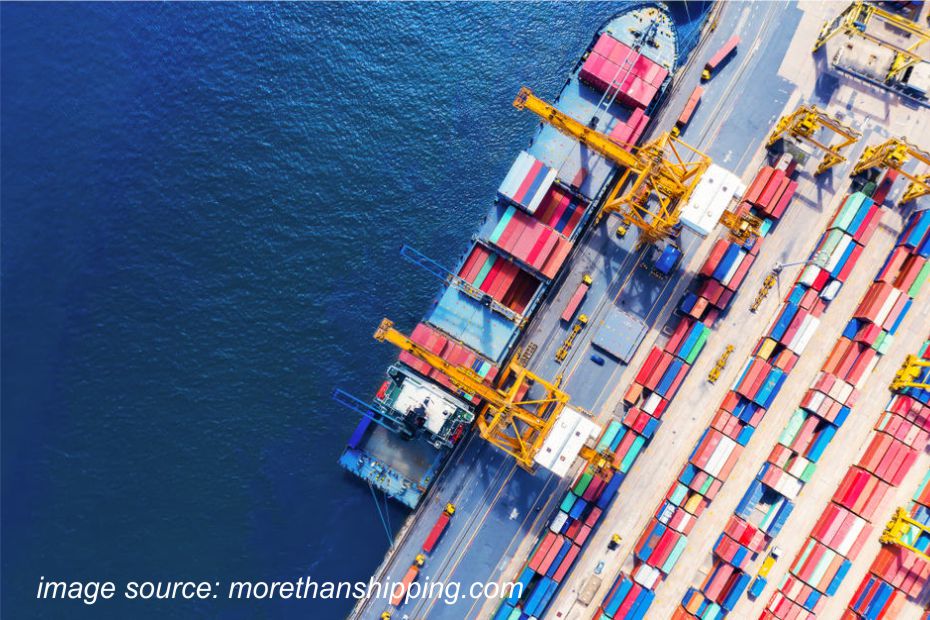
In ocean freight, the gradual resumption of services through the Suez Canal and the addition of new vessels are changing global capacity conditions. However, port congestion, blank sailings and uneven demand across trade lanes continue to constrain schedule reliability.
Meanwhile, air freight demand is growing as manufacturing activity spreads beyond China to Southeast Asia and India, creating new cargo origins and putting pressure on airline capacity in emerging production hubs.
Around 60% of relevant Asia-Europe headhaul services are currently planned to transit the Suez Canal, although the pace of the shift varies between Asia-North Europe and Asia-Mediterranean routes, DHL said in its latest Ocean Freight Market Update Report for November 2026.
Broader network adjustments could take another six to 12 months, provided security conditions do not force carriers to change their routes again.
“The question is no longer simply how to respond to the next disruption. It is how to make decisions while the market itself is still adjusting,” said Niki Frank, chief executive of DHL Global Forwarding Asia Pacific.
Global container fleet capacity is expected to increase by about 4% year on year in 2026. However, congestion continues to tie up more than 10% of the global fleet, equivalent to approximately 3.6 million twenty-foot equivalent units (TEUs).
The additional vessels therefore do not necessarily translate into immediately available or reliable capacity for shippers.
“Carriers must reposition ships, rebalance schedules and manage services operating across different routings. Ports and inland transport networks then need to absorb those changing arrival patterns,” said Bjoern Schoon, senior vice president of ocean freight at DHL Global Forwarding Asia Pacific.
“The return to the Suez Canal can shorten the sailing. It cannot eliminate the bottlenecks waiting at either end,” he said.
Freight rates are also showing different trends across major trade lanes. Pricing pressure is beginning to build on Asia-Europe routes as capacity conditions change, while the U.S. West Coast remains comparatively firm. Strong demand and severe congestion continue to support rates in the Middle East.
For Asia Pacific shippers, DHL said, the outlook will depend less on overall global rate movements than on individual trade-lane conditions, including capacity deployment, port congestion, blank sailings and schedule reliability.
Air freight demand shifts towards emerging Asian hubs
In air freight, the diversification of manufacturing across Asia is creating a more distributed cargo network, with China remaining the region’s largest production base while Southeast Asia and India emerge as additional manufacturing and export hubs.
Global air cargo demand rose 9% year on year in September, while capacity increased 3%. Outbound air cargo volumes from Asia grew 10%, reinforcing the region’s role as a major driver of global air freight growth, according to DHL’s Air Freight Market Update Report for October 2026.
“The strategy to create supply chain resilience has fundamentally reshaped Asia’s air cargo landscape into a multi-origin, networked system, moving away from a single dominant corridor towards multiple interconnected trade lanes,” Frank said.
Manufacturing growth in countries such as Vietnam, Thailand and India is generating additional cargo flows, particularly for high-value goods such as electronics, semiconductors and e-commerce products.
However, the expansion of cargo origins is not always matched by the availability of airline capacity in those locations.
“Air freight demand out of Asia Pacific is both stronger and more structurally resilient, but also more compressed and capacity-constrained,” said Fabio Weiss, senior vice president of air freight at DHL Global Forwarding Asia Pacific.
“The result is increasingly a capacity-location problem rather than simply a capacity problem,” he said.
For shippers operating through capacity-constrained origins in Southeast Asia and India, earlier planning and bookings could become increasingly important, particularly for larger shipments.
Using alternative gateways, carriers and transport modes could also provide greater flexibility when capacity on preferred routes becomes limited.
Across both ocean and air freight, headline capacity figures are becoming less useful as a standalone indicator of market conditions, DHL said. The availability of capacity on a specific route, at a particular origin and within the required timeframe is becoming more important for supply chain planning.
“Shippers need to have a strategy that will cover greater predictability, cost flexibility and most importantly, the optional agility to adapt to changing situations,” Frank said. “This is essential to create supply chain resilience, which has increasingly become a top priority for businesses,” he said.