






Amid the economic pressures in the last few years that significantly disrupted the logistics and forwarding business, Gateway Container Line (GCL) is running steady, even better. Its revenue and profit grew higher and exceeded the target. Coming to its 13th anniversary this year, Gateway targets to be the biggest export consolidator in the country.
Global pressures are still very high in 2022. The world economy still has to face several risk factors due to global inflationary pressures, the continuing war between Russia and Ukraine, geopolitical tensions in several countries, and aggressive worldwide monetary policy tightening.
Global inflationary pressures continue to increase in line with high commodity prices due to continued supply chain disruptions followed by widespread protectionist policies, particularly food policies.
Various countries, notably the United States, have responded to rising inflation with more aggressive monetary policy tightening measures, restraining economic recovery and increasing the risk of stagflation. US inflation has remained at a high level for the past few months.

According to Hesty Rosmawati, Gateway Container Line President Director, those conditions have affected the logistics and forwarding business. The direct impact, she said, was from the delivery of cargo to conflict areas (especially to Russia), in which almost all modes of transportation temporarily stopped shipments to war conflict areas. This is understandable considering the risks posed by these modes of transportation.
What is more worrying is the indirect impact of the war. Russia’s use of energy and food politics causes oil and gas prices to fluctuate with an upward trend.
As a result, the cost of production for factories has increased relatively because prices have also soared. In other words, there is significant inflation. This situation hit the purchasing power of the people who have not yet recovered. As a result, the production of goods also decreased, reducing the volume of global shipments of goods, especially to the continents of Europe and North America. This decline in the purchasing power of the worldwide community will become the biggest threat in the near future for the logistics world, which must be resolved.
The decline in freight prices is always a positive thing for the logistics world and the business world in general. “However, for freight forwarders themselves, this is a double-edged sword. Decreasing freight prices means opening up opportunities for new forwarders (who generally do not have strong enough capital) to be able to compete. Of course, the emergence of newcomers, according to Porter’s Theory, should be a concern for forwarders who have already been involved.”
“However, in my opinion, this (freight rate drop) has more positive impacts, especially for Gateway,” she said.
According to the latest data published by BPS-Statistics Indonesia, the national economic recovery currently underway in Indonesia remains intact, given increasing community mobility and amidst escalating geopolitical tensions between Russia and Ukraine.

Domestic economic growth was solid and stable in the first quarter of 2022 at 5.01% (YoY) compared with 5.02% (YoY) in the previous quarter. Positive economic performance in Indonesia has been fuelled by growing domestic demand and maintained export performance.
Furthermore, the national economic gains have been replicated in most sectors and all regions. The Indonesian economy is expected to gain momentum, with Bank Indonesia projecting growth at 4.5- 5.3% in 2022, supported by a faster vaccination rollout, broad reopening of economic sectors, and policy stimuli instituted by Bank Indonesia, the Government, and other relevant authorities.
In terms of spending, the economic recovery in the first quarter of 2022 was driven primarily by household consumption, which accelerated significantly to 4.34% (YoY) from 3.55% (YoY) in the previous period. Such developments were explained by increasing community mobility in line with looser mobility restrictions in the first quarter of 2022 and a faster vaccination rollout.

Investment grew 4.09% (YoY) in the reporting period, mainly supported by nonbuilding investment, yet the growth of building investment was also sustained. On the other hand, government consumption contracted by 7.74% (YoY) in line with improving Covid-19 pandemic conditions that reduced procurement and social assistance disbursements, particularly for Covid-19 containment and mitigation measures.
Exports continued to perform well, expanding 16.22% (YoY) on the back of solid demand in Indonesia’s major trading partners and the limited impact of geopolitical tensions between Russia and Ukraine. Imports in the first quarter of 2022 grew 15.03% (YoY) in response to strong export performance and increasing domestic demand.
Nearly all economic sectors recorded positive growth in the first quarter of 2022, particularly the Manufacturing Industry, Retail and Wholesale Trade, as well as Transportation and Storage, given greater community mobility in all regions.
Exceeding Target, Enjoying High Growth

Hesty affirmed that within such conditions, Gateway still enjoyed positive growth. “Though there is a global economic pressure, our national logistics and forwarding activities, including Gateway, have benefited from our national economic growth and export-import growth as well,” she said.
Hesty explained that there had not been a significant impact, from the drop in freight rate to logistics and forwarding activities, including Gateway. Prior to the decline in freight rates, Gateway volume still increased by around 30%.
“However, in my opinion, the main key today is the purchasing power of the global community. Last year, although the freight rate was relatively high compared to this year, because the purchasing power of the global community was still maintained, the logistics business continued to increase. Currently, the recession that has occurred in several countries (one of them as a result of the Russo-Ukrainian war) has caused the purchasing power of the global community to begin to decline, especially entering this Q3. As a result, volume stagnation will begin to be felt by forwarders, which if it continues to deteriorate, will lead to a decrease in the volume trend,” Hesty explained.
To anticipate this impact, Gateway focuses on providing additional services such as E-DO, E-Invoice, and Dedicated Customer Care for existing customers, combined with implementing a new system through the Forwarder Management System.
As for the addition of new customers, Gateway currently puts forward the branding side in terms of consolidators and complete services, including PPJK services, trucking, and the IATA agency for air freight.
Such appropriate strategies have supported Gateway to exceed its 10% revenue and profit growth target this year. In the first half of this year, Gateway’s revenue and profit increased 44% and 34%, respectively, compared to last year’s period.
Key Milestones, Current Expansion, Future Target
After running the business for 13 years, data proves that Gateway has become one of the country’s leading logistics and forwarding businesses. Several key milestones have been recorded since its establishment to be in this position.
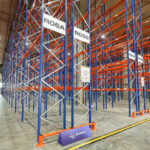
Hesty names some of them. Up to now, she said, Gateways has 25 direct console export destinations and 18 direct console imports, complete services in freight forwarder logistics services, from customs clearance (PPJK), freight forwarders, trucking, warehousing, to air freight services. In addition, Gateways also has branch offices in Belawan, Bandung, Cikarang, Semarang, Surabaya, and at Soekarno Hatta Airport. It also has owned export warehouses and office buildings in Jakarta, Bandung, Semarang, and Surabaya.
Gateway has also complied with ISO 9001:2015 certification and IATA certification, and it has adopted Digital-Based Systems, from ERP in finance to Forwarder Management systems in freight.
“All these achievements have challenges, so it is difficult to choose the greatest achievement. In general, the biggest achievement is being able to bring Gateway to continue to grow and develop through some difficult times, especially during the pandemic,” Hesty explained.

Currently, Gateway is penetrating the market in Air Freight. Gateway’s IATA certification is the main asset for Gateway to partner with many cargo airlines worldwide. Therefore, Gateway sees this as a potential that needs to be maximized.
Gateway also accelerates digital transformation through its Forwarder Management System. The diversification that Gateway does is to establish a Gateway Learning Centre with scope for training and hospitality services.
Gateway is also targeting to become the largest export consolidator in Indonesia. With an indicator that is the owner of the largest market share in all destinations with a Gateway console. “The biggest dream is to have assets to operate own ship and airplane,” said Hesty.
This article was published in ISG Print Magazine September 2022 Edition.