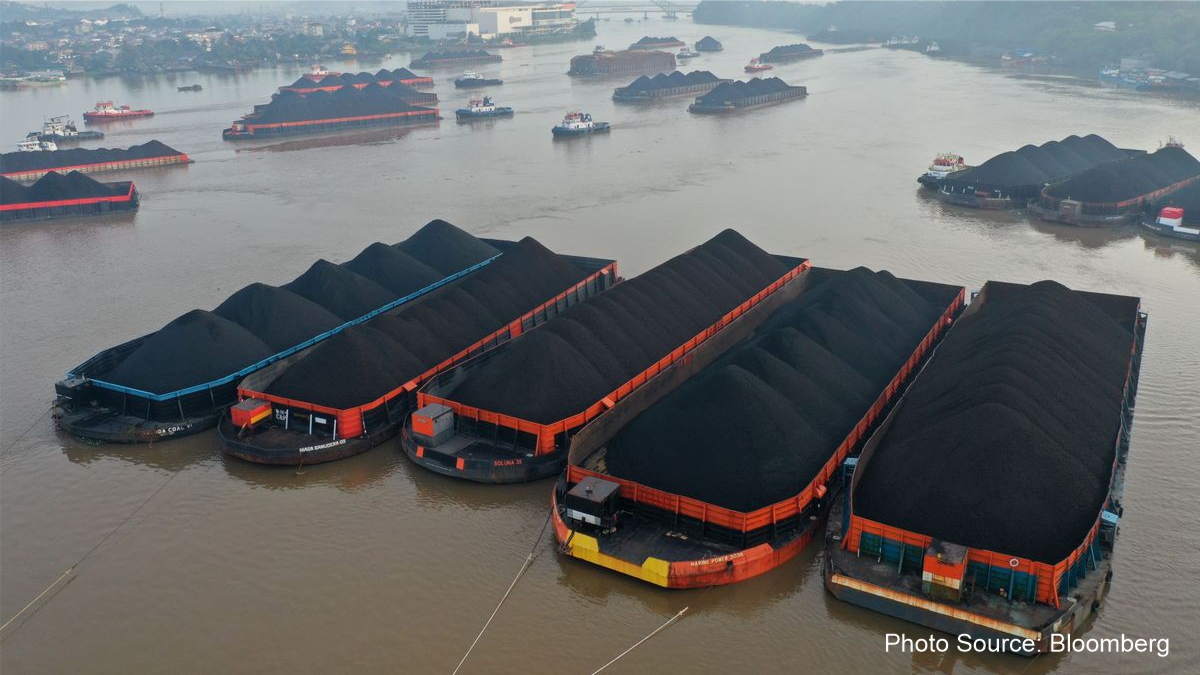
The Ukraine war has triggered the price of some commodities, mostly sourced from the two countries involved (Ukraine and Russia) in particular, including coal, to increase significantly. Russia is one of the biggest suppliers of coal to the global market.
Indeed, the increasing price of coal in the global market must benefit the countries as the biggest coal suppliers, including Indonesia. Indonesia is the second-biggest coal exporter to the global market after Australia.
Since Australia fell out of favour, China has increasingly relied on Indonesian coal. 65% of all Chinese coal imports in 2021 came from Indonesia, according to BIMCO.
On the other hand, India turned to Australia for more coal in 2021, but Indonesia’s coal still made up 35% of the country’s coal imports despite this.
With India and China importing around 40% of all seaborne coal combined, global coal exports, particularly Indonesia’s, are very dependent on the two countries’ energy demand.
Therefore, it will be a concern to some that China has recently announced plans to increase domestic mining capacity by a further 300 million tonnes (equal to recent annual imports) and expects demand to start declining in the second half of this decade.
India is equally looking to expand its domestic capacity but expects annual demand to increase by around 300-500 million tonnes by 2030, which cannot be covered without imports.
With such an increasing global demand and good price in the global market due to some political causes, Indonesia can optimize the situation to increase coal export, thus taking more money from the global market to this country.
But, if the view of supply concerns at domestic power plants, Indonesia cannot export more than 75% of its production. In other words, Indonesia has to allocate 25% of coal production for domestic market obligation (DMO) to secure the power plant. Even there is a government plan to increase DMO to 30%.
It is, of course, a dilemma for coal traders; they cannot optimize the global coal market price. They have to follow the rule; otherwise, the government will take another ban, as we experienced in January.
As the reports have said, due to supply concerns at domestic power plants, Indonesian authorities banned coal exports in January 2022, which BIMCO said removed around 30% of global coal volumes from the bulk market. The ban was lifted in February.
Read ISG Cover Story April 2022: https://theshippinggazette.com/meratus-path-to-go-regional/