

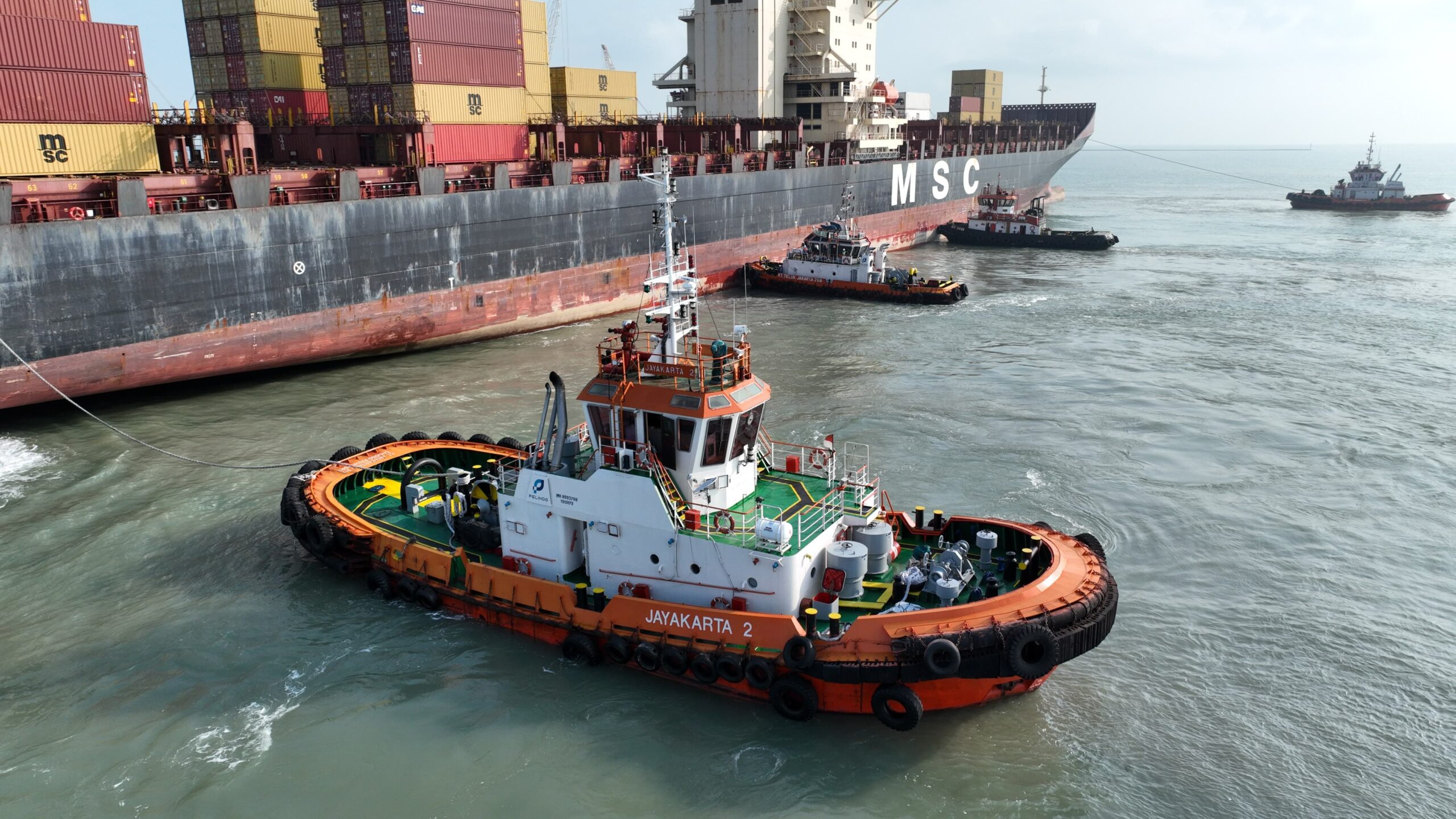
Rising vessel traffic at Patimban is expanding the pilotage and towage market and boosting the provider’s revenue, while container terminal operations could drive further growth
More ships are calling at Indonesia’s Patimban Port, giving a wider market to PT Jasa Armada Indonesia (JAI), known as IPCM, the pilotage and towage service provider.
JAI/IPCM, a publicly listed subsidiary of PT Pelindo Jasa Maritim, handled about 30 ship movements a month at Patimban as of June 2026, up from around 20 a month a year earlier, according to Dadan Ramdan, General Manager of JAI Area V.
The increase has come as foreign vessel calls, particularly car carriers, have increasing significantly in the last years. The start of container terminal operations this year is expected to bring additional traffic, especially containerships, providing another potential source of growth for JAI.
“Over the past year, there has been a regular increase in foreign vessel calls to Patimban Port. The operation of the container terminal is expected to attract more and more calls, especially containerships,” Dadan told The Shipping Gazette.
Patimban has two main terminals: the container terminal operated by PT Patimban Global Gateway Terminal (PGT) and the car terminal operated by PT Patimban International Car Terminal.
As traffic grows, JAI is providing pilotage and towage services to vessels calling at both facilities.
Overall annual vessel visits to Patimban have risen by about 15% to 20%, Dadan said, reflecting the port’s expanding role in Indonesia’s national logistics network.
To support the service at Patimban Port, JAI currently operates with two pilots, one pilot boat and three tugboats with combined power of 6,100 horsepower. That capacity is sufficient for vessels of up to 250 metres in length, Dadan said, noting that regulations require at least 6,000 horsepower of tug capacity for vessels of that size.
The company is preparing for larger ships as activity increases.
For vessels exceeding 250 metres, including Panamax-class ships, JAI Area V has arranged to have a 4,400-horsepower tugboat from JAI Area I at Tanjung Priok available on call.
“We are collaborating with JAI Area I Tanjung Priok to have a 4,400 HP tugboat on call,” Dadan said.
The expansion of vessel traffic is also prompting JAI to strengthen its operating systems and infrastructure. Its PHINISI system has been integrated with the Transportation Ministry’s INAPORTNET platform and is also used within Pelindo Group’s corporate systems.
Dadan said additional investment in personnel, facilities and infrastructure would be needed as Patimban develops.
He also called for stakeholders to review service tariffs as activity at the port increases, while ensuring that logistics costs remain competitive.
“Stakeholder support is needed regarding tariffs, which need to be increased so that stakeholders can grow together for port activities at Patimban,” Dadan said.
Revenue Growth Reaches 30%
The rise in ship movements has translated into higher revenue from JAI’s pilotage and towage services at Patimban, although the business remains a small contributor to the company’s consolidated revenue.
Revenue from Patimban activities has grown by about 20% to 30% annually, Dadan said.
“Specifically, for the Patimban area, pilotage and towing revenue is still not a significant contribution to the corporation’s consolidated revenue. However, revenue growth is growing by 20% to 30% annually,” he said.
The increase broadly tracks the rise in vessel movements, which reached about 30 calls per month by June 2026, compared with around 20 a month in the same period a year earlier.
For JAI, the next phase of Patimban’s development could bring a bigger opportunity as container shipping becomes more established.
Regular containership calls following the operation of PGT’s terminal could add to the existing car-carrier traffic and increase demand for pilotage and towage services.
Dadan said the port had the potential to become an important hub for national and international logistics, but its expansion would also require service providers to keep pace with growing demand.
“We are optimistic that Patimban Port will become an attractive port for national and international logistics,” he said.
That growth, he added, would need to be matched by safe and reliable services in line with JAI’s mandate from the Transportation Ministry.
For JAI, the challenge is therefore twofold: expanding operational capacity as vessel traffic rises while keeping costs competitive. Tariff adjustments, Dadan said, should allow port stakeholders to grow together without weakening Patimban’s position in Indonesia’s increasingly important logistics network.