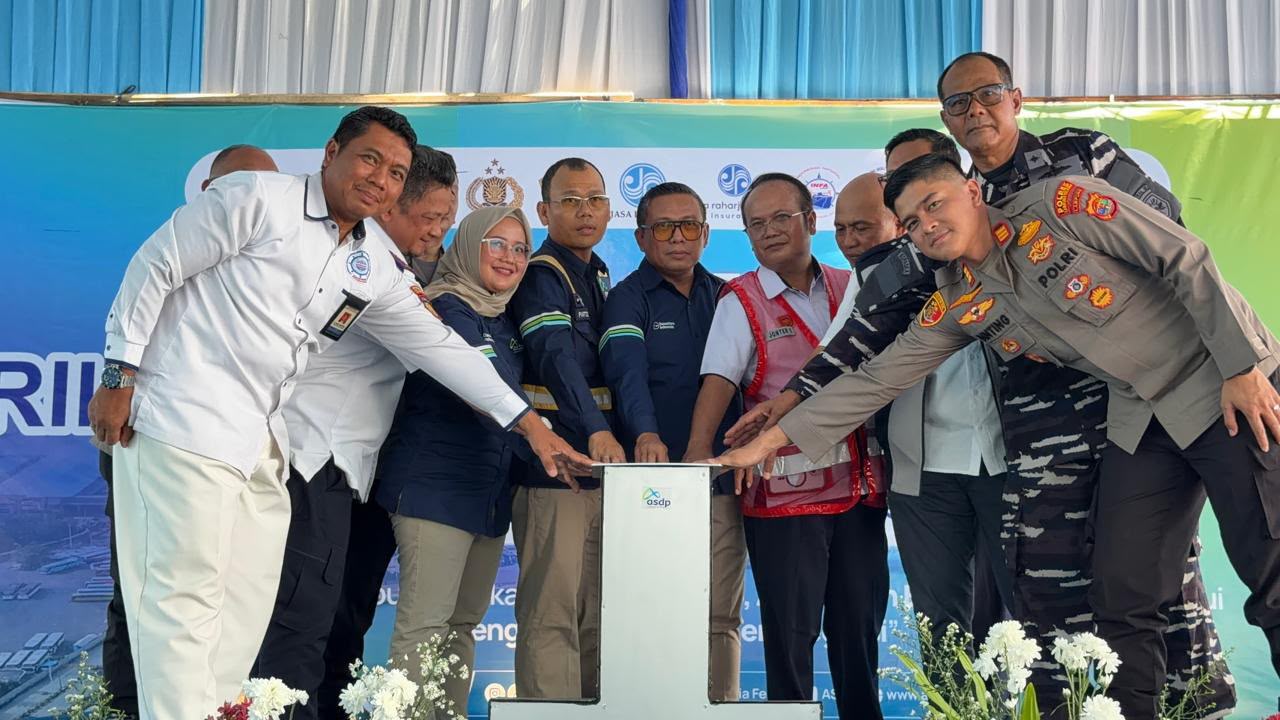
ASDP launches standardized port sterilization across six key ferry terminals, aiming to improve operational safety, efficiency, security and public confidence nationwide today, Wednesday, August 5, 2026
PT ASDP Indonesia Ferry (Persero) on Wednesday officially implemented its Port Sterilization program across six major ferry ports, marking a nationwide effort to strengthen safety, security and operational efficiency at Indonesia’s busiest crossings.
The program was launched simultaneously at Merak, Bakauheni, Ketapang, Gilimanuk, Kayangan and Lembar ports following a soft launch on July 20. The rollout was carried out across five ASDP operational branches and attended by the company’s board of directors.
ASDP said the implementation followed a transition period during which it worked with regulators and other stakeholders to refine operating procedures, conduct public outreach and strengthen inter-agency coordination to ensure the system was fully operational.
At the Ketapang-Gilimanuk crossing, implementation focused on improving operational compliance through stakeholder outreach, monitoring the use of personal protective equipment (PPE), conducting joint patrols and enforcing zoning-based access controls that restrict operational areas to authorized personnel.
At Kayangan and Lembar ports, ASDP strengthened facial recognition-based access controls, conducted inspections of restricted areas and symbolically distributed PPE to stakeholder representatives as part of the rollout.
Eko Indrayanto, head of the Class II Banten Port Authority (BPTD), said the nationwide implementation represented an important milestone following the issuance of Transportation Ministry Regulation No. 91/2021.
“Nearly five years after the regulation was issued, full implementation has now been realized,” Eko said. “We appreciate ASDP’s continued innovation and expect this initiative to further improve safety, security and order at ferry ports.”
ASDP Corporate Secretary Windy Andale said the launch reflected close collaboration between the company, regulators and other stakeholders.
“Port sterilization is a collective effort to build a more disciplined, professional and safety-oriented operational culture,” Windy said. “Its implementation will continue to be evaluated and refined so the benefits can be maximized for passengers and the wider port ecosystem.”
Transportation analyst Djoko Setijowarno of Soegijapranata Catholic University said the initiative represented an important step in modernizing Indonesia’s ferry transportation sector.
“This policy can strengthen safety, security and service quality while improving logistics flows and passenger mobility through more orderly and efficient operations,” Djoko said. He added that adequate infrastructure and coordination among stakeholders would be essential for consistent implementation while considering communities that have long depended on port activities.
ASDP President Director Heru Widodo said the initiative represented a broader transformation of ferry port operations rather than simply reorganizing physical infrastructure.
“Port sterilization is not merely a rearrangement of operational areas, but a change in operational culture that places safety at the center of every activity,” Heru said. “We believe safer ports will deliver more comfortable travel, more reliable operations and stronger public confidence in ferry services.”
ASDP said operations on the first day proceeded as planned through tighter access controls, greater use of digital technologies, improved organization of activities within port areas and enhanced supervision in coordination with regulators.
At Merak Port, the company reorganized operational areas, re-registered authorized personnel and traders, expanded monitoring facilities and implemented a One Gate System to strengthen access control. ASDP said its Automatic Gate System reduced truck processing times from 10–15 minutes to 1–2 minutes, improving operational efficiency.
At Bakauheni Port, the company introduced dedicated vehicle traffic lanes, motorcycle parking areas, upgraded signage and information systems, and enhanced access control as part of the nationwide rollout.
ASDP said the simultaneous implementation across six strategic ferry ports establishes a new national standard for ferry port management by combining digital technology, stricter safety procedures and internationally aligned operational practices to support safer and more reliable maritime connectivity.