

Indonesia’s remarkable economic growth, consistently exceeding 5% for seven consecutive quarters, is a testament to its economic resilience in the face of global economic challenges. This achievement is further reinforced by the country’s sustained trade balance surpluses over the past 41 months. Indonesia’s ability to attract stable foreign direct investment (FDI) is a positive indicator of investor confidence in the domestic economy.
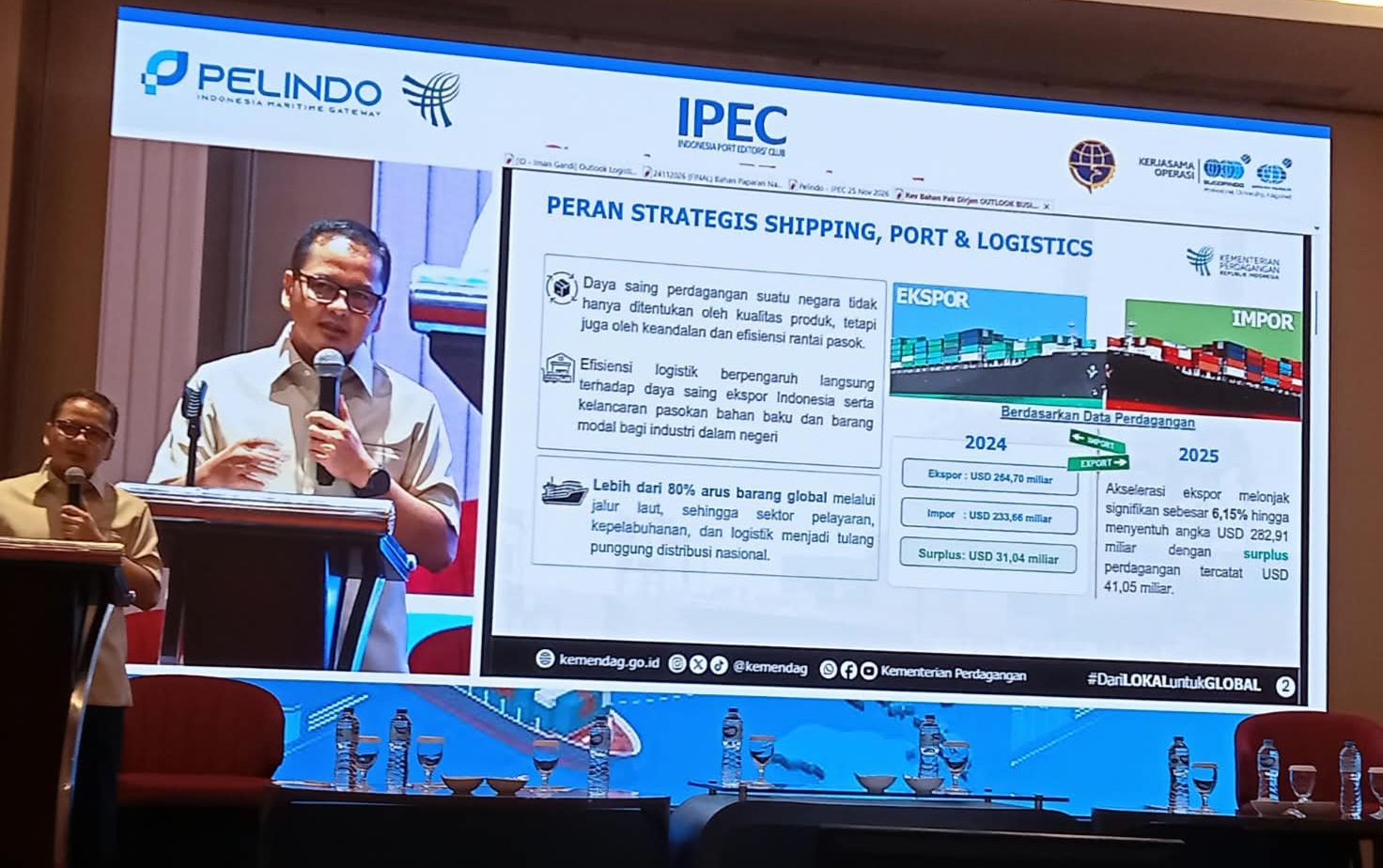
Agus Rofiudin, the Head of the National Single Window Institution (LNSW), underlines the pivotal role of the National Logistics Ecosystem (NLE) as a strategic step in addressing future logistics challenges. He emphasizes that digital collaboration within the NLE platform will ensure the smooth flow of both exports and imports and domestic goods movements within Indonesia, enhancing efficiency in transportation and trade.
International trade and FDI are highlighted as key drivers of economic growth. International trade enables countries to leverage their comparative advantages, reducing the cost of goods and services. FDI facilitates technology transfer, human capital development, and institutional improvement, all of which are essential for economic advancement.
Despite these positive economic trends, Indonesia’s national logistics sector still requires improvements. The country currently ranks 63rd in the World Bank’s Logistics Performance Index (LPI) for 2023, and national logistics costs remain relatively high.
To address these issues, the State Budget for 2024 has been approved, with substantial allocations for infrastructure development. This includes projects aimed at boosting economic growth, providing basic services, implementing strategic initiatives, and driving digital transformation.
The importance of infrastructure, connectivity, transportation, and information technology is emphasized as crucial for enhancing logistics performance. Infrastructure development, such as roads, bridges, airports, and ports, must be accompanied by adequate internet access and technological support. The implementation of the National Logistics Ecosystem (NLE) is expected to maximize efficiency in goods movement.
NLE aims to simplify government logistics processes, foster collaboration with the private sector, facilitate payments, and improve the spatial organization of ports and distribution routes. NLE is built on four key pillars: streamlining government and private sector processes, collaborating within a logistics platform, simplifying payment processes through a single billing system, and spatial planning to streamline the movement of goods.
A noteworthy innovation within NLE is the Single Submission Online Service System, developed by the National Single Window Institution (LNSW). This system has streamlined complex business processes, reduced duplication, and simplified the management of government logistics services.
The successful implementation of NLE is expected to spur innovation and coordination to enhance logistics performance and make a significant contribution to the national economy. It will further position Indonesia as a competitive player on the global economic stage.
In conclusion, Indonesia’s forward-looking initiatives, particularly the National Logistics Ecosystem, are driving the nation’s economic growth and competitiveness, reinforcing its status as a resilient and dynamic economy in a challenging global landscape.