

There is evidence that the rebranding of Pelindo Group post-merger has been working, creating good results for the group’s performance. The transformation, meanwhile, is being in the process. It has been done, is being done, and will always be done. Business changes will never end, thus transformation will always be continuous work.
The Pelindo merger last year (October 1, 2021) not only changed the business structure and corporate organization but also called for new business rebranding and further transformation.
The merger, as we know, has integrated the four Pelindos (Pelindo 1-4) into Pelindo. The corporate organization has united into a single umbrella of management. The merger will not only remove the regional obstacles but will also create a nationwide Pelindo. In other words, the merger is expected to transform the region-based port corporations into a single national one. Such a historical breakthrough!
Regarding business structure and corporate organization, the merger has separated port management and port/terminal operators. The merger divides the port management into four regions: Pelindo Regional 1-4, which its region covers some ports. The port/terminal operators, meanwhile, are clustered into four independent business groups: (1) container, (2) non-container, (3) logistics and hinterland development, and (4) marine, equipment, and port services sub-holdings.
Soon after the merger was legally launched, Pelindo took the fast step, starting with organizational restructuring, especially repositioning the status of subsidiaries. All subsidiaries earlier owned by each Pelindos are handed over into the new business clusters (sub-holdings) of Pelindo Terminal Petikemas (SPTP), Pelindo Multi Terminal (SPMT), Pelindo Solusi Logistik (SPSL), and Pelindo Jasa Maritim (SPJM).
The SPTP becomes the holding of container terminals:
- PT Berlian Jasa Terminal Indonesia,
- PT IPC Terminal Petikemas,
- PT Kaltim Kariangau Terminal,
- Prima Multi Terminal,
- Prima Terminal Petikemas,
- Terminal Petikemas Surabaya, and
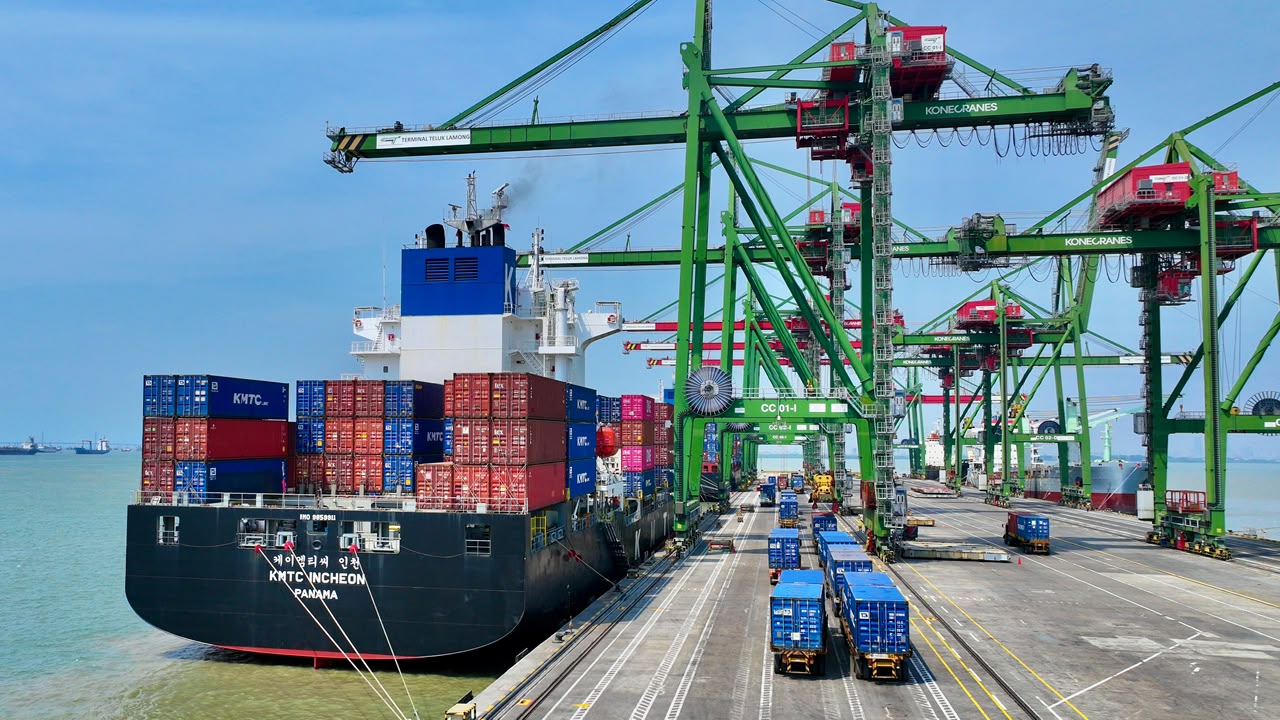
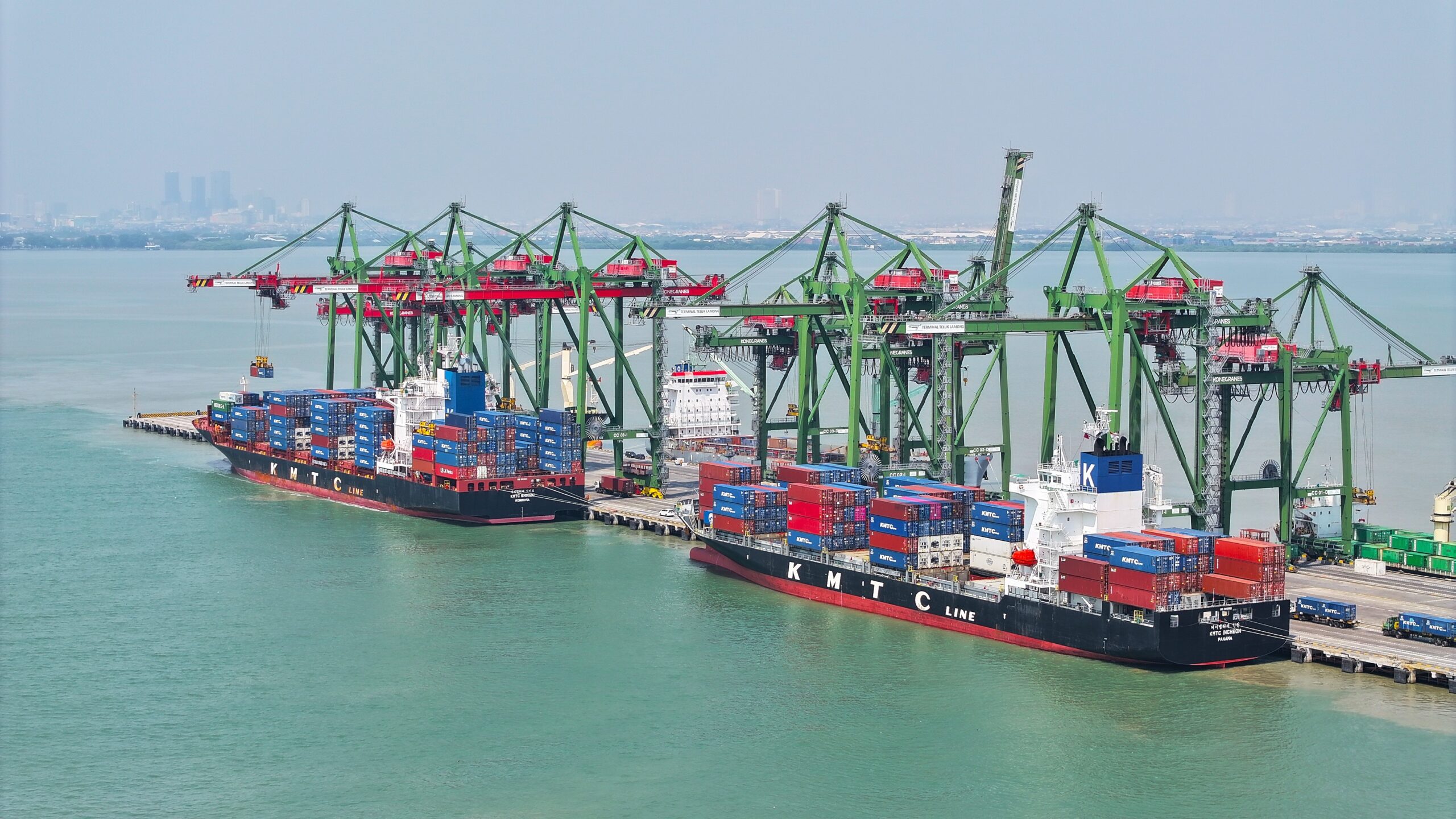
- Terminal Teluk Lamong
SPMT becomes the holding of:
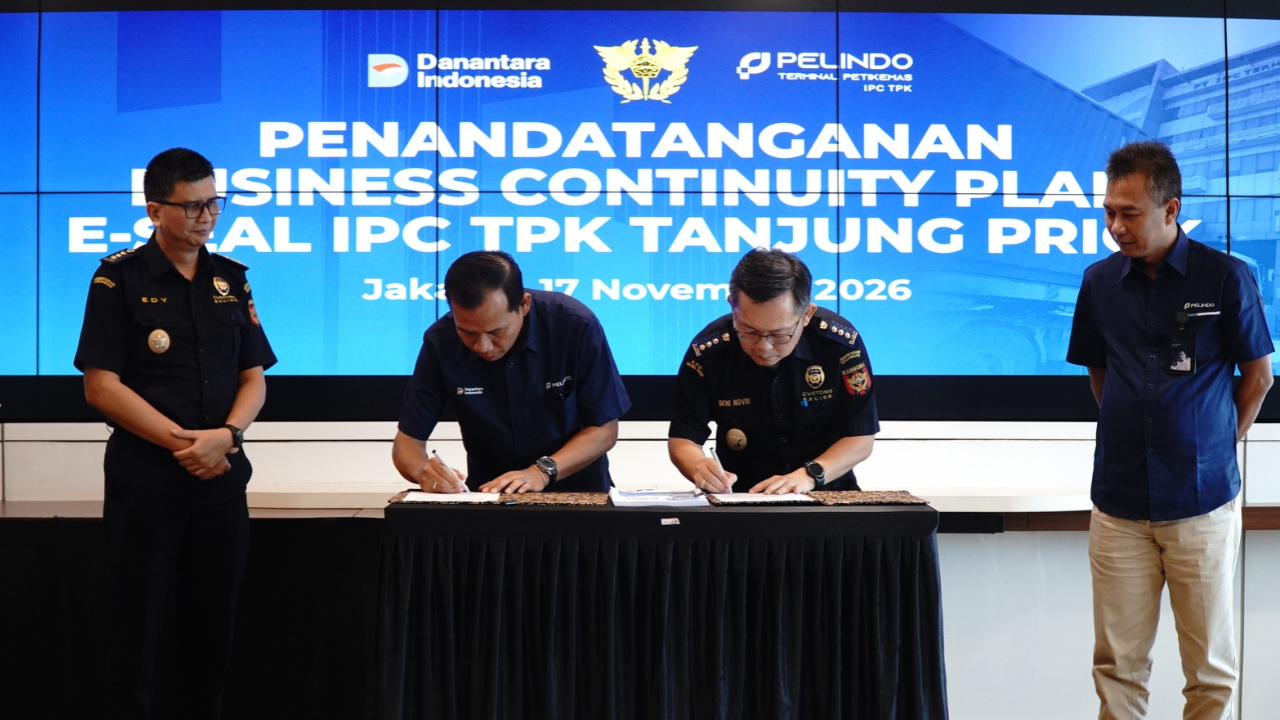
- PT Pelabuhan Tanjung Priok and
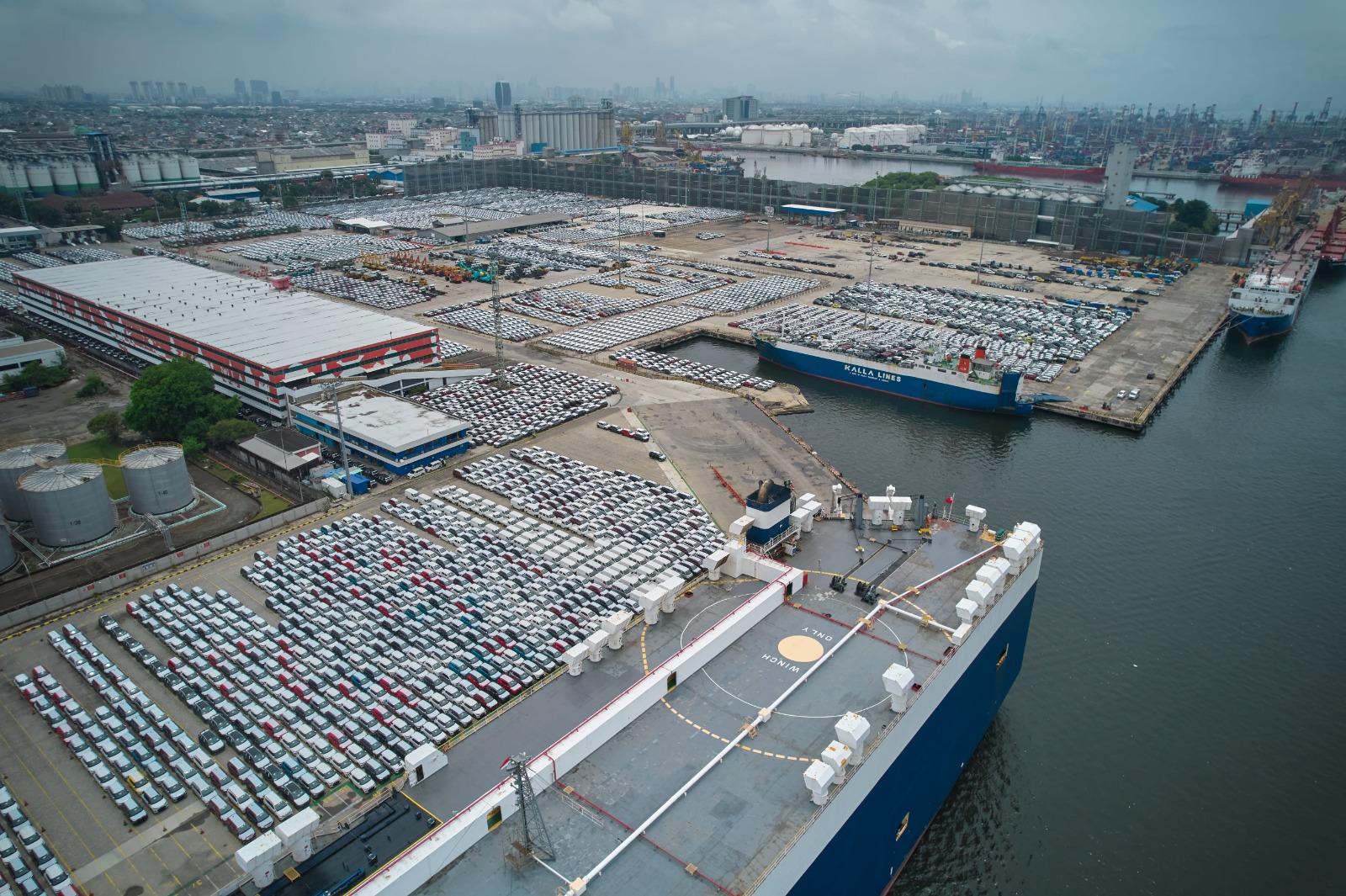
- PT Indonesia Kendaraan Terminal
SPSL becomes the parent for:
- PT Multi Terminal Indonesia,
- PT Nusantara Terminal Service,
- PT Prima Indonesia Logistik,
- PT Pelabuhan Indonesia Developer, and
- PT Prima Kawasan Pembangunan.
SPJM becomes the parent for:
- PT Energi Pelabuhan Indonesia,
- PT Equiport Inti Indonesia,
- PT Jasa Pelabuhan Indonesia Equipment,
- PT Pelindo Marine Service,
- PT Pengerukan Indonesia, and
- PT Jasa Armada Indonesia Tbk
Fortunately, the process ran smoothly. The share transfer of the subsidiaries to sub-holdings ran fast, completed just a few months after the merger.
But, is this organizational restructuring the most achievement in the first year of the merger? For some instances, the answer is yes. But, it is better to see it in the processes after rebranding them to national (international) corporates and business players and transforming them into specialists in their business entity.
Why does business rebranding and transformation stay the top priority and should be done soon after the merger? First, this is in line with the spirit of the Pelindo merger. “The integration (merger) is done for business focus, thus optimally providing benefits not only to the state but also to the community and business players,” noted Arif Suhartono, Pelindo President Director.
Second, this transformation is done considering many changes in doing business due to new regulations (government regulations), business competition, and increasing customer requirements.
Playing a key role in maintaining the supply chain, logistics distribution, and economic growth within the country, Pelindo’s position, on the one hand, is so strategic. On the other hand, challenges from a business change require a breakthrough, a transformation commends Rhenald Kasali.

“Pelindo merger is a very strategic step to face business disruptions, but the further transformation is needed“
Rhenald Kasali
“We know today’s disruption occurs not only on a single aspect but there is also a ‘double disruption’ – technology and pandemics. Pelindo merger is a very strategic step to face this, but the further transformation is needed,” Rhenald Kasali said.
“All employees are expected to be ready to face changes with one goal for a more advanced Indonesia. We are all advocates of change in realizing international-scale port services,” added Arif.
From Reginal to Nationwide, Global Player Expected
The rebranding process at Pelindo started from the rebranding of the Pelindo itself. The merger has inherently changed the brand of Pelindo from regional corporate to nationwide. The merger has supported Pelindo in a more strategic position, becoming a national player and a bigger corporation.
This new brand (rebranding) is surely very strategic, not only to the corporate magnitude but also to the operation. Pelindo can do business and investment nationwide, borderless in coverage.
Just like their parent company (Pelindo), the sub-holdings were officially established on the merger occasion, and teens of subsidiaries earlier owned by each Pelindo’s directly got a ‘coat-tail effect’ in the branding and rebranding. The sub-holdings are directly branded as nationwide players, while teens of subsidiaries are rebranded from regional players to national players.

However, though there is an inherent process of rebranding, the group has also done several works, including changing the logos of Pelindo and its subsidiaries. Pelindo itself has a new logo. The subsidiaries change their names and logo. For example, PTP (PTP Terminal Non-Petikemas), a subsidiary of SPMT, has just rebranded its business to PTP Terminal Non-Petikemas, from earlier PTP Multipurpose.
“This is to make business focus and in line with one of our merger missions. In addition, this will set our business apart from our sister companies in our group cluster,” commends Rino Wisnu Putra, President Director of PTP Terminal Non-Petikemas.
The rebranding also sends a clear message to the business of each sub-holdings and any subsidiaries. “Now, all are clear, especially in answering customers’ questions on our business. We, for example, focus on handling non-container cargoes,” Rino said.
Specialist in Business Cluster
Though business transformation is not a new term and program for Pelindo, the merger has driven a transformation process. And since the merger focus is to cluster the business, most transformation programs in the first year after the merger are executed by each sub-holding and subsidiary.
The transformation is done by supporting the sub-holdings and their subsidiaries as specialists in their core business. SPTP is transformed into a specialist in container handling, SPMT in non-containerized cargo handling, SPSL in logistics, and SPJM in maritime-related activities.
But how to do that? “It is done in any aspects, including operation, facilities and equipment, information and technology (system), and the human resources,” said Rino.

“Transformation means to make human resources to be specialists, covering three aspects of knowledge, skill, and certification“
Rino Wisnu Putra
In operation, the transformation begins with remapping the terminals to determine what the terminals will be dedicated for. Good to know that the issuance of the new regulation of PM 59 on dedicated terminals drives a faster remapping process, especially for the existing multi-purpose terminals.
The regulation requires remapping the terminals according to the cargo they handle, such as dry bulk, liquid bulk, and even more specific cargoes of CPO (crude palm oil). “Making terminals dedicated is very strategic for PTP and SPMT group as this supports our transformation process to be specialist in non-containerized cargo handling,” commends Rino.
But, to be a specialist is not just given by the terminal status. Further efforts are needed. Dedicated terminals require special facilities and equipment, different IT systems, and specialist human resources. Hence, immediate and comprehensive transformation is needed.
The transformation in facilities and equipment is also done to align with the cargo requirement. No doubt, handling CPO is different from handling bio-diesel cargoes, though both are liquid cargoes. Hence, Pelindo has to install different facilities and equipment that fit the cargoes. Their handling processes are different, requiring different systems and technology and special skill.
Transformation in IT (digitalization) that stands on two basic targets of providing ease to customers and increasing operation quality has been massively done by the subsidiaries in the last year. Adoption of Terminal Operating System (TOS) that integrates all services provided from planning, operational, and control until reporting process has been massively adopted by terminals nationwide.
The merger has driven the process more accessible as a terminal can adopt the system from other terminals.
“But, surely, this needs human resources specialist in handling those cargoes,” noted Rino. The basis of all these transformations is human resources. Transformation means making human resources specialists, covering three aspects of knowledge, skill, and certification.
For example, since PTP is transformed to be the operator of a certainly dedicated terminal, say CPO terminal, the human resources should have knowledge, skill, and certificate in handling CPO so does other dedicated terminals.
A Never-Ending Work
After intensively introducing the core business of each subsidiary and clarifying their borderless business coverage nationwide, there are pieces of evidence to say that the rebranding of Pelindo Group post-merger has been working, creating some good results for the group’s performance.
The merger has successfully changed the brand of Pelindo, the four sub-holdings, and all subsidiaries from regional players to nationwide players. Is it enough? Not yet. Pelindo and all sub-holdings and subsidiaries are expected to go further, rebranding them to be global players.
Good to know that the merger has put Pelindo as the 8th biggest container terminal operator in the world in view of throughput. Pelindo handles at least 16-17 million TEUs a year. According to pre-pandemic data (2018), the top-ten global container operators are as follows:
- PSA (60.3m TEUs),
- HPH (46.7m TEUs),
- DPW (44.2m TEUs),
- APM Terminals (42.8m TEUs),
- CMPort (35.1m TEUs),
- TIL (26.5m TEUs),
- Pelindo (16.7m TEUs),
- ICTSI (8.9m TEUs), and
- Evergreen (8.5m TEUs).
Being in this position makes it very reasonable for Pelindo to rebrand itself. Rebranding has to be done massively, telling the world Pelindo is not just a national player but a global player!
The transformation has also been understood as a focus after a merger. And Pelindo has efforted some transformation programs, ranging from port management to port operation. The transformation has been done from the HQ (headquarters) programs to subsidiaries, branch ports, and subsidiaries.
And since business changes will continue, the transformation programs are expected to be continuously done, even more extensively and expansively. A business will always change at any time, the transformation is expected to be a never-ending work.