





The shipping and logistics are expected to grow positive this year, in parallel with the economic growth projection, both global and national. But, challenges and problems will continue to disrupt the sector. How to optimize the potencies and minimize the risks? Some key players of this sector have talked to Indonesia Shipping Gazette.
The economy is expected to grow positive this year. Bank Indonesia projects that national economic growth in 2022 will range from 4.7-5.5%, up from 3.2-4.0% in 2021, driven by ongoing global economic improvements that drive solid export performance, coupled with growing domestic demand in terms of consumption and investment.
Just like the national economy, the global economy is also expected to grow positively. Though the world starts the year (2022) with economies held back by a supply chain crisis and the rapid spread of the Omicron coronavirus variant, the global economy is still expected to grow by about 4% in 2022, compared with an estimated 5.1% in 2021, according to the Centre for Economic and Business Research (CEBR), a UK thinktank.
As the economy grows positive, the shipping and logistics sector is expected to maintain its last year’s trend. As the reports have said, last year shipping grew up fantastic. The shipping industry event created records in its history. The logistics, though much lower than shipping, it also experienced growth.
The Shipping Market Remains Promising

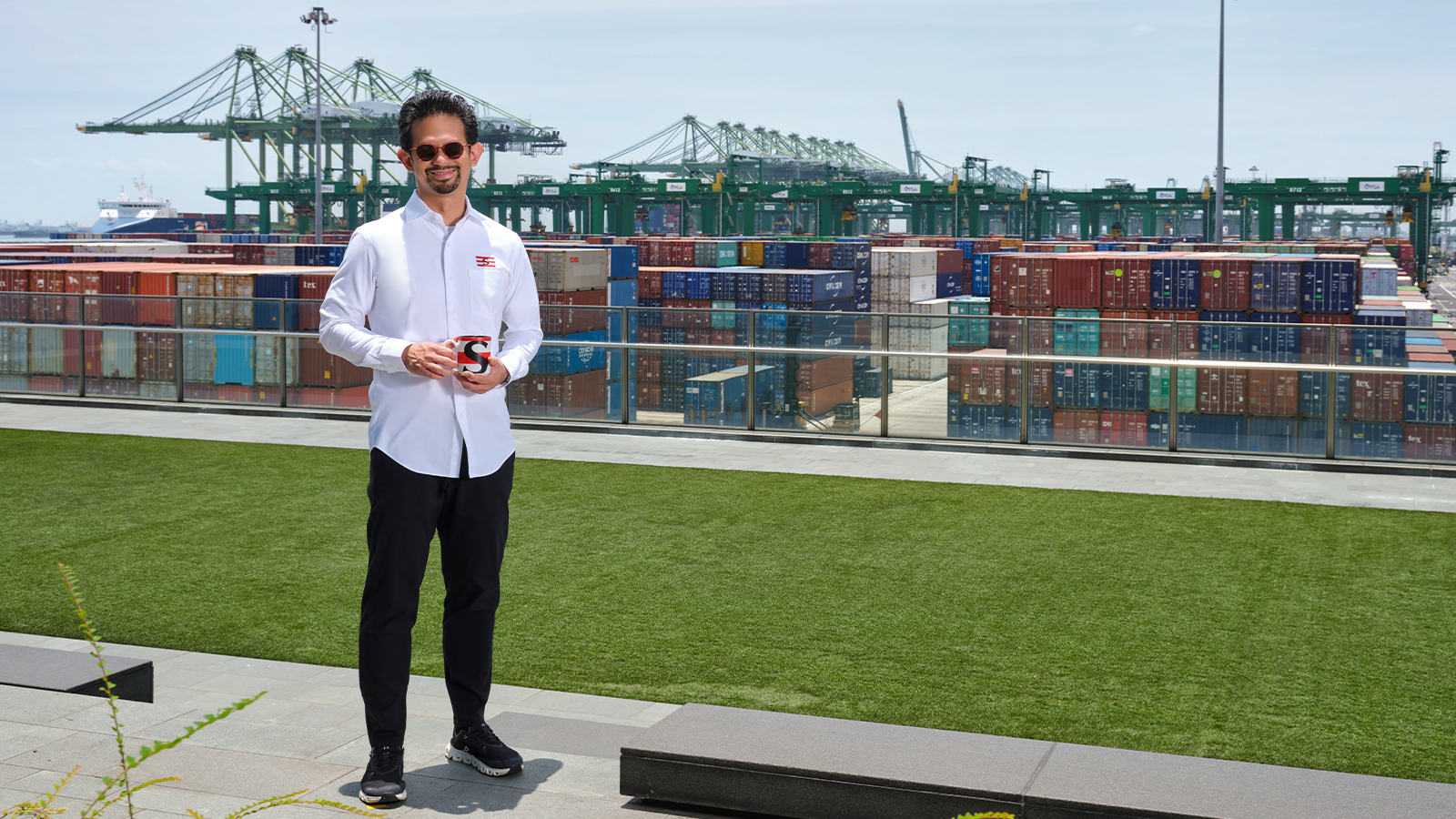
Bani Maulana Mulia, President Director of Samudera Indonesia, affirmed it, saying the shipping industry enjoyed the high-profit last year (2021), thanks to the high revenue from the fantastic freight increase and better strategy in controlling cost. This year (2022), the shipping is predicted to continue enjoying this promising market, he said.
Bani affirmed that the shipping industry is one of the sectors that still enjoyed positive growth amid the pandemic of the Covid-19 outbreak. He even declared that last year (2021) was the best in the history of this industry, including for Samudera.
“So fantastic. In view of revenue and net profit, 2021 is the highest in the history of Samudera Indonesia,” Bani said but refused to mention the numbers. “We will release it soon after being audited, but surely, 2021 is so amazing.”
Bani gave a clue, saying Samudera’s single month revenue in 2021 was equivalent to one year in previous years.
He affirmed the container shipping contributed the highest to this industry but noted that other sub-sectors also grew up positive in parallel with a better price of their commodities. Cruise shipping is an exception, said Bani. But, others of dry bulk and liquid bulk also enjoyed a positive income, thanks to the better price of commodities of coal and oil.
“After a drop in the previous year of 2020, the oil price had been rebound in 2021. Coal price has also been increasing, giving good business to coal carrier, I guess,” said Bani.
“But, the pandemic has hit the cruise shipping very much,” he said further.
Strong demand in the shipping and logistics market predictably will continue this year, giving another momentum for shipping to harvest high revenue and profit.
“The market will continue to stay strong this year, though it may be hard to be at the same level as last year. But the shipping industry will still be promising,” Bani said.
Erry Hardianto, Senior Director and Area Managing Director for A.P. Moller – Maersk Indonesia, echoed the views, saying this strong market triggered by the strong demand from the US market will continue until the second quarter of this year (Q2 2022).
“First, no one knows when this pandemic and its effect will end. Second, high demand will likely continue into some part of 2022. Demand for goods in the US will like to continue to grow at a healthy level,” said Erry.
Erry explained that Maersk sees a strong global GDP for 2022, leading by expectations of a robust CapEx cycle, strong demand, rising wages, and cheap capital. Inventory replenishment will support goods trade well into 2022, and the channel shift to e-commerce is likely to keep pressure on outbound logistics capacity.
How about the logistics? Though the projections vary among the logistics players, all are generally optimistic about this sector’s performance this year.
Optimistic in The Logistics Sector

Logistics business players are still optimistic that 2022 has the potential to be a momentum for Indonesia’s economic revival, even though the Covid-19 pandemic is still ongoing.
Chairman of Indonesia Logistics and Forwarders Association (ALFI) Chapter Jakarta Adil Karim says optimism as many logistics companies have to transform to digitalization to support the smooth flow of goods.
“We hope that this year’s economic growth will be better than last year, thus giving a better growth to logistics,” Adil said, adding that the throughput of Indonesia’s leading port, Tanjung Priok as an indicator of the growth. Amid the pandemic last year (2021), Tanjung Priok still enjoyed 8.78% volume growth, domestic and international.
Juswandi Kristanto, Chairman of Indonesia Stevedoring Companies’ Association (APBMI), amended with the trend of port volume growth. “There is evidence to say that ports’ volume, both of container and non-container terminals, have been increasing since last year,” said Juswandi.
Manufacturing Continues to Grow
Referring to the economic projection that will grow up to 5.5% this year, Juswandi is optimistic about the loading and unloading volume at the port. He said that the port’s loading unloading volumes would depend on hinterland production, trade activities, export-import, and domestic distribution.
“Since the economy is projected to grow, trade activities will increase, thus giving positive growth to stevedoring activities at the port,” Juswandi said.

The growth, according to Adil, will be driven by the increasing manufacturing production and the increase of community economic activities as the vaccination of Covid-19 has reached a high level of 60%.
“Supported by digitalization, we are so optimistic the logistics industry will grow positively,” said Adil.
Supply Chain Indonesia (SCI) predicts the contribution of the logistics sector (transportation and warehousing including couriers) to Indonesia’s Gross Domestic Product (GDP) until the end of 2021 at IDR 676.0 trillion or a contraction of 2.03 percent (YoY).
Based on data from the Central Statistics Agency (BPS) up to Quarter III-2021, SCI also predicts that the sector’s contribution in 2022 will reach Rp 699.1 trillion or grow by 1.08 percent (YoY).
SCI Chairman Setijadi explained that the growth of the logistics sector in 2022 will be driven mainly by the performance of the manufacturing industry, especially non-oil and gas, followed by the agriculture, forestry, and fishery sectors; construction sector; and the mining sector. Logistics sector performance in 2022 was also driven by export-import performance, which continued to improve during 2021.
This article was published in ISG Print Magazine January 2022 Edition.