







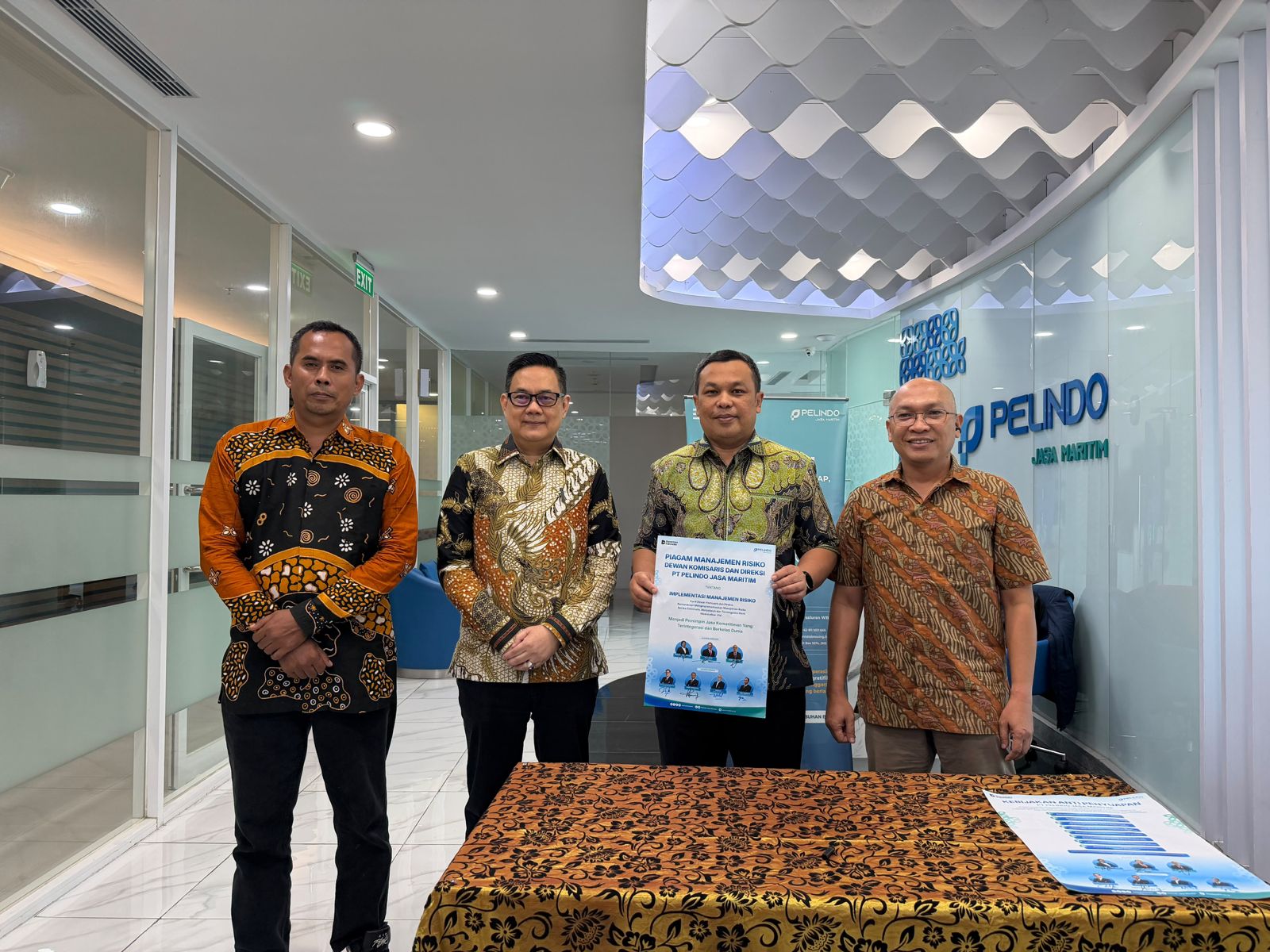
Pelindo Jasa Maritim has signed new risk management and anti-bribery policies to strengthen accountability, prevent corruption and improve operational reliability
PT Pelindo Jasa Maritim (PJM) has strengthened its corporate governance framework with the signing of a Risk Management Charter and an Anti-Bribery Policy by its Board of Commissioners and Board of Directors.
The signing ceremony took place on November 25 at the company’s representative office in Jakarta, reaffirming management’s commitment to strengthening risk oversight, promoting integrity and preventing bribery and corruption across its business operations.
The Risk Management Charter establishes a framework for identifying, assessing and mitigating potential risks across all levels of the organization, covering port operations and strategic business decisions.
PJM said the initiative is intended to minimize operational disruptions, maintain service reliability and strengthen the company’s ability to respond to challenges in the maritime industry.
The company has also introduced an Anti-Bribery Policy based on the Anti-Bribery Management System (ABMS) and its “5 No’s” principles: No Gifts, No Kickbacks, No Bribery, No Corruption and No Luxurious Hospitality.
The policy establishes a zero-tolerance approach to bribery and corruption, while requiring compliance with applicable laws and regulations. It also safeguards the independence of the anti-bribery compliance function and provides confidentiality protections for whistleblowers reporting suspected violations in good faith.
Employees found violating the policy may face disciplinary measures, including termination of employment, as well as potential civil or criminal penalties under applicable regulations.
PJM Corporate Secretary Amy Purwa Aditia said the signing represented a commitment by the company’s leadership that must be reflected in the conduct of all employees.
“The signing of the Risk Management Charter and the Anti-Bribery Policy is not merely a commitment at the leadership level; it also serves as a reminder for everyone at PJM to exercise due care, prioritize integrity, and conduct all business activities in line with the principles of good corporate governance,” Amy said.
She added that the company aimed to embed risk awareness and anti-bribery practices into its daily operations rather than leave them as formal policies.
According to Amy, the policies also establish standards for the company’s relationships with stakeholders. Employees are expected to use them as guidance in performing their duties and managing operational risks, while business partners and vendors are expected to maintain professional, fair and ethical relationships.
PJM said the strengthened governance framework was also intended to provide customers and other stakeholders with greater confidence in the safety, reliability and transparency of its port services.
The initiative is aligned with Danantara’s broader objective of transforming state-owned enterprises into more transparent and accountable organizations.
PJM said it would continue strengthening governance, risk management and business integrity to maintain stakeholder confidence and support the company’s long-term sustainability in the maritime services sector.