




Indonesia could strengthen its position as a regional logistics hub by 2027 as companies restructure global supply chains, but high transport costs, infrastructure gaps and geopolitical tensions remain key challenges, an industry official said.
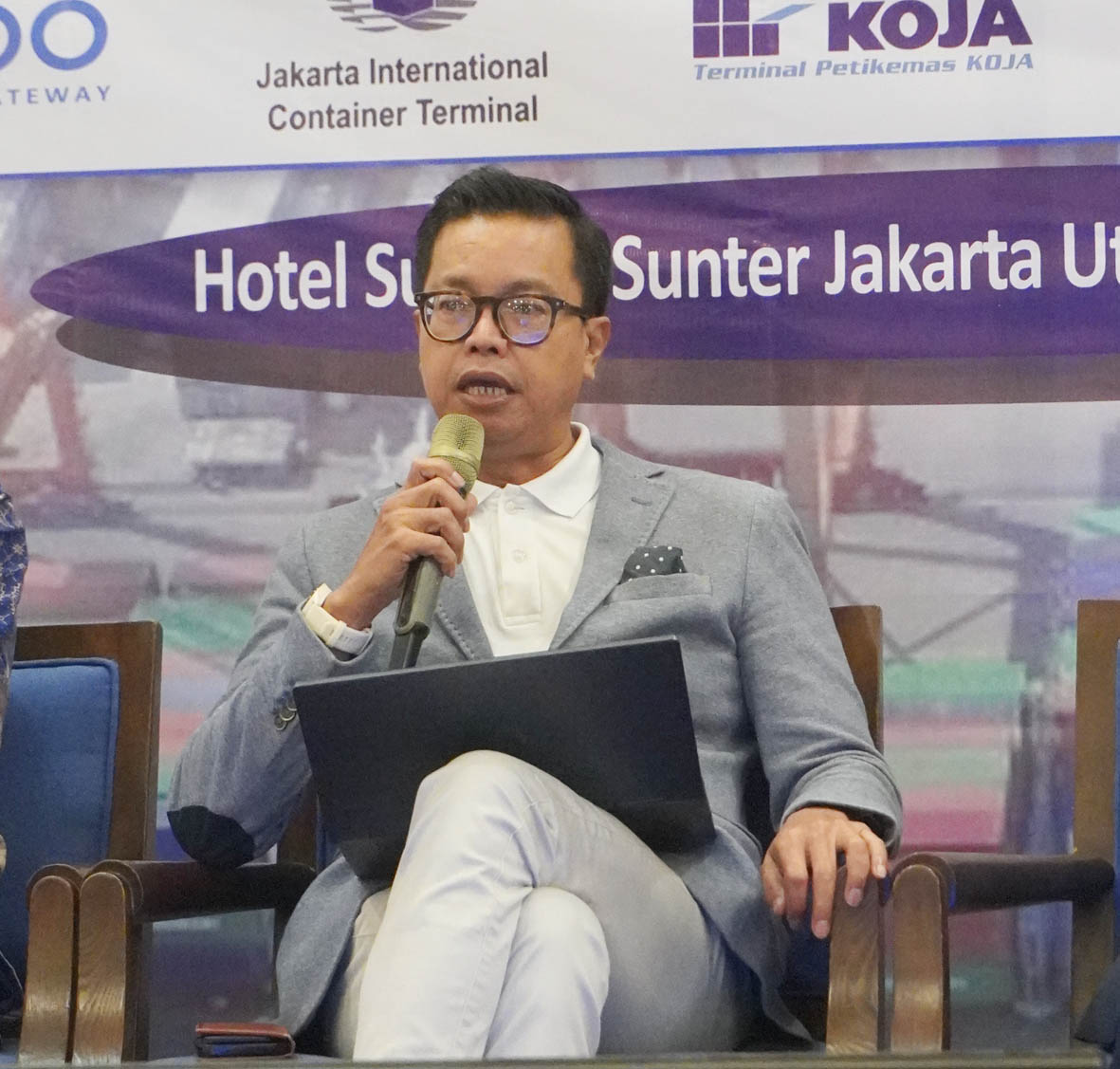
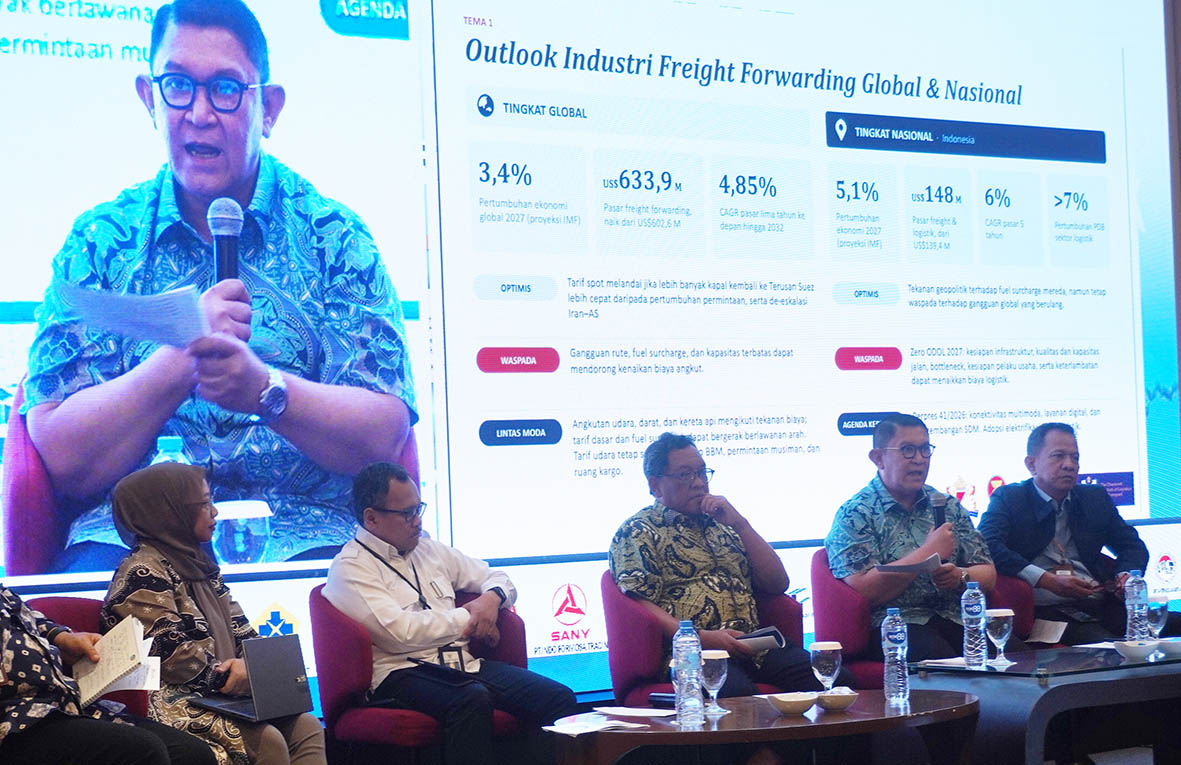
Yukki Nugrahawan Hanafi, chairman of the advisory board of the Indonesian Logistics and Freight Forwarders Association (ALFI) and senior vice president of the International Federation of Freight Forwarders Associations (FIATA), said Indonesia needed to integrate different modes of transport, improve productivity across supply chains and accelerate trade digitalisation to seize the opportunity.
“Global supply chains are undergoing restructuring throughout this year. By 2027, their architecture will become increasingly vulnerable due to trade fragmentation and geopolitical pressures, which heighten risks at critical global chokepoints,” Yukki said.
He identified eight key trends expected to shape the logistics and supply chain industry in 2027.
First, global economic growth is projected at 3.4% in 2027, according to the International Monetary Fund (IMF). The global freight forwarding market is expected to reach $633.9 billion, with a compound annual growth rate (CAGR) of 4.85% through 2032.
Indonesia’s economy is projected to grow by 5.1% in 2027, while its freight forwarding and logistics market could expand to $148 billion, representing a CAGR of 6%. The logistics sector’s contribution to gross domestic product is also projected to increase by more than 7%.
Yukki said the positive outlook required caution, as logistics costs remained vulnerable to both domestic and international disruptions.
He identified three domestic priorities: implementing the zero-overdimension and overload (ODOL) policy, electrifying logistics fleets and executing Presidential Regulation 41/2026.
Second, geopolitical tensions and disruptions at global shipping chokepoints are becoming persistent risks, pushing up fuel and freight costs. International trade is also moving towards greater use of multimodal transport and digital documentation.
These developments include the FIATA electronic Forwarder’s Bill of Lading (eFBL), the United Nations Negotiable Cargo Documents (NCD) and the European Union’s electronic Freight Transport Information (eFTI) regulation, scheduled to begin implementation in 2027.
Third, Indonesia’s logistics system remains heavily dependent on road transport, which accounts for about 90% of national freight movement. Sea transport accounts for 9%, rail for 1% and air transport for less than 1%, Yukki said.
He cited poor road conditions, the need to improve port performance to international standards, imbalanced cargo flows towards eastern Indonesia and limited multimodal connectivity as persistent structural problems.
“Logistics costs will not decrease simply by pushing down rates. The key lies in end-to-end productivity, achieved through the integration of land transport, both road and rail, with sea and air transport,” he said.
Fourth, digitalisation is becoming essential to maintaining competitiveness. Global adoption of digital freight documentation, including the FIATA electronic Bill of Lading, is projected to rise from 33% in 2022 to 51% in 2026.
Artificial intelligence is also increasingly being used for freight rate quotations, customs documentation and customer service.
Yukki urged logistics companies to develop interoperable data systems and called on the government to strengthen the National Logistics Ecosystem (NLE), which aims to improve coordination and efficiency across the country’s logistics services.
Fifth, customer expectations are changing, with businesses demanding more than competitive shipping rates. They increasingly expect reliable delivery schedules, transparent shipment tracking and alternative arrangements when disruptions occur.
“Customers are not only sensitive to fluctuations in shipping costs; they also demand delivery certainty, transparent access to the shipping process and alternative solutions in the event of disruptions,” Yukki said.
Sixth, freight forwarders need to move away from volume-based business models towards approaches that prioritise operational productivity and efficiency.
Seventh, consolidation among global logistics companies through mergers and acquisitions is intensifying competition. A January 2026 analysis by Kearney found that the world’s 10 largest players controlled about 44% of the ocean freight forwarding market.
Yukki said Indonesian companies would need to focus on specialisation, collaboration, digitalisation and service differentiation to remain competitive.
Eighth, trade tensions between the United States and China, alongside broader geopolitical uncertainty, are encouraging companies to diversify shipping routes and relocate production facilities.
The shifts could benefit Southeast Asia through investment in electric vehicle ecosystems, artificial intelligence and digital infrastructure, creating opportunities for Indonesia to attract a greater share of regional supply chain activity.
“Investors choose locations based not only on available resources but also on the ease and efficiency of cross-border logistics. Indonesia could capitalise on this if it achieves more competitive logistics costs, establishes multimodal transport access and implements trade digitalisation that fosters greater transparency,” Yukki said.