The pilotage and towage market predictably will be more promising in the future as these water areas call for better service for the sake of shipping safety and security. Moreover, The Ministry of Transportation’s Directorate General of Sea Transportation commits to continuously improving shipping safety and security, protecting the maritime environment, and keeping smooth traffic within Indonesian waters. Hence, some efforts have been made, including establishing certain water areas as mandatory pilotage zone.
Director General of Sea Transportation Arif Toha explained that the government has designated as many160 mandatory water areas within the country, including 34 Class I, 33 Class II, 30 Class III, and 63 extraordinary pilotage water areas.
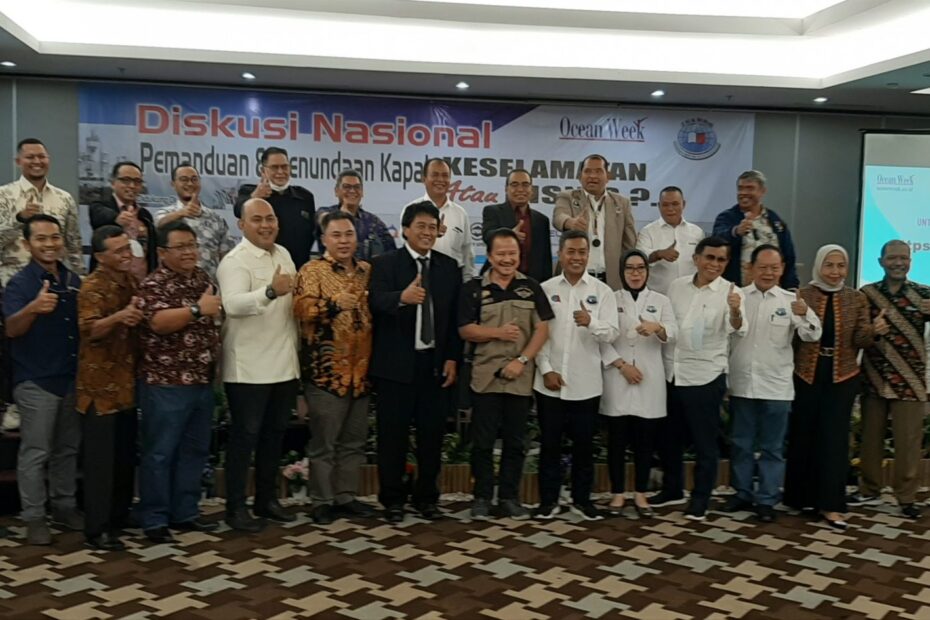
“It is very dynamic. The numbers can change anytime. Directorate General of Sea Transportation continues to review and evaluate the existing pilotage waters, and identify the projected needs as well for determining pilot waters in the future,” Arif Toha said in his keynote speech for a discussion titled ‘Pemanduan dan Penundaan Keselamatan atau Bisnis’ (Pilotage and towage: for the Sake of Safety or Business) hosted by Ocean Week and INAMPA, on Tuesday, August 9, 2022.
To support the pilotage activities, the directorate has been continued to prepare human resources (pilots). Since 1971 until now, the Ministry of Transportation has provided as many as 1,769 pilots, 1,086 of which are still active.
In addition to strengthening human resources, the pilotage and towage require adequate infrastructure and facilities in accordance with regulatory provisions.
According to the regulation, the government is responsible and authorized for the pilotage and towage within Indonesian waters. However, the government, in line with the Regulation of Ministry of Transportation PM 57/2015, the government can cooperate or delegate the authority to Port Business Entities (BUP) and Special Terminal (Tersus), who meet the requirements as stipulated PM 57/2015.
“In the Minister of Transportation Regulation, pilotage officers have an important role in providing assistance, advice, and information to the captain about the condition of local waters. So that shipping navigation can be carried out safely, orderly, and smoothly so that shipping safety can be realized,” he said.
In the discussion, the speakers consisting of Capt. Yoshua, Head of Sub-Directorate for Guidance on Delays at the Directorate General of Ports, Capt. Zaenal A. Hasibuan (shipping practitioner), President INAMPA Pasoroan Herman Harianja, and Capt. Medi from PT Pelindo asked more about the various problems in implementing the pilotage of ship delays.
“From the government side, safety is a priority, but if you look at it from the other side, I don’t know,” said Capt. Joshua.
Some shipping business figures joined the discussion, including Capt. Bobby Mamahit, former Director General of Sea Transportation, Chairperson of the APBMI (Indonesian Stevedoring Companies’ Association), Juswandi Kristanto, INSA Chairwoman Carmelita Hartoto, Head of Tanjung Priok Port Authority (OP) Capt. Wisnu Handoko, GM Regional 2 Tanjung Priok Hadi Safitri, and hundreds of maritime sector business actors.