

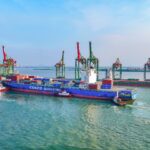
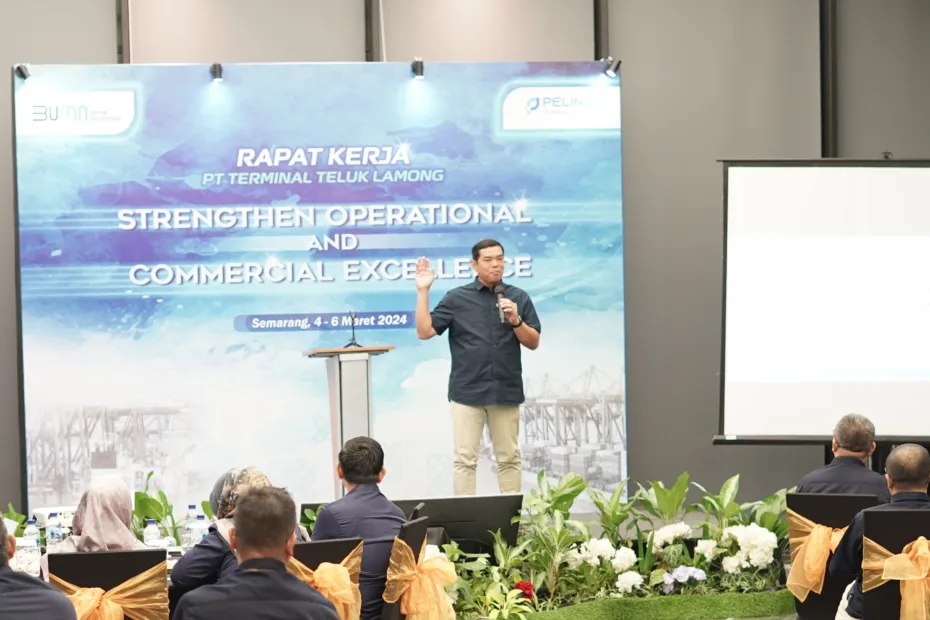
Indonesia’s leading modern and green port (terminal) – PT Terminal Teluk Lamong (TTL) – has just established strategies to achieve its yearly target in 2024. Its recent annual meeting has determined two key strategies: strengthening operations and commercial aspects through several steps.
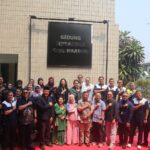
Speaking to the Indonesia Shipping Gazette recently, TTL President Director David P. Sirait highlighted the conclusions of the annual meeting, which took place in Semarang on March 4-5. He mentioned that the annual meeting involved the complete boards of executives and commissioners, who set both productivity and revenue targets along with key strategies to realize them.
During his remarks at the annual meeting, TTL member of the commissioners, Zaki Zulfikar, expressed appreciation for TTL’s satisfactory achievements in 2023. However, he noted the challenges anticipated for this year, which would require appropriate strategies to maintain positive growth.
“Challenges will be more complex this year as the macro economy seems to slow down. Therefore, TTL is expected to be more solid, innovative, and collaborative in order to achieve the yearly target,” said Zaki Zulfikar.
TTL has set a target of a 3.2% throughput increase in 2024, reaching 879,978 TEUs. “To reach the target, we will focus on two key strategies: strengthening operational and commercial aspects,” explained David.
Regarding strengthening the commercial aspect, David further explained that TTL would penetrate new market potentials from cargo owners and industries. In terms of operational strengthening, TTL would focus on five areas: skilled frontline operations, safety environment, optimal port equipment availability, standardized operations based on P&C, and cost efficiency in operations.
In addition to these new strategies, TTL will continue to implement the strategies it initiated earlier in revenue enhancement and cost efficiency.
“For revenue enhancement, TTL will continue to add services (ship calls) both domestically and internationally, including new routes and ad hoc calls,” explained David.
Meanwhile, the cost efficiency strategy will be realized through fuel and electricity consumption. “We will continue to innovate for a more effective operation model, thus saving more in fuel and electricity consumption,” said David, adding that this strategy would continue to support emission reduction and environmental protection, reflecting TTL’s value as a green port.