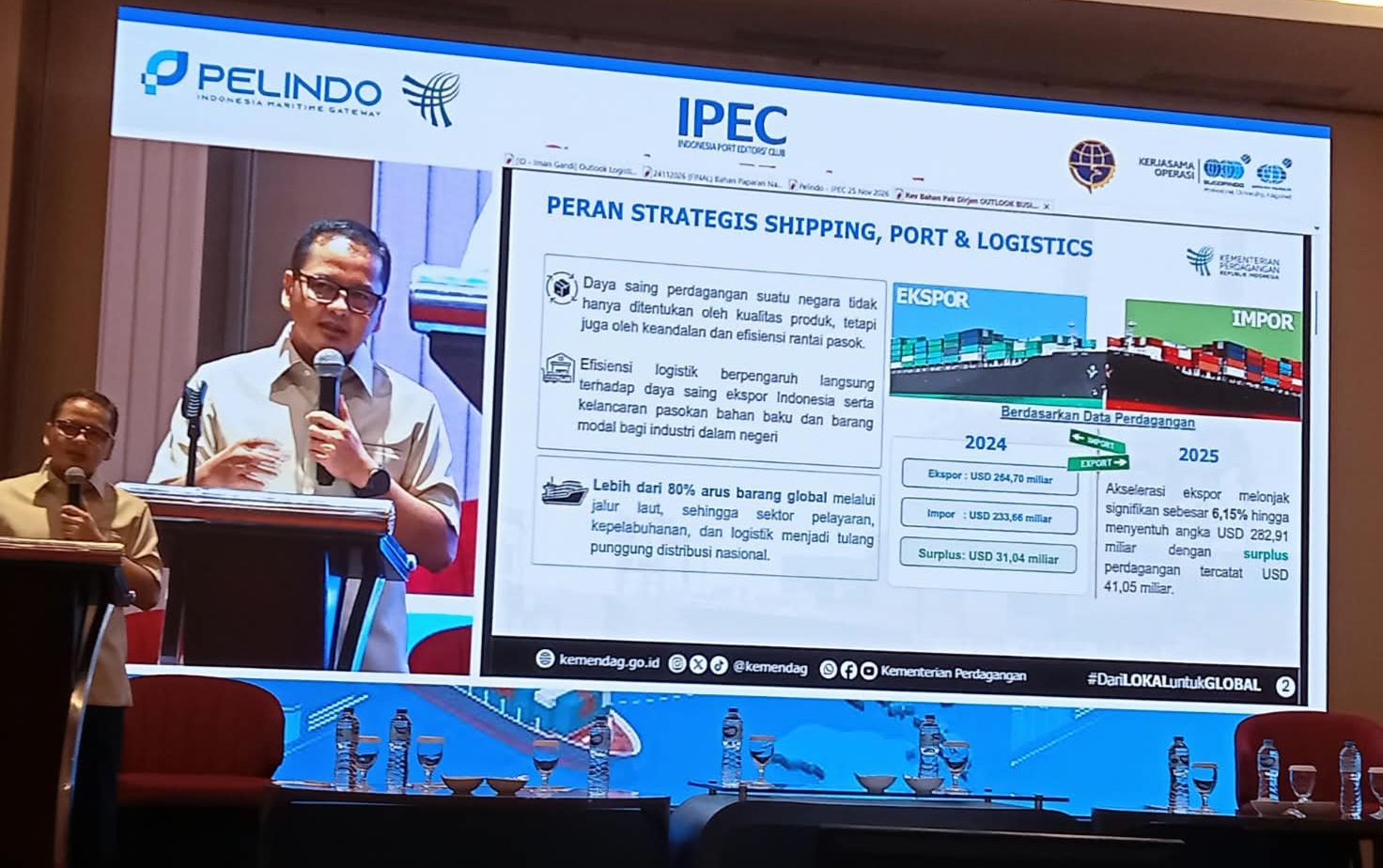

Since its launch in 2016, until now, the Sea Toll (Tol Laut) program has continued to increase and develop, both in terms of routes, the number of ports visited, ship carrying capacity, and the amount of cargo transported.
This number increase was conveyed by the Minister of Transportation, Budi Karya Sumadi, at the opening of the National Sea Toll Coordination Meeting held at the JW Marriott Hotel Surabaya from 23/8 to 24/8 2022.
National Coordination Meeting was held as a meeting place between the Central and Regional Governments to jointly prepare improvement measures in the utilization of Sea Toll ships so that their implementation in 2023 is more optimal. This coordination uses the theme “Creating an Effective, Efficient and Accountable Sea Toll To Support Economic Recovery Post Pandemic”.
Minister of Transportation Budi also said that implementing Public Service Obligations for the Transportation of Goods at Sea in 2022 is progressing, with the addition of routes in Maluku and North Maluku Provinces.
Currently, explained to the Minister of Transportation, the sea toll program serves 33 routes by operating 32 ships that stop at 130 ports.
The Central Government, through Ministries/Institutions with relevant Regional Governments, coordinates with each other, unites, and works hand in hand in synergizing each stage of the National Transportation System (SISTRANAS) and the National Logistics System (SISLOGNAS).
Budi Karya Sumadi explained that based on the evaluation results of the first half of 2022, the implementation of Public Service Obligations for the Transportation of Goods at Sea had transported 13,110 TEUs of cargo or an increase in the number of loads by 21%, and voyage achievements of 29%.
“This means that there is an increase in the performance of the Sea Toll Road, which this year is more effective when compared to the achievement of semester 1 (one) last year,” he said.
The Minister of Transportation revealed that the most departing cargo carried by Sea Toll Ships includes cement, rice, mineral water, and soft drinks. At the same time, the most returned cargo commodities include wood, copra, seaweed, coconut tree trunks, and charcoal.
“This can certainly be realized thanks to the efforts of all Ministries/Agencies, Regional Governments, Technical Organizing Units, and Operators in socializing and providing assistance to business actors involved in the Goods Sea Toll Program,” he said.
For information, the National Sea Toll Coordination Meeting was attended by Ministries/Agencies, Regional Governments, BUMN, Educational Institutions, as well as associations and related stakeholders both as resource persons and participants.